




Researchers Develop Paper-Like Battery for Future Vehicle Applications
TROY, N.Y. --- Researchers at Rensselaer Polytechnic Institute have developed a new energy storage device that easily could be mistaken for a simple sheet of black paper.
TROY, N.Y. --- Researchers at Rensselaer Polytechnic Institute have developed a new energy storage device that easily could be mistaken for a simple sheet of black paper. The nano-engineered battery is lightweight, ultra-thin, completely flexible, and geared toward meeting the trickiest design and energy requirements of tomorrow's transportation vehicles, gadgets and implantable medical equipment. Along with its ability to function in temperatures up to 300 degrees Fahrenheit and down to 100 below zero, the device is completely integrated and can be printed like paper, according to an institute press release. The device can function as both a high-energy battery and a high-power supercapacitor, which are generally separate components in most electrical systems. Another key feature is the capability to use human blood or sweat to help power the battery. Details of the project are outlined in the paper "Flexible Energy Storage Devices Based on Nanocomposite Paper," published Aug. 13 in the Proceedings of the National Academy of Sciences. The resemblance to paper is no accident. More than 90 percent of the device is made up of cellulose, the same plant cells used in newsprint, loose leaf, lunch bags, and nearly every other type of paper. Rensselaer researchers infused this paper with aligned carbon nanotubes, which give the device its black color. The nanotubes act as electrodes and allow the storage devices to conduct electricity. The device, engineered to function as both a lithium-ion battery and a supercapacitor, can provide the long, steady power output comparable to a conventional battery, as well as a supercapacitor's quick burst of high energy. The device can be rolled, twisted, folded, or cut into any number of shapes with no loss of mechanical integrity or efficiency. The paper batteries can also be stacked, like a ream of printer paper, to boost the total power output. "It's essentially a regular piece of paper, but it's made in a very intelligent way," said co-author Robert Linhardt, professor of biocatalysis and metabolic engineering at Rensselaer. "We're not putting pieces together --— it's a single, integrated device. The components are molecularly attached to each other. The carbon nanotube print is embedded in the paper, and the electrolyte is soaked into the paper. The end result is a device that looks, feels and weighs the same as paper." The creation of this unique nanocomposite paper drew from a diverse pool of disciplines, requiring expertise in materials science, energy storage and chemistry. Along with Linhardt, authors of the paper include Pulickel M. Ajayan, professor of materials science and engineering, and Omkaram Nalamasu, professor of chemistry with a joint appointment in materials science and engineering. Senior research specialist Victor Pushparaj, along with postdoctoral research associates Shaijumon M. Manikoth, Ashavani Kumar and Saravanababu Murugesan, were co-authors and lead researchers of the project. Other co-authors include research associate Lijie Ci and Rensselaer Nanotechnology Center Laboratory Manager Robert Vajtai. The researchers used ionic liquid, essentially a liquid salt, as the battery's electrolyte. It's important to note that ionic liquid contains no water, which means there's nothing in the batteries to freeze or evaporate. "This lack of water allows the paper energy storage devices to withstand extreme temperatures," Kumar said. The paper batteries' light weight could make them ideal for use in automobiles, aircraft and even boats. The paper also could be molded into different shapes, such as a car door, which would enable important new engineering innovations. “Plus, because of the high paper content and lack of toxic chemicals, it's environmentally safe," Shaijumon said. Paper is also extremely biocompatible and these new hybrid battery/supercapcitors have potential as power supplies for devices implanted in the body. The team printed paper batteries without adding any electrolytes, and demonstrated that naturally occurring electrolytes in human sweat, blood, and urine can be used to activate the battery device. "It's a way to power a small device such as a pacemaker without introducing any harsh chemicals, such as the kind that are typically found in batteries, into the body," Pushparaj said. The materials required to create the paper batteries are inexpensive, Murugesan said, but the team has not yet developed a way to inexpensively mass produce the devices. The end goal is to print the paper using a roll-to-roll system similar to how newspapers are printed. "When we get this technology down, we'll basically have the ability to print batteries and print supercapacitors," Ajayan said. "We see this as a technology that's just right for the current energy market, as well as the electronics industry, which is always looking for smaller, lighter power sources. Our device could make its way into any number of different applications." The team of researchers has already filed a patent protecting the invention. They are now working on ways to boost the efficiency of the batteries and supercapacitors, and investigating different manufacturing techniques. "Energy storage is an area that can be addressed by nanomanufacturing technologies and our truly inter-disciplinary collaborative activity that brings together advances and expertise in nanotechnology, room-temperature ionic liquids, and energy storage devices in a creative way to devise novel battery and supercapacitor devices," Nalamasu said. The paper energy storage device project was supported by the New York State Office of Science, Technology and Academic Research (NYSTAR), as well as the National Science Foundation (NSF) through the Nanoscale Science and Engineering Center at Rensselaer.
More Fuel

Bob Adamsky on Fuel Volatility: "Don't Panic, Have a Plan."
When it comes to up and down fuel prices, Adamsky has a message for fleets: “Don’t panic.”
Read More →
How Fleets Can Gain Control of Non-Fuel Spend
Fuel often gets the spotlight, but non-fuel expenses can have a major impact on fleet costs. Ramel Lindsay of U.S. Bank Voyager discusses how fleets can gain better visibility and control over these often-overlooked expenditures.
Read More →
Fuel is Just the Start: How Middle East Tensions are Driving Up Fleet Maintenance Costs
The Middle East conflict is doing more than pushing up fuel prices. It’s also raising the cost of key maintenance products your fleet depends on, from motor oil to tires to windshield wipers. Here’s what you need to know about this budget-busting situation.
Read More →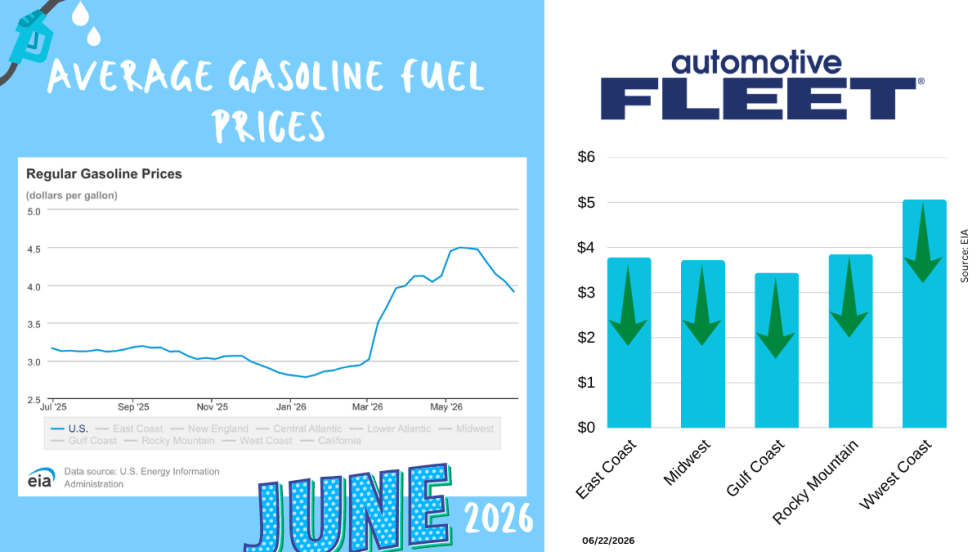
June Fuel Update: Prices Fall Below $4
Drivers are finally getting some relief at the pump. The national average gas price has dropped below $4 a gallon for the first time in months, with prices falling in 47 states as oil markets react to developments in U.S.-Iran negotiations.
Read More →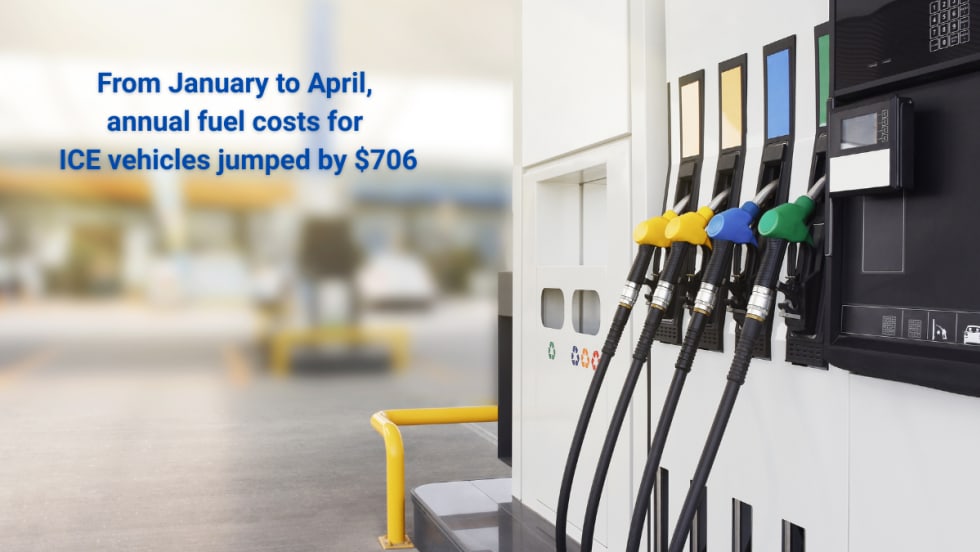
Study: How 2026's Gas Price Hikes Affect Different Vehicle Types
New data from iSeeCars reveals how rising fuel costs have affected different vehicle segments as gasoline prices climbed nearly 46% over the past four months.
Read More →
Are You Tracking Your Fleet's True Total Cost of Ownership?
Bobit Business Media surveyed 190 fleet professionals and found that while most fleets are tracking costs, fragmented systems and data gaps are keeping true TCO visibility out of reach. With rising pressure to control spend in an increasingly volatile environment, the gap between what fleets think they know and what the data actually shows is wider than you might expect. See how your peers are managing costs today and where the industry still has room to improve.
Read More →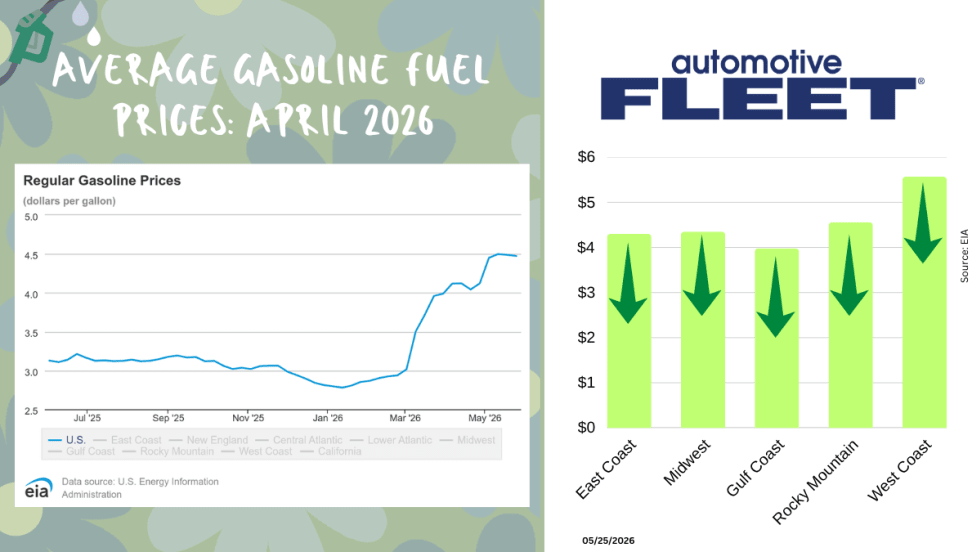
May Fuel Update: All Regions Experience Declines
Gas prices are finally easing in much of the country, but experts warn global tensions could quickly reverse the trend as the national average remains well above last month’s levels.
Read More →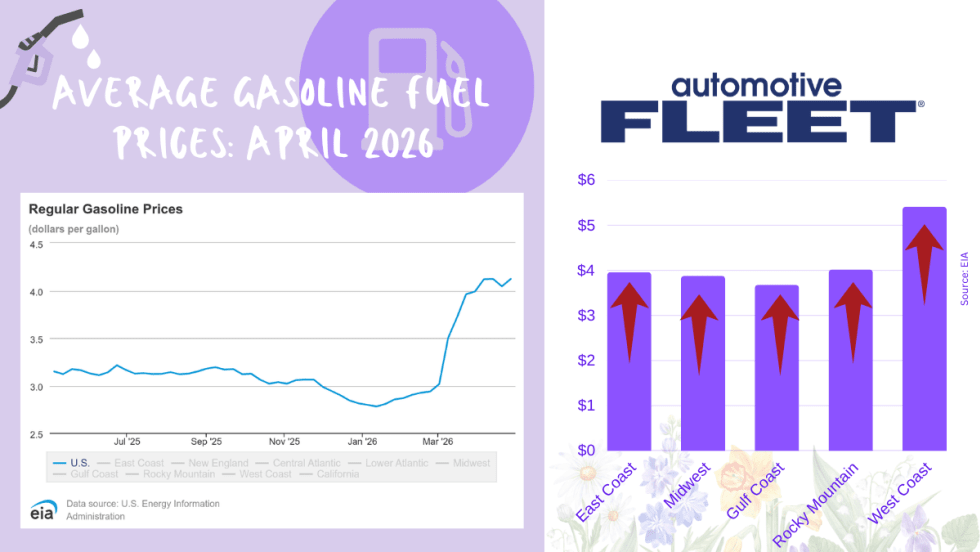
April Fuel Update: Prices Climb Above $4 as Spring Surge Accelerates
National average jumps to $4.04 per gallon, up sharply from last year, with West Coast prices topping $5 and further increases expected amid rising oil tensions.
Read More →
Tips from Fleet Managers on Saving Fuel Costs
Fleet leaders share practical strategies to reduce fuel spend through smarter policy, routing, and driver guidance.
Read More →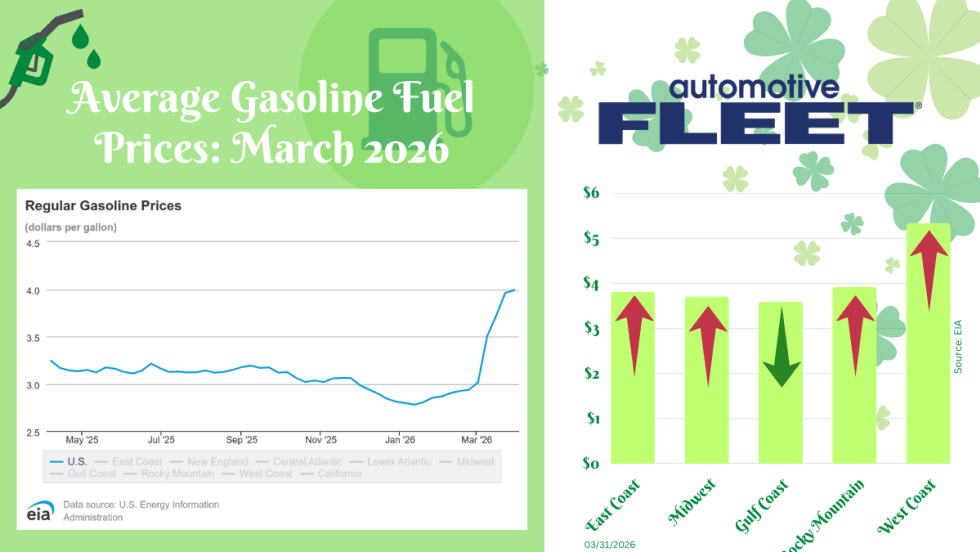
March Fuel Update: Prices Settle With a $4 Average
Fuel prices significantly slowed this week, but a $4 national average is still expected.
Read More →