




Related: 2016 Nissan Altima Adds Safety Tech
Refreshed 2016 Altima Starts at $23,325
Nissan's 2016 Altima will retail for at least $23,325 and add a seventh trim level, when the mid-size sedan goes on sale Nov. 11., Nissan has announced.
by Staff
October 28, 2015
Photo of 2016 Altima courtesy of Nissan.
2 min to read
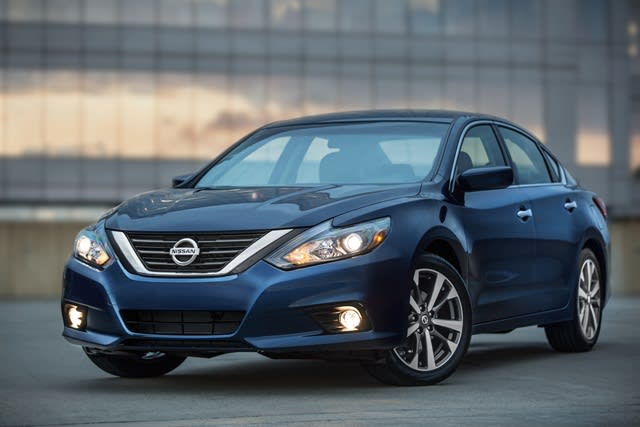
Photo of 2016 Altima courtesy of Nissan.
Nissan's 2016 Altima will retail for at least $23,325 and add a seventh trim level, when the mid-size sedan goes on sale Nov. 11., Nissan has announced.
The new sporty SR trim features smoked headlights, paddle shifters, unique suspension tuning and sport interior accents.
The Nissan Altima 2.5 SR trim is priced at $25,295 and the 3.5 SR trim will cost $28,215. The Altima 2.5 S will be $23,725, the 2.5 SV $26,285, the 2.5 SL $29,395, and the 3.5 SL is priced at $32,915. Pricing for the 2016 Altima includes the $825 destination and handling fee.
The 2016 Altima 2.5 trims offer standard fuel economy of 39 mpg for highway, according to Environmental Protection Agency fuel economy estimates released by the automaker.
The mid-cycle refresh features retuned steering and suspension, the Xtronic transmission’s third-generation D-step logic, which simulates traditional automatic transmission shift points and improves performance.
Upgraded technology features include standard Siri Eyes Free and NissanConnectSM with mobile apps (not available for the 2.5 grade), available NissanConnect with navigation and mobile apps, and NissanConnect Services powered by SiriusXM telematics (subscription required, sold separately).
The five 2.5-liter models feature a 182-hp 2.5L DOHC inline 4-cylinder engine, while 3.5L Altimas offer a 270-hp 3.5L DOHC V6.
In 2013, commercial fleets registered 7,681 Altima sedans, according to Automotive Fleet. Fleets typically choose the base 2.5 or 2.5 S trim models, said Tim Gallagher, a Nissan spokesman.
More Operations

Here's When You Should Make an Exception to Fleet Policy
Fleet policies are designed to create consistency, but not every driver or situation fits neatly within standard rules.
Read More →
AI-Native or AI-Acquired: What Should Fleet Managers Look for in an AI Platform?
Six questions can help fleet managers look beyond AI marketing claims to evaluate integration, data access, and real-world operational performance.
Read More →
Sponsored•October 14, 2026
A buyer's guide to fleet management software in 2027
Buying fleet management software in 2027 means looking beyond features and price. As fleet operations, technology and expectations evolve, this guide explores what today’s fleet professionals should consider when choosing a system that can deliver value now and adapt to what comes next.
Read More →

What Will Shape the Next Era of Fleet Management?
EVs, AI, and autonomous vehicles are reshaping fleet management. Discover what’s ahead—and how fleet leaders can prepare for the next era.
Read More →
How Fleets Can Recruit and Train Veterans for Technician Roles
Here's how the technician shortage has affected uptime for fleets, and what to do about it.
Read More →
Avis Budget Group Deploys Neology Toll Management Technology Across Major Brands
Neology’s neoFleet platform will manage toll transactions and toll-authority operations for vehicles across Avis, Budget, Payless, Budget Truck and Zipcar.
Read More →
Fleet Personal-Use Charges Edge Higher in 2026
Nearly eight in 10 surveyed fleets allow personal use of company vehicles, while just over half of respondents report charging employees for the privilege.
Read More →
The Future of Fleet + What’s Changing Right Now | AF News Recap
Could developments overseas offer a preview of what’s coming for U.S. fleets? This week, we’re looking at the future of AI, autonomy, and electrification, plus Ford Pro’s new certified pre-owned program, smarter vehicle offboarding, and a new way for fleets to manage toll expenses.
Read More →
How to Handle Vehicle Offboarding
What do fleet managers need to do when a driver leaves?
Read More →
Sponsored•October 1, 2026
Fleet Manager’s Ultimate Playbook: Navigating the New Standard in OEM Connectivity
Rising operating costs, driver safety concerns, and unplanned downtime are putting unprecedented pressure on modern fleets. Discover how fleet managers use embedded OEM connectivity and real-time vehicle data to cut TCO, prevent downtime, and protect drivers without aftermarket telematics hardware.
Read More →