




Traffic cameras to photograph drivers who run red lights in Philadelphia are expected in the fall, according to the Philadelphia Inquirer newspaper. Parking Authority officials plan to install the first set of cameras at Roosevelt Boulevard and Grant Avenue, which has had the highest accident rate of any intersection in the city over the last five years, according to authority officials. Eight other intersections are under consideration: two on Roosevelt Boulevard, at Red Lion Road and at Cottman Avenue; Kensington Avenue at Clearfield Street; Richmond Street at both Allegheny Avenue and Castor Avenue; Aramingo Avenue at York Street; Broad Street at Washington Avenue; and Thompson Street at Lehigh Avenue. The intersections were included in state legislation sponsored by State Rep. Richard Geist. Geist said that they were selected primarily based on traffic accident rates. Richard D. Dickson Jr., the authority's director of on-street parking, who is overseeing the camera project, said that a final decision had not been made and that some of the intersections might be changed, depending on traffic information the authority is gathering from the state Department of Transportation and the Philadelphia Police Department. The city's red-light enforcement system will use 35mm cameras. Sensors will trigger the cameras if a motorist fails to stop at a red light. The cameras will be aimed to capture an image of the vehicle's license, but not the driver. Intersections also will be posted with signs alerting drivers that the cameras are in use. Vehicle owners will be fined $100 for a violation. However, under the law that authorized the use of the cameras, the pictures cannot be used to assess points on a motorist's license, and no insurance surcharges will be permitted. Dickson said points would only be assessed to a driver if an officer also witnessed the violation. Citations will be reviewed by police officers before they are mailed to violators. The owner of a vehicle caught on camera running a red light will be mailed a citation. Included will be three pictures. One will show the rear of the vehicle before it ran the light. Another will show the rear of the vehicle in the intersection after the light has turned red. The third photo will show the vehicle's license plate. Fenerty said that during the first 90 days the cameras are operating, motorists will receive a notice in the mail but not a formal citation and fine. The idea, Fenerty said, is to make sure the system is working properly and to give motorists ample warning. While many municipalities that have the red-light enforcement system use digital cameras from which images can be sent to a computer, Philadelphia's 35mm cameras will require someone to unload the film. Parking Authority officials say they prefer to use the 35mm cameras, also known as "wet film," because they are difficult to tamper with and more accurate.
Red-Light Cameras to be Installed in Philadelphia
Traffic cameras to photograph drivers who run red lights in Philadelphia are expected in the fall, according to the Philadelphia Inquirer newspaper.
More Operations

Hybrids: Electrification Without the Challenges
For fleet managers, fuel is one of the biggest line items in the budget — and it's one hybrids can shrink without changing how your people work. Download the eBook to see the numbers, understand the technology, and get a step-by-step guide to making the switch.
Read More →
How NOV Uses Telematics to Improve Fleet Safety Across 160 Locations
James Victory of NOV discusses how the company manages fleet safety, maintenance, and telematics across more than 150 locations supporting oilfield operations throughout the U.S.
Read More →
Fleet Meets: Steven Santostasi
This edition of the Fleet Meets series features Steven Santostasi, the current TSP channel manager for Ford Pro.
Read More →
Why Fleet Managers Are Replacing Departmental Vehicles with Shared Motor Pools
Departmentally assigned vehicles often create hidden costs through underutilization, poor visibility, and increased administrative burden. This white paper explores how shared motor pool strategies help fleets reduce costs, improve accountability, and optimize vehicle utilization.
Read More →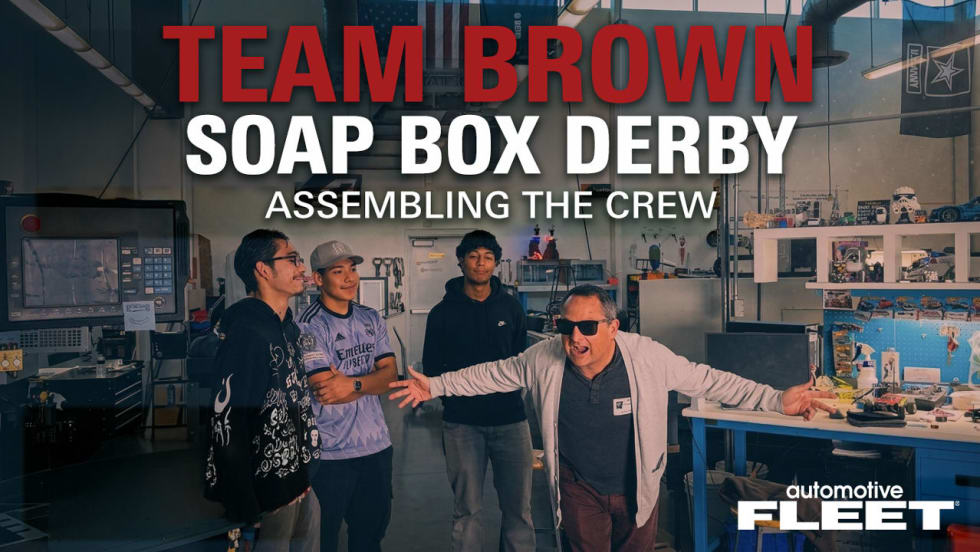
Soap Box Derby Challenge: Assembling the Crew
Meet Gabriel, Matthew, and Angel — the team helping bring this soap box derby build to life.
Read More →
BBL Fleet Acquires Velcor Leasing Corporation
BBL Fleet expanded its footprint in the fleet management industry with the acquisition of Velcor Leasing Corporation of Madison through a stock purchase agreement finalized Feb. 27, 2026.
Read More →
Lytx Introduces New AI Fleet Technologies at Protect 2026
The company introduced new AI-driven fleet safety and operations technologies during its annual user conference.
Read More →
Fleet Costs Are Rising: Here’s How Leaders Are Responding
Fleet leaders are under pressure to reduce costs, adapt to economic uncertainty, and make smarter decisions. See how peers across North America are responding with real data, proven strategies, and forward-looking insights. Download the 2026 Market Pulse Report to benchmark your strategy and uncover where you can gain an edge.
Read More →
From Waffle House to AI: Fleet Trends You Need to Know
In this AF news recap, host Faith Howell covers how Waffle House stepped up during disaster response and new AI tech on the market.
Read More →
Fleet Operations in the Age of AI: Navigating Ethical and Legal Challenges
AI is no longer a future concept for fleets—it’s already embedded in the tools, data, and decisions that operators rely on every day. In this episode of the Fleet Forward Podcast, recorded live at Fleet Forward, industry leaders take the conversation beyond hype to examine what responsible AI adoption really looks like in fleet operations.
Read More →