




Red-Light Cameras Help Prevent Fatal Crashes
A new study from IIHS finds that implementing a red-light camera program results in 21% fewer fatal red-light-running crashes per capita.
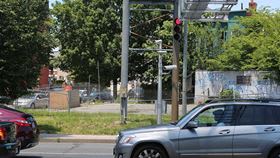
Photo courtesy of IIHS.
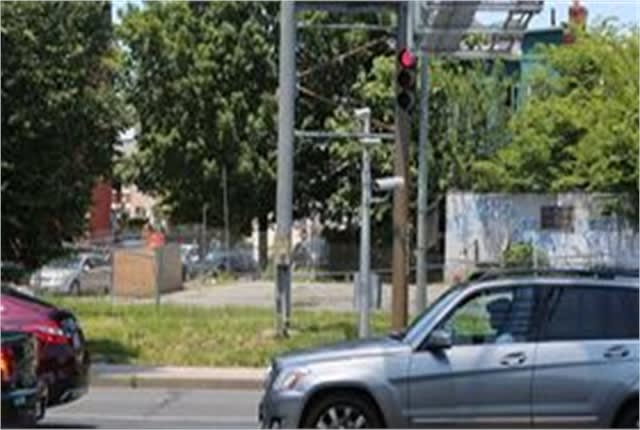
Photo courtesy of IIHS.
Red-light camera programs continue to generate public controversy, but a new study from the Insurance Institute for Highway Safety concludes that such programs in 79 large U.S. cities saved nearly 1,300 lives through 2014.
IIHS researchers contend that eliminating red-light camera programs costs lives, with the rate of fatal red-light-running crashes rising 30% in cities that have scrapped the programs.
Red-light-running crashes resulted in 709 deaths in 2014 and an estimated 126,000 injuries, according to IIHS. Drivers who ran a red light represent a minority of the people who died in these crashes. Most of those killed were occupants of other vehicles, passengers in vehicles running red lights, pedestrians, or bicyclists.
“Red light cameras are valuable enforcement tools that prevent many dangerous intersection crashes,” said IIHS President Adrian Lund. “This study confirms that cameras reduce fatal crashes and for the first time quantifies the effect that ending these programs has on safety.”
IIHS researchers looked at the 57 cities of 200,000 or more people that activated cameras between 1992 and 2014 and didn’t shut them off. They compared the trends in annual per-capita fatal crash rates in those cities with the trends in 33 cities that never had cameras.
After accounting for the effects of population density and unemployment rates, the researchers found there were 21% fewer fatal red-light-running crashes per capita in cities with cameras than would have occurred without cameras and 14% fewer fatal crashes of all types at signalized intersections.
As expected, IIHS noted, the cameras have their biggest effect on red-light-running crashes. However, the analysis shows they reduce other types of fatal intersection crashes as well. Drivers may be more cautious in general when they know there are cameras capturing images of their driving. In addition, red-light-running fatalities may be undercounted.
When applied to all 57 cities, as well as 22 cities that started and ended camera programs, the lower intersection crash rate translates into 1,296 lives saved during the years the cameras were operational, according to the study.
The second part of the study focused on 14 cities that terminated their camera programs between 2010 and 2014. The researchers compared trends in annual crash rates in those cities with trends in crash rates in 29 cities in the same regions that continued their camera programs. The fatal red-light-running crash rate was 30% higher in cities that turned off cameras than it would have been if the cameras remained on. The rate of fatal crashes at signalized intersections was 16% higher, the study found.
The 16% increase translates into an estimated 63 deaths that would have been prevented in the 14 cities if they had not turned off their cameras, IIHS said.
“Debates over automated enforcement often center on the hassle of getting a ticket and paying a fine,” Lund said. “It's important to remember that there are hundreds of people walking around who wouldn’t be here if not for red light cameras. Sadly, there are 63 families who are missing a loved one because these life-saving programs were canceled.”
Nonetheless, a level of public distrust of red-light camera programs persists, with some critics arguing that their primary purpose is to raise city revenue. A scandal in Chicago has helped fuel such skepticism.
To download the full IIHS study, click here.
To view a list of state laws regarding red-light cameras, click here.
More Safety

Fleet Manager’s Ultimate Playbook: Navigating the New Standard in OEM Connectivity
Rising operating costs, driver safety concerns, and unplanned downtime are putting unprecedented pressure on modern fleets. Discover how fleet managers use embedded OEM connectivity and real-time vehicle data to cut TCO, prevent downtime, and protect drivers without aftermarket telematics hardware.
Read More →
From Driver Well-Being to EV Charging | AF News Recap
Mental health belongs in the fleet safety conversation. This week, we’re looking at five ways fleets can support employee well-being before a crisis, plus Holman’s expansion in Mexico, new one-day Fleet Forward passes, and why EV charging demand is outpacing infrastructure growth.
Read More →
Nexar-Nauto Merger Aims to Give Fleets Better Safety Intelligence Through Larger Driving Dataset
Stefan Heck tells Automotive Fleet that combining more than 10 billion miles of driving history with Nexar's AI models will give fleets deeper insights into driver risk and roadway conditions than either company could provide independently.
Read More →
Don't Wait for a Crisis: 5 Ways to Build Mental Health Into Your Fleet Safety Program
For Suicide Prevention Month, fleet and safety leaders have an opportunity to put mental health where it belongs: at the center of workplace safety.
Read More →
How Camera Data Can Strengthen a Fleet’s Insurance Renewal
Insights from a commercial insurance carrier and a broker show how fleets can turn video telematic data, driver coaching, and improved claims results into a stronger case at insurance renewal.
Read More →
The Safest Fleets Aren’t the Ones with the Most Technology
You’ve made the telematics investment. Here’s how to capture the other half of its value and build the safest fleet on the road.
Read More →
Hidden in Plain Sight: Fleet Compliance Risks
Fleet compliance isn't just about having policies — it's about consistently enforcing them. This practical guide reveals six hidden compliance risks common in public sector and shared fleet operations and outlines proven strategies to improve visibility, accountability, and audit readiness
Read More →
NETS Sets 2026 Fleet Safety Benchmark Conference for Indianapolis
The Sept. 15–17 program will feature fleet benchmarking data, case studies, emerging technologies, and implementation strategies while running alongside the NSC Safety Congress & Expo.
Read More →
Off-the-Job Crashes Account for 43% of Employers’ $61.7 Billion Crash Burden
NETS quantifies costs dispersed across fleet, risk, HR, and other departments while providing new per-crash benchmarks for employers.
Read More →
Ram Recalls More Than 1.27 Million 1500 Pickups for Seat Belt Anchor Issue
The recall affects certain 2019-2026 Ram 1500 pickups that may have improperly attached second-row seat belt buckle anchors.
Read More →