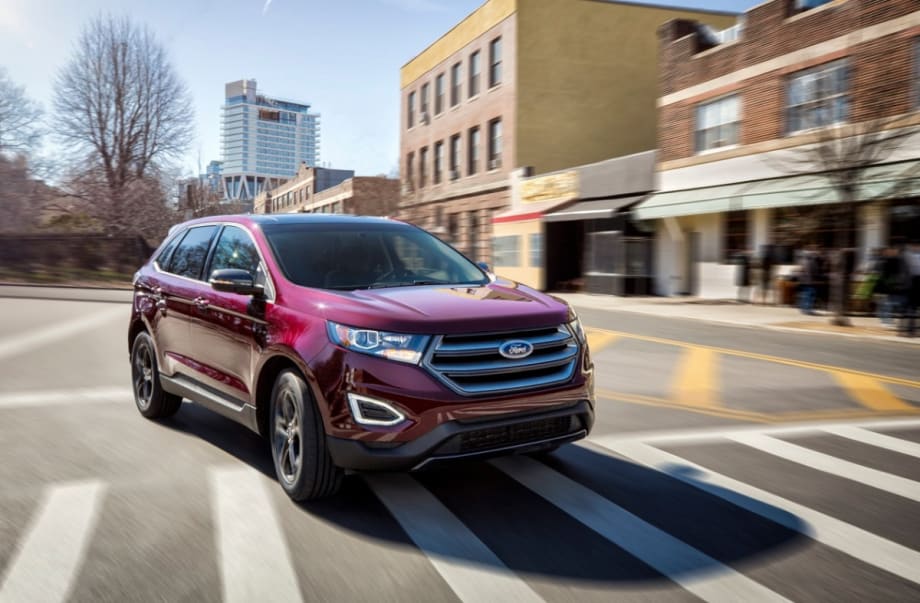
The Ford Edge is one vehicle included in the recall for a potential bushing issue.
Photo: Ford
2 min to read
Recently, two automakers announced safety recalls for diverse problems on various models. The details follow.
Ad Loading...
Ford Motor Company
Ford is recalling approximately 2,925,968 2013-2019 Escape, 2013-2018 C-Max, 2013-2016 Fusion, 2013-2021 Transit Connect, and 2015-2018 Edge vehicles because the bushing that attaches the shifter cable to the transmission may degrade or detach.
Ad Loading...
This scenario may prevent the vehicle from shifting into the intended gear, and cause it to move in an unexpected direction. Moreover, the vehicle could experience an unintentional rollaway after the driver puts it in “park.” Either situation increases the likelihood of a collision.
To fix the problem, dealers will replace the under hood shift bushing and add a protective cap over the shift cable bushing, at no cost to owners.
Owner notification letters will be mailed on or around June 27. Owners can reach Ford customer service at (866)-436-7332. Ford's reference number for this recall is 22S43.
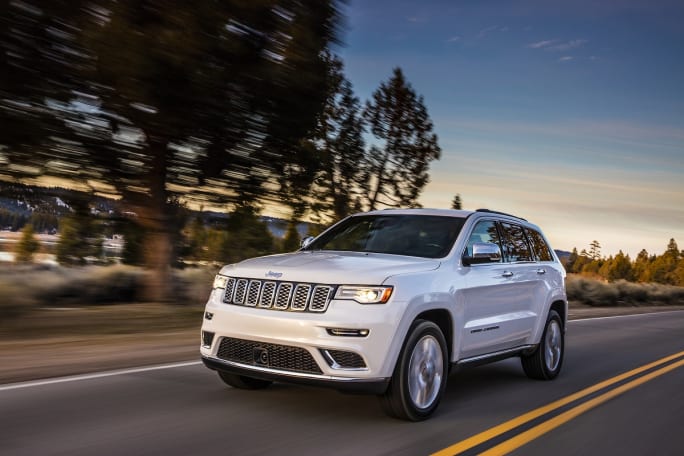
The 2019 Jeep Grand Cherokee is involved in two potential recalls for the anti-lock brake system and possible fuel pump failure.
Photo: Stellantis
Stellantis
Stellantis is recalling an estimated 270,904 2018-2019 Jeep Grand Cherokee and Dodge Durango vehicles for an anti-lock brake problem. Specifically, a malfunction in the antilock-brake system (ABS) module may illuminate the brake lights, and allow the vehicle to start and shift out of “park” without the brake pedal being applied.
This scenario can result in vehicle rollaway, increasing the risk of a crash and/or injury to pedestrians and others outside of the vehicle.
Ad Loading...
The remedy for this issue is under development. Stellantis' reference number for this recall is Z48.
In a second action, Stellantis is recalling approximately 117,759 2022 Ram 1500, 2500 pickup trucks, and 3500 Cab Chassis vehicles with GVWR less than 10,000 lbs. for a rearview camera problem. Specifically, the radio software may prevent the rearview image from displaying.
A rearview camera that fails to display an image reduces the driver’s rear visibility. This, in turn, ups the odds of a collision.
To fix the problem, dealers will reprogram the radio software, free of charge. Stellantis’ reference number for this recall is Z47.
In a third action, Stellantis is recalling an estimated 138,645 2014-2020 Jeep Grand Cherokee, and 2014-2019 Ram 1500 vehicles equipped with 3.0L diesel engines for potential high pressure fuel pump (HPFP) failure. HPFP may introduce internal debris into the fuel system, potentially resulting in fuel starvation.
Ad Loading...
Fuel starvation may result in an unexpected loss of drive power, which increases the likelihood of a crash.
To remedy the matter, dealers will replace the HPFP, and inspect and replace, if necessary, additional fuel system components, at no cost. Stellantis’ reference number for this recall is Z46.
For all three recalls, owner notification letters are expected to be mailed on or about July 29. Owners may contact Stellantis customer service at (800) 853-1403.
New crash-avoidance ratings from the Insurance Institute for Highway Safety reveal inconsistent performance among commercial vehicles, with several popular cargo vans and heavy-duty pickups struggling to avoid collisions with other vehicles and pedestrians.
Could your company's culture be encouraging distracted driving? This week, we're exploring how workplace expectations affect driver safety, what AI, EVs, and autonomous vehicles could mean for the future of fleet management, and how fleet professionals can strengthen their award nominations.
What happens when the people responsible for enforcing safety rules are the ones setting the wrong example? The answer may reveal why some of the biggest risks to fleet drivers have little to do with what's written in the employee handbook.
Rising operating costs, driver safety concerns, and unplanned downtime are putting unprecedented pressure on modern fleets. Discover how fleet managers use embedded OEM connectivity and real-time vehicle data to cut TCO, prevent downtime, and protect drivers without aftermarket telematics hardware.
Mental health belongs in the fleet safety conversation. This week, we’re looking at five ways fleets can support employee well-being before a crisis, plus Holman’s expansion in Mexico, new one-day Fleet Forward passes, and why EV charging demand is outpacing infrastructure growth.
Stefan Heck tells Automotive Fleet that combining more than 10 billion miles of driving history with Nexar's AI models will give fleets deeper insights into driver risk and roadway conditions than either company could provide independently.
Insights from a commercial insurance carrier and a broker show how fleets can turn video telematic data, driver coaching, and improved claims results into a stronger case at insurance renewal.
Fleet compliance isn't just about having policies — it's about consistently enforcing them. This practical guide reveals six hidden compliance risks common in public sector and shared fleet operations and outlines proven strategies to improve visibility, accountability, and audit readiness