




Range Rover Sport Adds Plug-in Hybrid for 2019
Land Rover's Range Rover Sport will add light updates in 2018 ahead of bigger changes for the 2019 model year that include a plug-in hybrid variant of the luxury SUV, the company has announced.
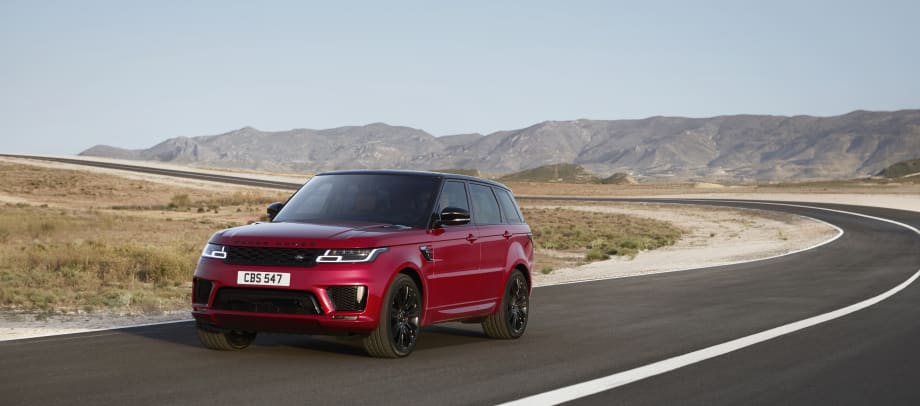
Photo of 2018 Range Rover Sport courtesy of Land Rover.
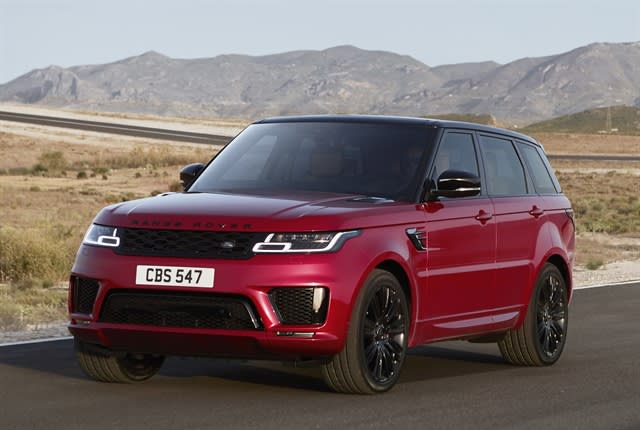
Photo of 2018 Range Rover Sport courtesy of Land Rover.
Land Rover's Range Rover Sport will add light updates in 2018 ahead of bigger changes for the 2019 model year that include a plug-in hybrid variant of the luxury SUV, the company has announced.
The 2019 Range Rover Sport PHEV will arrive in the summer and offer a choice of two supercharged gasoline engines with four output ratings, the PHEV, and a diesel-powered model for the first time.
Land Rover will badge the hybrid as the P400e, and will pair a 2.0-liter turbocharged four-cylinder (296 horsepower) with an 85-kilowatt electric motor (114 hp). The system will produve 398 hp or available power. It will provide up to 31 miles of electric range.
The system, which includes a 7-kilowatt onboard charger, includes a 13.1-killowatt-per-hour lithium-ion battery.
The P400e will offer two driving modes, including Parallel Hybrid and EV mode. Parallel Hybrid combines the use of gasoline and electric power. It uses SAVE — a function that prevents the battery charge from droppnig below a pre-selected level. The Predictive Energy Optimization function uses onboard GPS altitude data to maximize fuel economy. When driven in EV mode, the vehicle runs solely on the electric motor and stored battery energy.
For 2018, the Range Rover Sport will add a new exterior design and revamped infotainment system that adds two 10-inch high-definition displays and greater onboard power with 14 power jacks.
More Operations

Personal-Use Charges Rise as Vehicle Values Fall | AF News Recap
Personal-use charges are climbing, wholesale used-vehicle values are declining, and commercial fleet sales growth is slowing. This week, we're breaking down the latest fleet data, plus how Element Fleet Management is helping Waymo prepare for its first Canadian robotaxi market.
Read More →
Here's When You Should Make an Exception to Fleet Policy
Fleet policies are designed to create consistency, but not every driver or situation fits neatly within standard rules.
Read More →
AI-Native or AI-Acquired: What Should Fleet Managers Look for in an AI Platform?
Six questions can help fleet managers look beyond AI marketing claims to evaluate integration, data access, and real-world operational performance.
Read More →

A buyer's guide to fleet management software in 2027
Buying fleet management software in 2027 means looking beyond features and price. As fleet operations, technology and expectations evolve, this guide explores what today’s fleet professionals should consider when choosing a system that can deliver value now and adapt to what comes next.
Read More →
What Will Shape the Next Era of Fleet Management?
EVs, AI, and autonomous vehicles are reshaping fleet management. Discover what’s ahead—and how fleet leaders can prepare for the next era.
Read More →
How Fleets Can Recruit and Train Veterans for Technician Roles
Here's how the technician shortage has affected uptime for fleets, and what to do about it.
Read More →
Avis Budget Group Deploys Neology Toll Management Technology Across Major Brands
Neology’s neoFleet platform will manage toll transactions and toll-authority operations for vehicles across Avis, Budget, Payless, Budget Truck and Zipcar.
Read More →
Fleet Personal-Use Charges Edge Higher in 2026
Nearly eight in 10 surveyed fleets allow personal use of company vehicles, while just over half of respondents report charging employees for the privilege.
Read More →
The Future of Fleet + What’s Changing Right Now | AF News Recap
Could developments overseas offer a preview of what’s coming for U.S. fleets? This week, we’re looking at the future of AI, autonomy, and electrification, plus Ford Pro’s new certified pre-owned program, smarter vehicle offboarding, and a new way for fleets to manage toll expenses.
Read More →
How to Handle Vehicle Offboarding
What do fleet managers need to do when a driver leaves?
Read More →