




Ram Revises ProMaster Cargo Volume
Ram Trucks will adjust the stated cargo volume for its ProMaster van so it complies with U.S. specifications rather than the European specifications of its Fiat counterpart.
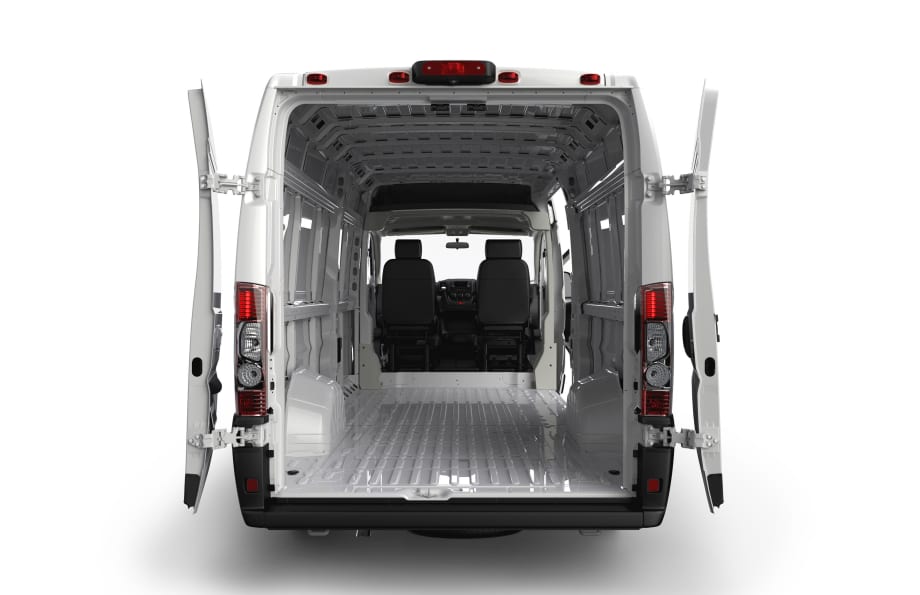
Photo courtesy of Ram Trucks.
Photo courtesy of Ram Trucks.
Ram Trucks will adjust the stated cargo volume for its ProMaster van so it complies with U.S. specifications rather than the European specifications of its Fiat counterpart.
When Ram introduced the full-size van, which is based on the Fiat Ducato, Ram converted the cargo capacity from the Ducato's European specification from 15 cubic meters to 530 cubic feet.
The ProMaster will likely provide between 450 and 475 cubic feet of cargo capacity under U.S. specifications.
In Europe, commercial vans follow the more generous European EMEA standard that allows total space including space above and between seats to be counted. In the U.S., only van cargo storage behind the seats can be counted under the Society of Automotive Engineers' J1100 standard.
"We are now measuring it out to SAE standards for the U.S. market," said Nick Cappa, a Ram spokesman. "We are going to give measurements for the ProMaster that are in line with J1100."
Cappa said Ram will release the new specifications shortly.
Since its introduction in October, the ProMaster has seen strong demand, Cappa said. The van is the only full-size front-wheel drive commercial van offered. Since its introduction, the van has seen recalls for a stuck accelerator pedal and brake hose.
More Operations
Here's When You Should Make an Exception to Fleet Policy
Fleet policies are designed to create consistency, but not every driver or situation fits neatly within standard rules.
Read More →
AI-Native or AI-Acquired: What Should Fleet Managers Look for in an AI Platform?
Six questions can help fleet managers look beyond AI marketing claims to evaluate integration, data access, and real-world operational performance.
Read More →
A buyer's guide to fleet management software in 2027
Buying fleet management software in 2027 means looking beyond features and price. As fleet operations, technology and expectations evolve, this guide explores what today’s fleet professionals should consider when choosing a system that can deliver value now and adapt to what comes next.
Read More →

What Will Shape the Next Era of Fleet Management?
EVs, AI, and autonomous vehicles are reshaping fleet management. Discover what’s ahead—and how fleet leaders can prepare for the next era.
Read More →
How Fleets Can Recruit and Train Veterans for Technician Roles
Here's how the technician shortage has affected uptime for fleets, and what to do about it.
Read More →
Avis Budget Group Deploys Neology Toll Management Technology Across Major Brands
Neology’s neoFleet platform will manage toll transactions and toll-authority operations for vehicles across Avis, Budget, Payless, Budget Truck and Zipcar.
Read More →
Fleet Personal-Use Charges Edge Higher in 2026
Nearly eight in 10 surveyed fleets allow personal use of company vehicles, while just over half of respondents report charging employees for the privilege.
Read More →
The Future of Fleet + What’s Changing Right Now | AF News Recap
Could developments overseas offer a preview of what’s coming for U.S. fleets? This week, we’re looking at the future of AI, autonomy, and electrification, plus Ford Pro’s new certified pre-owned program, smarter vehicle offboarding, and a new way for fleets to manage toll expenses.
Read More →
How to Handle Vehicle Offboarding
What do fleet managers need to do when a driver leaves?
Read More →
Fleet Manager’s Ultimate Playbook: Navigating the New Standard in OEM Connectivity
Rising operating costs, driver safety concerns, and unplanned downtime are putting unprecedented pressure on modern fleets. Discover how fleet managers use embedded OEM connectivity and real-time vehicle data to cut TCO, prevent downtime, and protect drivers without aftermarket telematics hardware.
Read More →