




Ram Questions Ford's 'Best-in-Class' F-450 Claim
Ram Truck is questioning Ford's claim that its 2015 F-450 holds the "best-in-class" towing rating for heavy-duty pickup trucks announced earlier this month.
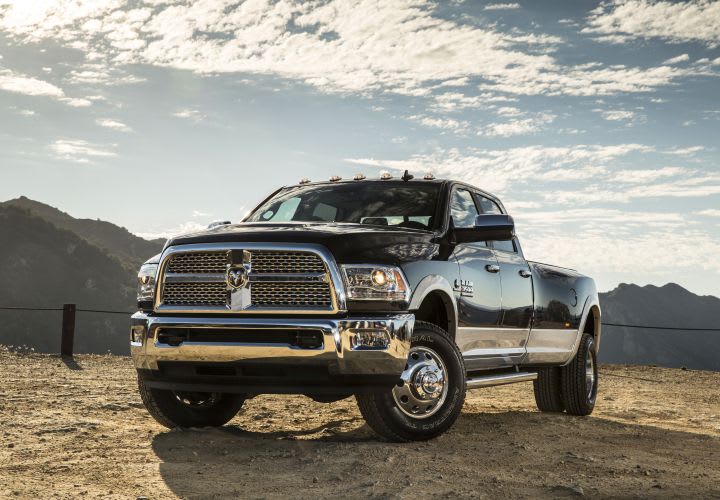
Photo of 2014 Ram 3500 courtesy of Ram Truck.
Photo of 2014 Ram 3500 courtesy of Ram Truck.
Ram Truck is questioning Ford's claim that its 2015 F-450 holds the "best-in-class" tow rating for heavy-duty pickup trucks announced earlier this month.
Ford made the claim at a media event in July after unveiling an upgraded 2015 F-450 with the capability to tow 31,200 lbs., which would give it the highest towing capacity among heavy-duty pickups. The 2015 F-450 would surpass the towing capacity of the Ram 3500, which now sits at 30,000 lbs.
Ram says the Ram 3500 competes directly with Class 3 pickups such as the Ford F-350 and GMC Sierra 3500. The Ram 3500 can be purchased in a variety of configurations topping out at 14,000 lbs. GVWR.
"Ram disagrees," said Nick Cappa, Ram's communications manager. "Our best-in-class claim of 30,000 lbs. of towing capacity for the 2014 Ram 3500 stands firm in the 350/3500 segment."
Ram claims the F-450 should be considered a Class 4 medium-duty truck because of its heavier weight rating. Ford has said the truck — offered only as a crew cab 4x4 — just fits within Class 3, which tops out at 14,000 pounds, according to the U.S. Department of Transportation's Federal Highway Administration.
The battle for towing supremacy is heating up as the Detroit 3 begin to adopt the SAE J2807 towing test criteria for new models. Ram has adopted the standard for its 2015-MY heavy-duty pickup trucks, while Ford has elected to wait to roll out the standard with fully redesigned Super Duty models. The 2015 F-150 will be Ford's first truck to meet the standard.
More Operations

How Fleets Can Recruit and Train Veterans for Technician Roles
Here's how the technician shortage has affected uptime for fleets, and what to do about it.
Read More →
Avis Budget Group Deploys Neology Toll Management Technology Across Major Brands
Neology’s neoFleet platform will manage toll transactions and toll-authority operations for vehicles across Avis, Budget, Payless, Budget Truck and Zipcar.
Read More →
Fleet Personal-Use Charges Edge Higher in 2026
Nearly eight in 10 surveyed fleets allow personal use of company vehicles, while just over half of respondents report charging employees for the privilege.
Read More →
The Future of Fleet + What’s Changing Right Now | AF News Recap
Could developments overseas offer a preview of what’s coming for U.S. fleets? This week, we’re looking at the future of AI, autonomy, and electrification, plus Ford Pro’s new certified pre-owned program, smarter vehicle offboarding, and a new way for fleets to manage toll expenses.
Read More →
How to Handle Vehicle Offboarding
What do fleet managers need to do when a driver leaves?
Read More →
Fleet Manager’s Ultimate Playbook: Navigating the New Standard in OEM Connectivity
Rising operating costs, driver safety concerns, and unplanned downtime are putting unprecedented pressure on modern fleets. Discover how fleet managers use embedded OEM connectivity and real-time vehicle data to cut TCO, prevent downtime, and protect drivers without aftermarket telematics hardware.
Read More →
U.S. Bank Adds Verra Mobility Toll Management to Voyager Fleet Platform
The integration allows U.S. Bank Voyager fleet customers to manage toll payments and violations alongside fuel, EV charging and maintenance expenses.
Read More →
ADAS Prevents Crashes. But Repairs Cost More | AF News Recap
ADAS-equipped vehicles may crash less often, but they can cost more when they do. This week, we’re breaking down what that tradeoff means for fleets, plus Subaru’s first Forester Wilderness Hybrid, Nissan’s new e-POWER Rogue, and why Calstart has become Catalyst Mobility.
Read More →
Moventum Fleet Management Names Mark Iorillo Head of Sales
Iorillo brings nearly 20 years of fleet management and sales experience to the role, including previous positions at Element Fleet Management, CEI, Donlen and Ryder.
Read More →
Fleet Has a Talent Pipeline Problem. What Comes Next? | AF News Recap
Where will fleet’s next generation of leaders come from? This week, we’re looking at the industry’s talent pipeline, what certification can add to a fleet career, how to build an award-worthy track record, and the return of Automotive Fleet’s Personal Use Survey.
Read More →