




Ram Introduces New “Long Hauler” Class 5 Concept Truck
AUBURN HILLS, MI – Chrysler’s Ram brand introduced a new concept truck, the Ram “Long Hauler,” which is based on a Class 5 Ram 5500 Chassis Cab.
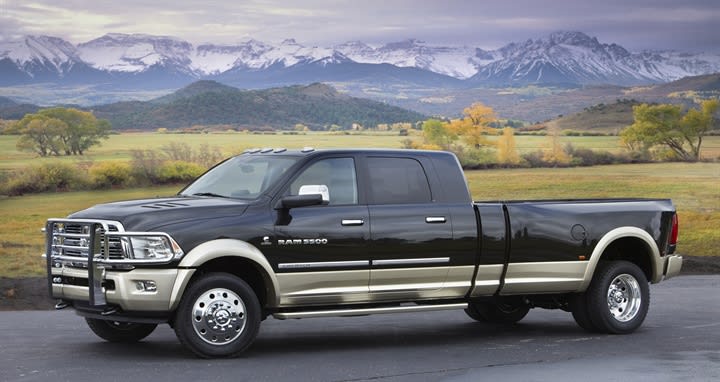
The Ram "Long Hauler" concept truck is designed for towing heavy trailers, long-distance driving, and use at work sites.
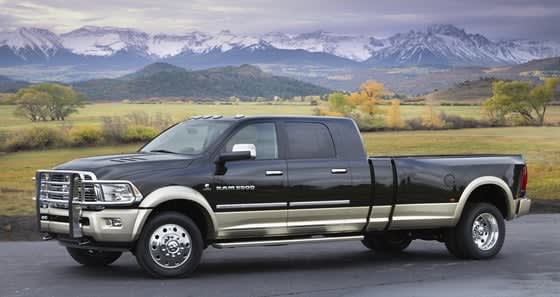
AUBURN HILLS, MI – Chrysler’s Ram brand introduced a new concept truck, the Ram “Long Hauler,” which is based on a Class 5 Ram 5500 Chassis Cab, that’s designed for towing heavy trailers, long-distance driving, and for use at a work site, for example by small-businesses.
Ram designers started with a Class 5 Ram 5500 Crew Cab and converted to a Mega Cab passenger compartment, added an 8-foot box and upped the range between refueling stops with a mid-ship fuel tank. Combined with a second frame-mounted tank and a third, optional, bed-mounted auxiliary tank, total fuel capacity is 170 gallons.
Performance
The powertrain for the concept truck includes an inline six-cylinder 6.7L High Output Cummins Turbo Diesel engine rated at 800 lb.-ft. of torque. The Ram’s diesel engine is mated to a six-speed, Aisin AS68RC automatic transmission with four-wheel-drive transfer case coupled to a 4.88 Dana 110 axle with dual rear wheels.
Exterior
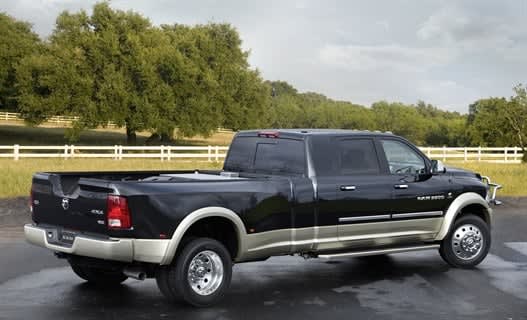
With a 197.4-inch wheelbase and 37,500 Gross Combined Weight Rating (GCWR), the concept Long-Hauler from Ram has an overall length of 24 feet, a height of 79.1 inches, and estimated curb weight is 9,300 lbs.
The Ram “Long Hauler” concept features Kelderman Air Suspension front and rear and 19.5-inch Alcoa aluminum wheels, for a comfortable ride. The suspension package also is self-leveling with kneel feature.
Up front, a bull bar extends the entire width of the vehicle. For full use of the bed, the spare tire is located under the box. To help make trailer line-up easier on the fifth wheel, a separate back-up camera provides a full view of the bed. A custom hitch-access tailgate allows easy hook-ups without the need to open or remove the entire tailgate.
Interior
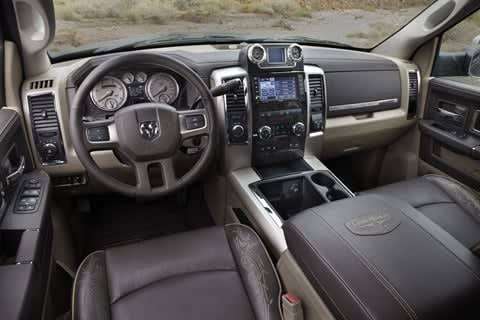
Chrysler said designers dampened interior noisewith an upgraded NVH package. The Long-Hauler includes 2+2 leather seating. Rear passenger seats have power-adjustable footrests and a rear center console that includes a refrigerator, cup holders, and tray tables.
In-cabin power includes 115V and 12V outlets front and rear. With the interior Wi-Fi enabled, passengers can work on laptop computers connected to the Internet during long drives.
Additional cabin features also include a laptop storage area and a safe for valuables. Interior items designed to allow driver monitoring of vehicle performance will include a tire pressure monitoring system, rear axle temperature gauge, and exhaust gas temperature and boost gauges. Convenience features also include an inductive charger and DVD player with overhead screen for rear seat passengers.
The rear seats and console also fold flat for additional storage or as a berth for resting.
Chrysler said although the Ram Long-Hauler is currently a concept, the company will show the vehicle across the country during the next eight months to help gauge public opinion on the appeal of a vehicle that provides an upgrade from a 1-ton truck without moving up to a full Class 6 truck.
The company said the tentative show schedule for the Ram Long-Hauler is as follows:
Kentucky Derby
Louisville, Ky.
5/05 – 5/07
Turbo Diesel Register Rally
Columbus, Ind.
6/10 – 6/11
Rodeo Circuit
July/August
Farm Progress Show
Decatur, Ill.
8/31 – 9/02
Husker Harvest
Grand Island, Neb.
9/13 – 9/15
NTEA New Product Conference
Dearborn, Mich.
9/19 – 9/19
Sunbelt Expo
Moultrie, Ga.
10/18 – 10/20
National R.V. Show
Louisville, Ky.
11/29 -- 12/1
More Operations

Company Vehicle or Reimbursement? How Fleets Are Rethinking Assignments
As fleet costs and insurance pressures rise, fleet managers are taking a closer look at which employees need company-provided vehicles and when a reimbursement program may make more sense.
Read More →
Fleetio, ASE Launch Scholarship Program for Automotive Technicians
The second annual program will award 15 scholarships totaling $35,000 to support ASE certification, testing fees, and equipment costs.
Read More →
Reading the Global Signals: What AI and the Energy Transition Mean for Fleets Now
In this opening keynote of the 2026 Fleet Forward Conference, John Rossant, founder of CoMotion, How can fleet managers navigate a never-ending, changing industry landscape?
Read More →
90% Use Telematics. Are Fleets Getting Safer? | AF News Recap
This week, we're breaking down which industries have the highest rates, how Jamie McKay manages 2,400 vehicles, what's happening with the 2027 fleet awards, and why software-defined vehicles could introduce new costs.
Read More →
What's Best Handled by an FMC, and What's Better Done Directly?
Fleet managers continue to rely on FMCs for essential services but are taking a closer look at where working directly with suppliers can improve efficiency and responsiveness.
Read More →
Fleet Meets: Erin Gilchrist
Meet Erin Gilchrist, the inaugural Mike Antich Spirit of Fleet Award winner, as she shares insights on leadership, mentorship, the power of industry connections, and why people remain at the heart of fleet's future.
Read More →
How 2026 Fleet Visionary Jamie McKay Manages 2,400 Vehicles Across 37 States
How do you keep 2,400 vehicles running across 37 states? Fleet Visionary Award winner Jamie McKay shares how collaboration, flexibility, and a few simple strategies help her tackle fleet management challenges at Aptive Pest Control.
Read More →
Managing Fleet Costs in an Era of Permanent Volatility
Fleet operating costs have risen more than 20% since 2020, raising a key question: When does extending a vehicle's service life stop making financial sense?
Read More →
The Next Evolution of Fleet Management: Autonomous Operations
This opening keynote session at the Fleet Forward Conference highlights the future of autonomous driving for fleets.
Read More →
How to Reduce the Total Cost of Risk From Catalytic Converter Theft
A stolen catalytic converter can cost fleets far more in downtime and lost productivity than in repairs. A total-cost-of-risk approach can help fleet managers quantify their exposure and prioritize theft prevention.
Read More →