




Ram Expands Power Wagon Model Range
SAN ANTONIO, TEXAS – Chrysler’s Ram Truck division said it's adding two models to its Ram Power Wagon lineup, the ST and Laramie, both of which are designed for off-road use.
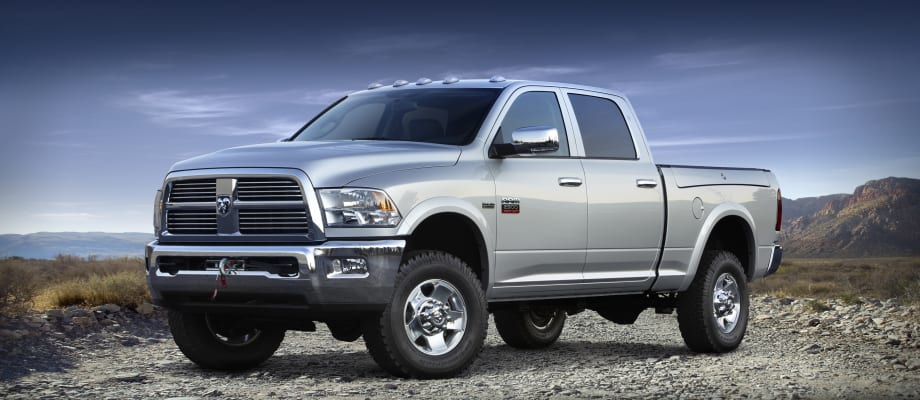
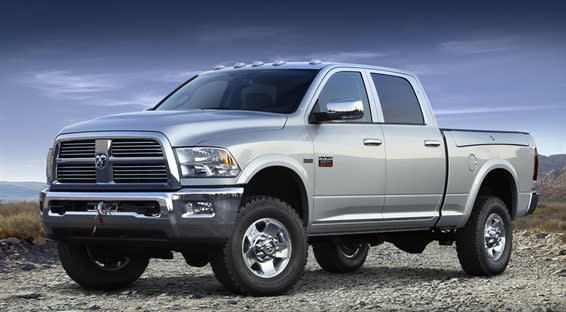
SAN ANTONIO, TEXAS – Chrysler’s Ram Truck division said it will add two models to its Ram Power Wagon lineup, the ST and Laramie.
The Ram Power Wagon ST package is designed for customers who have off-road use needs for the vehicle, for example mining companies, oil exploration, fire and emergency services, and daily off-road duty.
The Ram Power Wagon ST features single-tone paint, a black grille, black front and rear bumpers, black fender flares, and black mirrors with optional clearance lamps. The interior is unchanged from the ST trim level with the exception of additional controls for Power Wagon’s unique features.
The Ram Power Wagon Laramie edition features a number of additional features, though the vehicle is off-road focused as well. Features include leather seats, premium audio, dual-zone A/C, woodgrain dash, and door panels. The Power Wagon package also includes a floor-mounted, manual transfer case shifter. On the outside, the exterior features body-colored fender flares, chrome mirrors, bumpers and grille, and unique badging.
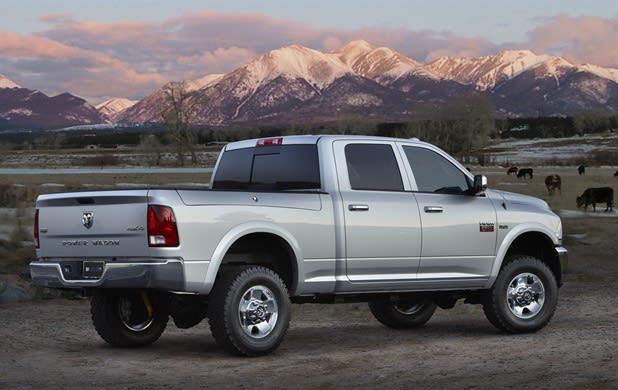
The Ram Power Wagon is based on the Ram 2500 Heavy Duty 4x4 Crew Cab. The 5.7L HEMI V-8 provides 383 hp at 5,400 rpm and 400 lb.-ft. of torque at 4,200 rpm. When driving in four-wheel drive in the "Low" setting, the throttle response softens and the idle speed increases by 100 rpm, from 650 to 750 rpm, which gives a driver more control when ascending and descending off-road obstacles at slow speeds.
The Power Wagon has a 14.5-inch ground clearance, compared to 12 inches on the Ram 2500 Heavy Duty. The vehicle's approach angle is boosted to 35 degrees, the departure angle is increased to 26.5 degrees and the breakover angle is enhanced to 25.5 degrees to better navigate off-road trails.
Underneath the 2012 Ram Power Wagon are underbody protection components that include a steering damper skid plate and fore-aft bars that bring together the transfer case and fuel tank skid plates.
The 2012 Ram Power Wagon's electronic disconnecting stabilizer bar, which the automaker calls a "Smart Bar," delivers additional wheel travel for driving on off-road trails. The driver-actuated stabilizer bar disengagement is possible in both four-wheel drive "High" or four-wheel drive "Low" at speeds less than 18 miles per hour. As a safety feature, the Smart Bar automatically re-engages at speeds greater than 18 miles per hour.
Chrysler said the front and rear electronic axle lockers provide low-speed maneuvering when climbing boulders and ascending steep inclines by evenly splitting torque between both wheels, which forces them to turn in unison for extra traction.
The Ram Power Wagon offers a 460, or 23-inch vertical height, Ramp Travel Index (RTI), which is a measurement of a vehicle's suspension articulation, with the stabilizer bar engaged. With the stabilizer bar disengaged, the RTI is 655, a 32-inch vertical height.
More Operations

Here's When You Should Make an Exception to Fleet Policy
Fleet policies are designed to create consistency, but not every driver or situation fits neatly within standard rules.
Read More →
AI-Native or AI-Acquired: What Should Fleet Managers Look for in an AI Platform?
Six questions can help fleet managers look beyond AI marketing claims to evaluate integration, data access, and real-world operational performance.
Read More →
A buyer's guide to fleet management software in 2027
Buying fleet management software in 2027 means looking beyond features and price. As fleet operations, technology and expectations evolve, this guide explores what today’s fleet professionals should consider when choosing a system that can deliver value now and adapt to what comes next.
Read More →

What Will Shape the Next Era of Fleet Management?
EVs, AI, and autonomous vehicles are reshaping fleet management. Discover what’s ahead—and how fleet leaders can prepare for the next era.
Read More →
How Fleets Can Recruit and Train Veterans for Technician Roles
Here's how the technician shortage has affected uptime for fleets, and what to do about it.
Read More →
Avis Budget Group Deploys Neology Toll Management Technology Across Major Brands
Neology’s neoFleet platform will manage toll transactions and toll-authority operations for vehicles across Avis, Budget, Payless, Budget Truck and Zipcar.
Read More →
Fleet Personal-Use Charges Edge Higher in 2026
Nearly eight in 10 surveyed fleets allow personal use of company vehicles, while just over half of respondents report charging employees for the privilege.
Read More →
The Future of Fleet + What’s Changing Right Now | AF News Recap
Could developments overseas offer a preview of what’s coming for U.S. fleets? This week, we’re looking at the future of AI, autonomy, and electrification, plus Ford Pro’s new certified pre-owned program, smarter vehicle offboarding, and a new way for fleets to manage toll expenses.
Read More →
How to Handle Vehicle Offboarding
What do fleet managers need to do when a driver leaves?
Read More →
Fleet Manager’s Ultimate Playbook: Navigating the New Standard in OEM Connectivity
Rising operating costs, driver safety concerns, and unplanned downtime are putting unprecedented pressure on modern fleets. Discover how fleet managers use embedded OEM connectivity and real-time vehicle data to cut TCO, prevent downtime, and protect drivers without aftermarket telematics hardware.
Read More →