




Ram 1500 Named Motor Trend 2014 Truck of the Year
The judges called out the performance of the Ram 1500’s all-new EcoDiesel V-6 engine as well as its 8-speed TorqueFlite transmission, a combination that boasts a towing capacity of up to 9,200 pounds.
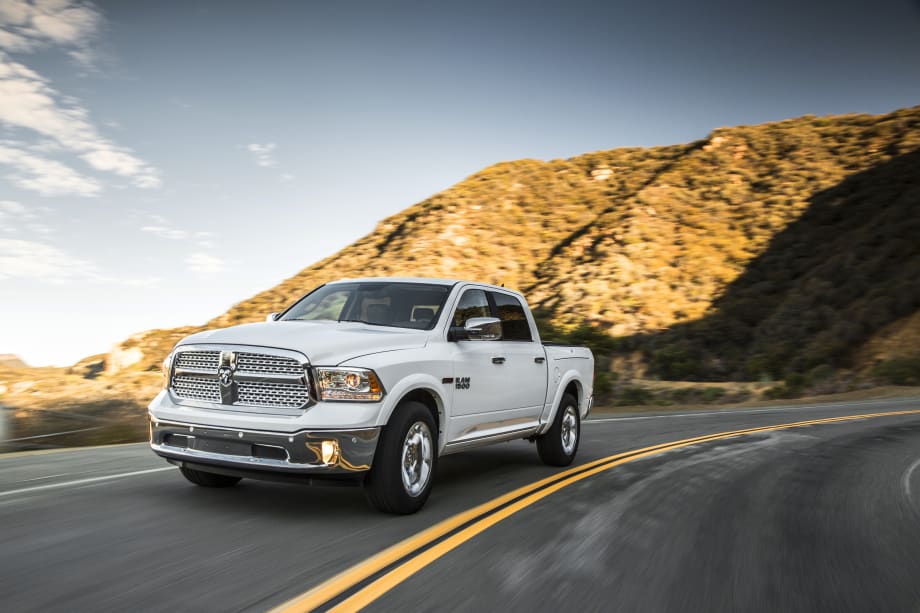
Motor Trend has selected the Ram 1500 as its 2014 Truck of the Year.
Motor Trend has selected the Ram 1500 as its 2014 Truck of the Year.
The announcement was made at the Chrysler Group LLC Warren Truck Assembly Plant in Michigan, the birthplace of Ram Trucks. A full report on Motor Trend’s comprehensive Truck of the Year testing will be featured on MotorTrend.com and in the February 2014 issue of Motor Trend.
Nine Truck of the Year contenders were put through an extensive battery of testing designed to evaluate virtually every aspect of each vehicle. In addition to the 2014 Ram 1500, the judges examined other all-new or significantly updated trucks the industry produced this year: the Chevrolet Silverado, GMC Sierra, Ram Heavy Duty, and Toyota Tundra pickups; and the Ford Transit Connect, Mercedes-Benz Sprinter, Nissan NV200, and Ram ProMaster vans.
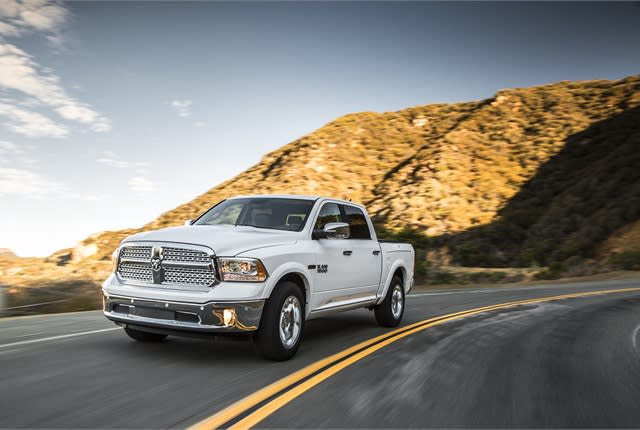
Motor Trend has selected the Ram 1500 as its 2014 Truck of the Year.
To determine which truck deserved top honors, the Motor Trend judges took the nine contenders to the Continental Tire Automotive Proving Grounds in Uvalde, Texas. There, the judges tested each truck’s performance with the following exercises:
Standard testing (without load): 0-60 mph and 1/4-mile acceleration, 60-0 mph braking, and maximum lateral grip.
Limit handling (without load): closed-course cornering, braking, and acceleration.
Tow/payload testing: 0-60 acceleration repeated with trailers attached (pickups) or payload secured (vans), loaded to 75 percent of each truck’s maximum rating (as equipped).
Road looping: Highway and real-world replication.
At Continental’s 5,000-acre proving grounds, the team utilized the facility’s 8.5-mile high-speed oval, 15-acre dynamics pad, 1.1-mile dry-handling road course, and multi-surfaced ride road to evaluate each truck’s capabilities and expose strengths and weaknesses. Following the team’s intensive, weeklong evaluation in Uvalde, the trucks were shipped to Motor Trend headquarters in El Segundo, California, to undergo proprietary “Intellichoice Real MPG” fuel-economy testing. Using advanced technology including a weather station, GPS data-logger, and flow-rate and gas analyzers, Real MPG measures exhaust samples every second during an 88-mile drive to record accurate real-world fuel economy.
Once testing was completed, the judges convened to determine which truck would be crowned Truck of the Year. The winner is not chosen from a direct comparison against the other contenders, but rather as a result of how each contender measured up against the award’s six criteria: Design Advancement, Engineering Excellence, Efficiency, Safety, Value, and Performance of Intended Function.
With the votes cast, the Ram 1500 clearly emerged as Motor Trend’s2014 Truck of the Year. The judges were particularly impressed with the performance of the Ram 1500’s all-new EcoDiesel V-6 engine as well as its 8-speed TorqueFlite transmission, a combination that boasts a towing capacity of up to 9,200 pounds. Further, Motor Trend’s Real MPG testing supported what the team learned in Uvalde: None of the gas-powered half-ton trucks in this year’s competition – be they V-6 or V-8, 4x2 or 4x4 – could match the EcoDiesel’s mileage. After delivering observed fuel economy of 15 mpg under extreme testing at Continental’s proving grounds, the EcoDiesel continued to impress during the Real MPG test loop, returning the following frugal stats: 19/26/21 mpg city/highway/combined for the Laramie Longhorn Crew Cab 4x4 with a 3.92 rear axle and an even more notable 18/28/22 for the Lone Star Crew Cab 4x2 with a 3.55 rear axle.
The Ram’s optional air suspension system also scored high marks in Engineering Excellence, as it delivered a compliant ride and commendable handling no matter the terrain. In terms of design, the Ram 1500 impressed with its style, packaging, and interior ergonomics; notably, the Laramie Longhorn’s luxury aesthetics and real wood trim. The breadth of the lineup was another compelling factor. Whether outfitted as a basic workhorse or optioned up to a near-luxury hauler, the Ram 1500 provides all of the capability needed in a truck.
More Operations

Avis Budget Group Deploys Neology Toll Management Technology Across Major Brands
Neology’s neoFleet platform will manage toll transactions and toll-authority operations for vehicles across Avis, Budget, Payless, Budget Truck and Zipcar.
Read More →
Fleet Personal-Use Charges Edge Higher in 2026
Nearly eight in 10 surveyed fleets allow personal use of company vehicles, while just over half of respondents report charging employees for the privilege.
Read More →
The Future of Fleet + What’s Changing Right Now | AF News Recap
Could developments overseas offer a preview of what’s coming for U.S. fleets? This week, we’re looking at the future of AI, autonomy, and electrification, plus Ford Pro’s new certified pre-owned program, smarter vehicle offboarding, and a new way for fleets to manage toll expenses.
Read More →
How to Handle Vehicle Offboarding
What do fleet managers need to do when a driver leaves?
Read More →
Fleet Manager’s Ultimate Playbook: Navigating the New Standard in OEM Connectivity
Rising operating costs, driver safety concerns, and unplanned downtime are putting unprecedented pressure on modern fleets. Discover how fleet managers use embedded OEM connectivity and real-time vehicle data to cut TCO, prevent downtime, and protect drivers without aftermarket telematics hardware.
Read More →
U.S. Bank Adds Verra Mobility Toll Management to Voyager Fleet Platform
The integration allows U.S. Bank Voyager fleet customers to manage toll payments and violations alongside fuel, EV charging and maintenance expenses.
Read More →
ADAS Prevents Crashes. But Repairs Cost More | AF News Recap
ADAS-equipped vehicles may crash less often, but they can cost more when they do. This week, we’re breaking down what that tradeoff means for fleets, plus Subaru’s first Forester Wilderness Hybrid, Nissan’s new e-POWER Rogue, and why Calstart has become Catalyst Mobility.
Read More →
Moventum Fleet Management Names Mark Iorillo Head of Sales
Iorillo brings nearly 20 years of fleet management and sales experience to the role, including previous positions at Element Fleet Management, CEI, Donlen and Ryder.
Read More →
Fleet Has a Talent Pipeline Problem. What Comes Next? | AF News Recap
Where will fleet’s next generation of leaders come from? This week, we’re looking at the industry’s talent pipeline, what certification can add to a fleet career, how to build an award-worthy track record, and the return of Automotive Fleet’s Personal Use Survey.
Read More →
Smith System Launches Driver Risk Management Program
Fleets have more driver data than ever, but identifying risky behavior doesn't necessarily correct it. Smith System's new Driver Risk Management program combines monitoring, training, and follow-up coaching to help fleets connect risk signals with driver intervention.
Read More →