




Propane Vehicles Showcased at BusCon
CHICAGO - Roush Performance and CleanFuel USA at BusCon Sept. 28-29 showcased propane autogas-fueled shuttle buses that cut carbon and particulate emissions and lower fuel costs while delivering the horsepower and torque of a diesel-powered bus.
CHICAGO - Roush Performance and CleanFuel USA at BusCon bus conference and expo in Chicago on September 28-29 showcased propane autogas-fueled shuttle buses that cut carbon and particulate emissions and lower fuel costs while delivering the horsepower and torque of a diesel-powered bus, according to a release from the Propane Education & Research Council (PERC).
BusCon offered more than 2,000 public transit managers, bus dealers and operators, and other public and private-sector transportation buyers the chance to get inside a propane autogas-fueled 25-passenger Micro Bird G-5 shuttle bus to examine a Roush six-liter liquid propane injection engine, and to inspect a propane autogas refueling dispenser.
The Micro Bird G5 Roush liquid propane-powered E-450 uses the Ford 6.8L, V-10 engine, which runs on the ROUSH liquid propane injection fuel system. The fuel capacity is 43 usable gallons which, depending on driving conditions, has a range of about 320 miles, according to Roush.
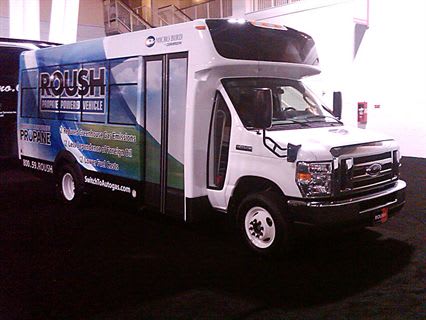
Propane autogas retailers from AmeriGas, Ferrellgas, and Heritage Propane were on hand to answer questions inside the Propane Pavilion.
PERC and CleanFuel USA held a two-hour training seminar on propane autogas fuel quality, infrastructure, vehicle availability, safety, and environmental benefits. A representative from PERC participated in the "Green Solutions" conference panel.
Collins Bus, Blue Bird, and Micro Bird offer propane autogas-fueled bus options. Freightliner/Thomas, with support from PERC, is developing a propane-fueled engine and truck chassis for use in school buses, with delivery expected in 2013.
On average, propane autogas vehicles reduce greenhouse gas emissions by 17 percent and create 20 percent less nitrogen oxide, up to 60 percent less carbon monoxide, and fewer particulate emissions, compared with gasoline. They also reduce operating costs. Federal and state organizations offer various rebates and incentives for purchasing propane autogas buses or converting buses to propane, and a 50-cent-per-gallon alternative fuel tax credit is available for fleet vehicles.
Propane is already the most widely used alternative fuel on roads today in the United States, powering 270,000 vehicles. Worldwide, more than 13 million vehicles run on propane, according to PERC.
More Green Fleet

Inspiration Mobility Acquires Key Electrada Assets
Inspiration Mobility Group has acquired select assets of Electrada, adding the fleet electrification provider's team, technology, and charging infrastructure development capabilities to its energy management business.
Read More →
Turning Connected Vehicle Data Into Decisions That Matter
Fleet leaders have more data than ever, but turning that data into clear, actionable decisions remains a challenge. This white paper shows how leading organizations are using connected vehicle data to improve safety, reduce costs, and optimize fleet performance. Learn how to turn insight into action across your fleet.
Read More →
Are You Tracking Your Fleet's True Total Cost of Ownership?
Bobit Business Media surveyed 190 fleet professionals and found that while most fleets are tracking costs, fragmented systems and data gaps are keeping true TCO visibility out of reach. With rising pressure to control spend in an increasingly volatile environment, the gap between what fleets think they know and what the data actually shows is wider than you might expect. See how your peers are managing costs today and where the industry still has room to improve.
Read More →
Hybrids: Electrification Without the Challenges
For fleet managers, fuel is one of the biggest line items in the budget — and it's one hybrids can shrink without changing how your people work. Download the eBook to see the numbers, understand the technology, and get a step-by-step guide to making the switch.
Read More →
Startup ZMD Motors Developing Electric Conversion for Ram 5500 Work Trucks
Detroit-based company says it has begun early development of a system to convert internal combustion Ram 5500 chassis-cab trucks to electric power.
Read More →
U.S. EV Adoption Is Climbing, but Commercial and Passenger Markets Diverge
New industry group data revealed that light-duty electric vehicle sales are hitting record market share and volumes, while commercial EV volume dipped. What’s driving the fluctuations?
Read More →
How To Upfit Electric Work Trucks and Vans
The biggest challenge lies in balancing additional equipment and accessories with EV battery capacity and range.
Read More →
How Fleets Can Adjust Approaches To EV Adoption
With the expiration of federal incentives, EV success now hinges less on government policy and more on discounts, battery tech progress, increased range, and broader infrastructure.
Read More →
Despite World Troubles, Forward Thinking Guides Fleets
Fleet operators shared their challenges during an annual conference that embraced the latest advances across all aspects of running private- and public-sector vehicles.
Read More →
GM Energy Details Partnerships and Targets for Public Charging Build-Out
EVgo, Pilot, ChargePoint and IONNA named; goal is 35k GM-invested DC stalls by 2030, with customer-experience upgrades at sites.
Read More →