




Propane Autogas Ford F-150 Hits Northwest in Coast-to-Coast Tour
Alliance Autogas began its coast-to-coast tour in Kansas, with the propane-converted pickup making it up to Washington in just a few short days before it continues on to California. The ride is to support the message to fleets that "it’s really not that hard to convert."

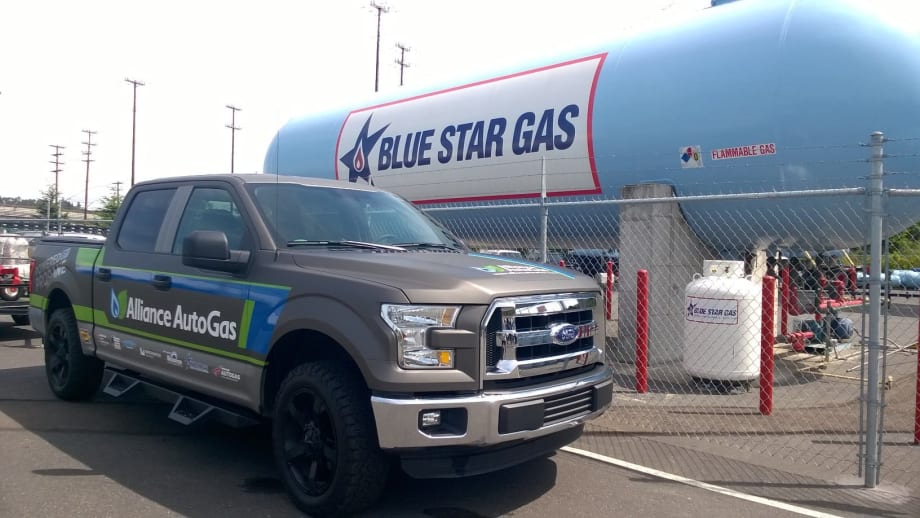
Propane vehicles are displacing about 1 million gallons of gasoline and 1,600 cubic-feet of greenhouse gas emissions annually in the Seattle area. (PHOTO: Joanne Tucker)
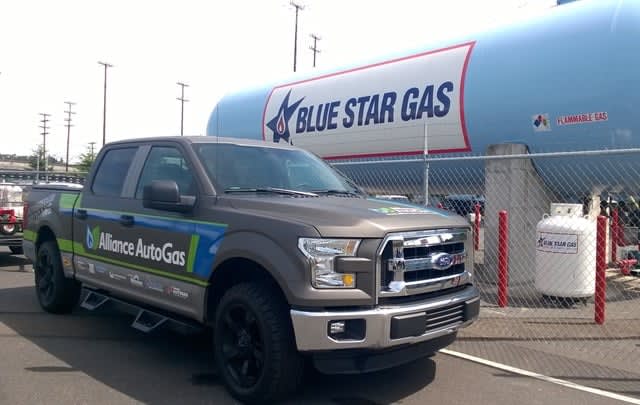
Propane vehicles are displacing about 1 million gallons of gasoline and 1,600 cubic-feet of greenhouse gas emissions annually in the Seattle area. (PHOTO: Joanne Tucker)
The same Ford F-150 that broke records at this year’s Work Truck Show as the fasted propane-autogas-converted vehicle is now making its way throughout the country. The propane-autogas-powered pickup has so far traveled from Kansas, made stops in Colorado and Utah, and now sits briefly in Seattle before heading on — all to demonstrate and serve as a testament to how quickly and easily a vehicle can be converted to propane, and run on it.
The tour has now reached the West Coast (see photo) and is on it's way to the East Coast (Jacksonville, Fla.).
“It’s about awareness,” said Darren Engle, director of government relations at Blue Star Gas, a sponsor of the event. He noted that Alliance Autogas and the propane industry have made some significant achievements.
According to Engle, who works in Blue Star Gas’ office just outside downtown Seattle, propane vehicles are displacing about 1 million gallons of gasoline and 1,600 cubic-feet of greenhouse gas emissions annually in the Seattle area. “We’re affecting the health of our children — no one can argue with that,” he added.
Throughout Washington, Engle says that fleet propane autogas customers have grown from just a few to now hundreds, ranging from Seattle Children’s, the first propane autogas customer there, to SuperShuttle and DHL. “It’s really not that hard to convert, and that’s what we want to show to fleets,” he said. “There’s a great ROI.”
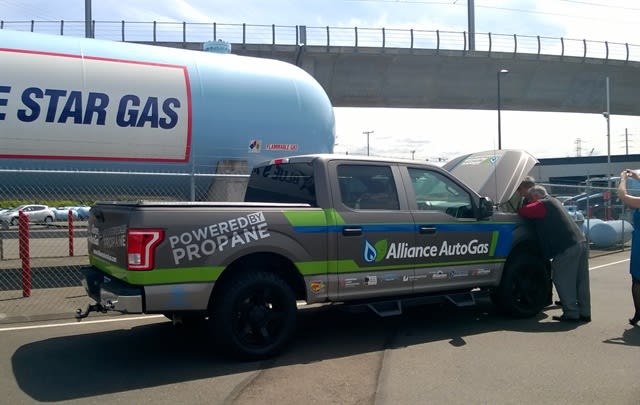
The propane-autogas-powered pickup has so far traveled from Kansas, made stops in Colorado and Utah, and now sits briefly in Seattle. (PHOTO: Joanne Tucker)
Western Washington Clean Cities (WWCC) was also at the event in support of alternative fuels. WWCC Coordinator Scott DeWees explained how if all the gas consumed annually in the U.S. were lined up in supertankers, it would line the coast from Seattle to Redding, Calif. — about a 10-hour drive. “We’re beginning to hit a critical mass on alternative fuels, so we need to celebrate the ease in which fleets can convert to propane autogas,” he said.
For more information about the tour, please visit www.allianceautogas.com/resources/coast-to-coast-clean-air-ride/.
More Green Fleet
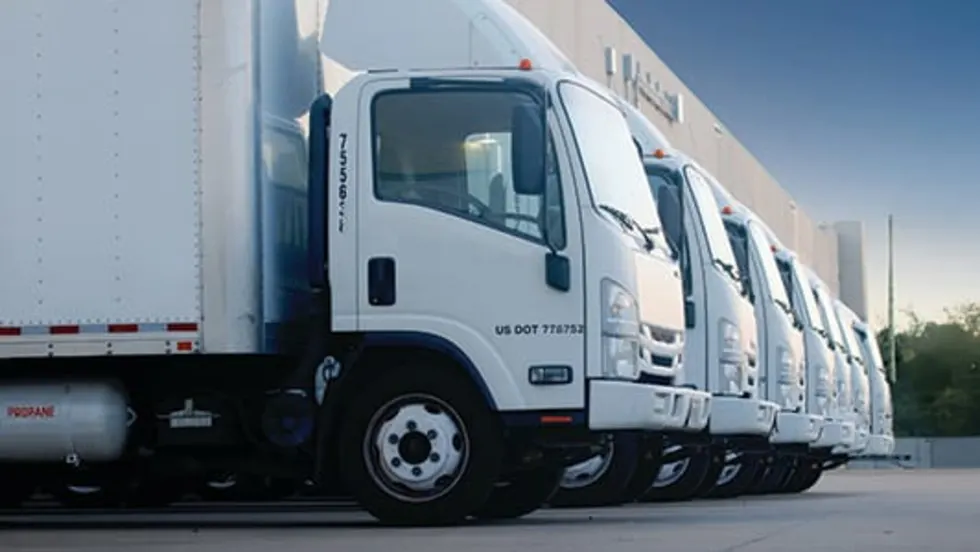
New Propane Autogas Program Offers Fleet Compensation
Qualified commercial fleets can receive $7,500 per eligible propane autogas vehicle and up to $10,000 for new refueling site prep. Learn how the program works and see whether your fleet qualifies.
Read More →
EV Charging Use Is Outpacing Infrastructure Growth
ChargePoint’s 2026 Charging Forward Report points to rising charger use, higher-powered charging, commercial vehicle electrification, and energy-management technology. Here’s what fleets should know.
Read More →
Merchants Fleet Reports 290M EV Miles as Fleets Navigate Changing Electrification Market
From millions in operating savings to hundreds of millions of EV miles, Merchants Fleet’s latest report reveals what’s working and what’s changing in fleet electrification.
Read More →
The EV Breakdown Nobody's Talking About: Why Most Electric Vehicle Roadside Calls Aren't Mechanical Failures
Here's why EV breakdowns are widely misunderstood.
Read More →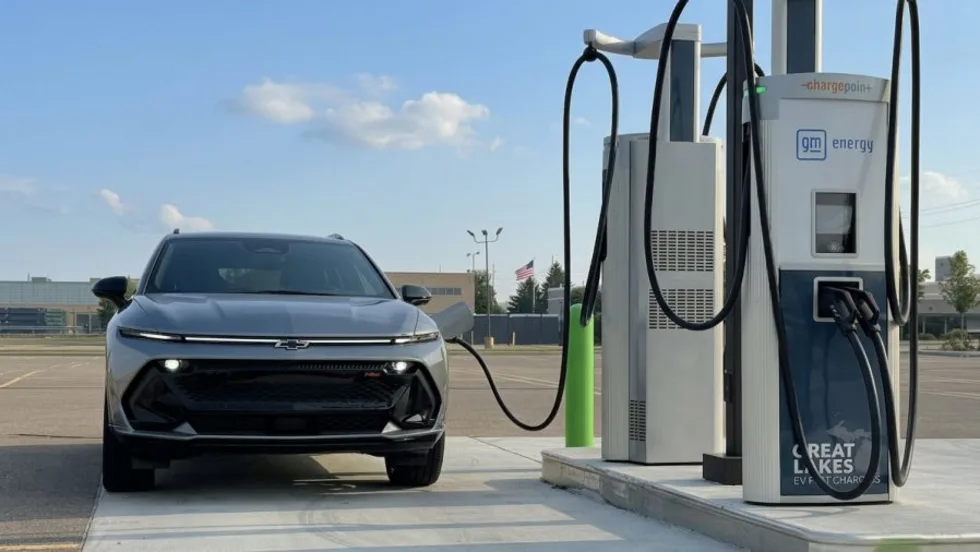
ChargePoint Now Available in Energy Pass
ChargePoint and additional planned charging network integrations were added to GM's Energy Pass.
Read More →

First Look: Slate Auto's Electric Fleet Pickup
Could an affordable, modular EV pickup make electrification more practical for fleets?
Read More →
Slate Debuts Colorful, Unique EV Models
A recent media and client event, studded with electric vehicles dressed up on platforms, planted a new position for the manufacturer in the wider EV market. Fleets will find cost-saving advantages.
Read More →
Slate Electric SUV, Pickup Switchable Model Aims For Light-Duty Fleets
Everything about this EV is counterintuitive and understated, making it stand out from the crowd.
Read More →
Inspiration Mobility Acquires Key Electrada Assets
Inspiration Mobility Group has acquired select assets of Electrada, adding the fleet electrification provider's team, technology, and charging infrastructure development capabilities to its energy management business.
Read More →