




Pricing for Chevrolet & GMC Bi-Fuel Pickups Announced
Selling for $11,000 above the suggested base-vehicle price, Chevrolet and GMC's extended cab heavy-duty pickup trucks with a bi-fuel option will be available for order starting April 19.

The 2013 bi-fuel Chevrolet Silverado HD includes a compressed natural gas (CNG) capable engine that seamlessly transitions between CNG and gas fuel systems. The bi-fuel Silverado HD will be covered
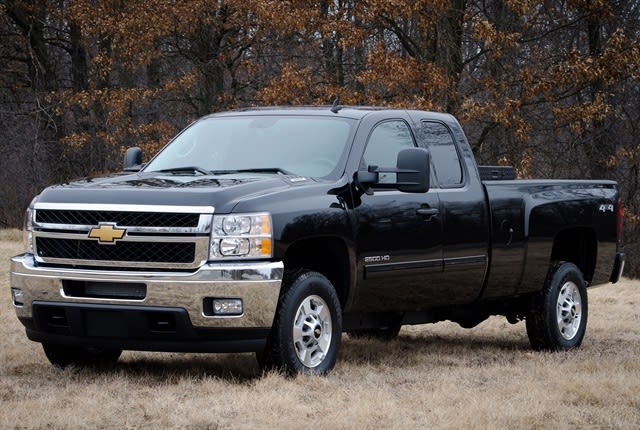
The 2013 bi-fuel Chevrolet Silverado HD includes a compressed natural gas (CNG) capable engine that seamlessly transitions between CNG and gas fuel systems. The bi-fuel Silverado HD will be covered
Chevrolet and GMC extended cab heavy-duty pickup trucks with a bi-fuel option will sell for $11,000 above the suggested base-vehicle price. Fleet and retail customers can place orders for the 2013 Chevrolet Silverado HD and GMC Sierra 2500 HD beginning April 19, according to General Motors.
GM first announced plans to sell a commercial bi-fuel pickup in October 2011. The automaker announced details of the new alternative-fuel models last month.
The pickups, which run on compressed natural gas (CNG) and gasoline, have a Vortec 6.0L V8 engine that seamlessly transitions between the two fuel systems for a combined CNG and gasoline range of more than 650 miles. A single light-weight Type 3 tank in the bed maximizes available payload and bed space for more usable space.
“The announcement of the bi-fuel Silverado and Sierra has been well-received among customers, which sends a clear message that businesses are looking for alternative-fuel options to meet their needs,” said Ed Peper, general manager, GM Fleet and Commercial Operations.
The pickups will be available in standard and long-box, two-or-four-wheel drive in the extended cab models, offering customization for specific needs. Click here to watch a video of Peper discussing the new bi-fuel pickups.
According to Joyce Mattman, director of GM Commercial Product and Specialty Vehicles, the “low cost of ownership makes these vehicles a realistic solution,” noting that the low retail price of CNG could save customers $5,000-$10,000 over a three-year period, depending on their driving habits.
The bi-fuel trucks will be covered by GM’s three-year, 36,000-mile new vehicle limited warranty and five-year, 100,000-mile limited powertrain warranty and vehicle emissions warranty, meeting all Environmental Protection Agency (EPA) and California Air Resources Board (CARB) emission certification requirements.
The entire manufacturer-backed gaseous fuel system in the vehicles meets GM’s strict quality, durability, safety testing and is covered under the extensive warranty. The trucks are built in Fort Wayne, Ind., and then sent to the Tier One supplier for installation of the CNG bi-fuel delivery and storage system.
Fleet-related questions can be answered by joining the GM Fleet and Commercial Customer Service LinkedIn group.
In a recent interview with Automotive Fleet, Peper said GM is focusing on growing its commercial and government sales, in particular boosting its presence in the car segment. “We’re very strong on the truck side. But, I think we’ve got to do a better job on the car side,” he told AF.
By Grace Suizo
More Operations

Fleet Has a Talent Pipeline Problem. What Comes Next? | AF News Recap
Where will fleet’s next generation of leaders come from? This week, we’re looking at the industry’s talent pipeline, what certification can add to a fleet career, how to build an award-worthy track record, and the return of Automotive Fleet’s Personal Use Survey.
Read More →
Smith System Launches Driver Risk Management Program
Fleets have more driver data than ever, but identifying risky behavior doesn't necessarily correct it. Smith System's new Driver Risk Management program combines monitoring, training, and follow-up coaching to help fleets connect risk signals with driver intervention.
Read More →
Automotive Fleet Opens 2026 Personal Use Survey for Commercial Fleet Managers
Less than two weeks left! Commercial and corporate fleet managers are invited to share how their organizations handle company vehicle personal-use policies, charges, and driver eligibility.
Read More →
From AI Prompts to AI-Generated Safety Songs | AF News Recap
Can better prompts make AI more useful for fleet managers? This week, we’re breaking down smarter fleet analysis, an AI-assisted experiment that turned safety training into music, and what happened to fuel prices in August.
Read More →
How to Write Better AI Prompts for Fleet Analysis
Include these six elements in your fleet prompts to generate more relevant analysis and accurate answers.
Read More →
Fleet Meets: Eric Kilgore
This edition of the Fleet Meets series features one of the industry's best leaders driving multi-market and national operations.
Read More →
Why Reactive Fleet Management Is Becoming Too Expensive to Sustain
Research highlights a growing need for proactive management strategies to address rising costs in fleet operations effectively.
Read More →
What Your Fleet KPIs Aren’t Telling You
Tracking fleet metrics is only useful when the data leads to better decisions. This guide helps fleet leaders assess cost, utilization, and downtime more accurately, identify performance gaps, and prioritize the actions that can improve operational results.
Read More →
Hidden in Plain Sight: Fleet Compliance Risks
Fleet compliance isn't just about having policies — it's about consistently enforcing them. This practical guide reveals six hidden compliance risks common in public sector and shared fleet operations and outlines proven strategies to improve visibility, accountability, and audit readiness
Read More →
Turning Fleet Payment Data into Executive Insights
Does data alone drive results in operations?
Read More →