




PG&E Bolsters Employee Electric Vehicle Adoption
Pacific Gas and Electric Company (PG&E) continued its industry-leading efforts to encourage employee adoption of electric vehicles (EV) with the opening of the largest, single-building EV charging installation in the State of California.
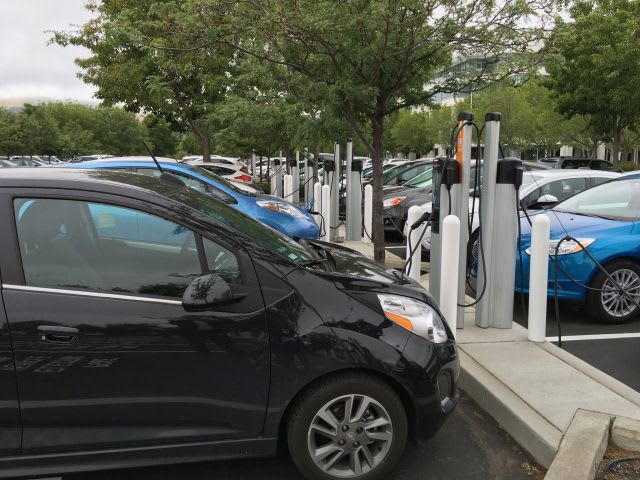
As part of its employee personal vehicle charging program, the company opened 90 additional EV charging stations at its Bishop Ranch campus in San Ramon. (PHOTO: PG&E)
Pacific Gas and Electric Company (PG&E) continued its industry-leading efforts to encourage employee adoption of electric vehicles (EV) with the opening of the largest, single-building EV charging installation in the State of California.
As part of its employee personal vehicle charging program, the company opened 90 additional EV charging stations at its Bishop Ranch campus in San Ramon. PG&E’s employee charging network now includes 400 Level 2 chargers for employee use with plans to add an additional 200 more chargers during 2016.
Demand for employee EV charging is high across the company’s service area, in large part due to the PG&E employee Electric Vehicle Incentive Program (eVIP). Through eVIP, employees receive a $2,000 cash incentive from the company towards the purchase of any EV or plug-in electric hybrid vehicle (PHEV) manufactured by Ford Motor Company or General Motors. Over 1,000 employees have participated in the program since its inception in December 2014.
“PG&E employees are leading the way on electric vehicle adoption,” said Dave Meisel, senior director of transportation and aviation services for PG&E. “The combination of cash incentives and our aggressive expansion of employee EV charging stations is making electric vehicle ownership viable for our employees. They now enjoy the same benefits of EV ownership that we do in our fleet, including lower total cost of ownership due to reduced maintenance and fueling costs and the environmental benefits due to reduced emissions.”
Both PG&E customers and employees have the added benefit of the company’s electric vehicle rate plans that offer off-peak charging at $1 per gallon equivalent. Customers can enroll in a single meter “whole house” time of use (TOU) rate plan or they have the option of having a separate meter installed for their EV charging needs.
PG&E operates a fleet of over 14,000 vehicles, including nearly 1,500 EVs and PHEVs, ranging from passenger cars to Class-8 heavy duty trucks. The company recently deployed the utility industry’s first Class 5 PHEV trouble trucks featuring exportable power. Each of these vehicles can provide power to up to 100 homes during planned and unplanned outages.
Originally posted on Work Truck Online
More Green Fleet
EV Charging Use Is Outpacing Infrastructure Growth
ChargePoint’s 2026 Charging Forward Report points to rising charger use, higher-powered charging, commercial vehicle electrification, and energy-management technology. Here’s what fleets should know.
Read More →
Merchants Fleet Reports 290M EV Miles as Fleets Navigate Changing Electrification Market
From millions in operating savings to hundreds of millions of EV miles, Merchants Fleet’s latest report reveals what’s working and what’s changing in fleet electrification.
Read More →
The EV Breakdown Nobody's Talking About: Why Most Electric Vehicle Roadside Calls Aren't Mechanical Failures
Here's why EV breakdowns are widely misunderstood.
Read More →
ChargePoint Now Available in Energy Pass
ChargePoint and additional planned charging network integrations were added to GM's Energy Pass.
Read More →

First Look: Slate Auto's Electric Fleet Pickup
Could an affordable, modular EV pickup make electrification more practical for fleets?
Read More →
Slate Debuts Colorful, Unique EV Models
A recent media and client event, studded with electric vehicles dressed up on platforms, planted a new position for the manufacturer in the wider EV market. Fleets will find cost-saving advantages.
Read More →
Slate Electric SUV, Pickup Switchable Model Aims For Light-Duty Fleets
Everything about this EV is counterintuitive and understated, making it stand out from the crowd.
Read More →
Inspiration Mobility Acquires Key Electrada Assets
Inspiration Mobility Group has acquired select assets of Electrada, adding the fleet electrification provider's team, technology, and charging infrastructure development capabilities to its energy management business.
Read More →
Turning Connected Vehicle Data Into Decisions That Matter
Fleet leaders have more data than ever, but turning that data into clear, actionable decisions remains a challenge. This white paper shows how leading organizations are using connected vehicle data to improve safety, reduce costs, and optimize fleet performance. Learn how to turn insight into action across your fleet.
Read More →