




Obama Administration Finalizes 54.5 MPG 2025 Fuel Economy Standards
WASHINGTON – The Obama Administration announced it has finalized the Corporate Average Fuel Economy (CAFE) standards up through model-year 2025. The Administration originally announced the proposed standards in July 2011. These standards build on previous rules, which set the mpg requirement for model-year 2016 to 35.5.
WASHINGTON – The Obama Administration announced it has finalized Corporate Average Fuel Economy (CAFE) standards up through model-year 2025. The new rule sets the standard to 54.5 miles per gallon for the 2025 model-year. The Administration stated that these standards, when combined with the previous standards set for model-years 2011 – 2016 will nearly double the fuel efficiency of vehicles for MY-2025 when compared with those currently on the road. The 2016 standard is 35.5 mpg, according to the National Highway Traffic Safety Administration (NHTSA).
"These fuel standards represent the single most important step we’ve ever taken to reduce our dependence on foreign oil,” said President Obama. “This historic agreement builds on the progress we’ve already made to save families money at the pump and cut our oil consumption. By the middle of the next decade our cars will get nearly 55 miles per gallon, almost double what they get today. It’ll strengthen our nation's energy security, it's good for middle class families and it will help create an economy built to last."
President Obama originally announced the proposed standards in July 2011. A total of 13 automakers have announced their support for the standards, according to the Administration. A number of automakers were involved in the negotiations, including Ford, GM, Chrysler, BMW, Honda, Hyundai, Jaguar/Land Rover, Kia, Mazda, Mitsubishi, Nissan, Toyota, and Volvo. Other stakeholders in the process included the United Auto Workers and the State of California. Federal agencies involved in the process include NHTSA and the Environmental Protection Agency.
The 2017 - 2025 CAFE standards haven’t met with universal approval, and have faced opposition from the U.S. House of Representatives, specifically the House Oversight Committee. That Committee has issued a number of reports critical of the Administration’s process for developing the new standards. A recent report from the Committee stated the new standards will raise the cost of purchasing vehicles and reduce vehicle safety.
Although NHTSA and EPA agree that there will be an increase in the acquisition cost of new vehicles, they disagree that the new standards mean vehicle safety will be compromised. The CAFE standards issued by the Administration provide for a mid-term evaluation to allow federal agencies to review the standards’ effectiveness and make adjustments.
The Administration claims the standards will provide a number of economic benefits, including average fuel savings of more than $8,000 by 2025 over the lifetime of a given vehicle. In addition, for those purchasing a model-year 2025 vehicle, the Administration claims net savings will be comparable to reducing the price of gasoline by roughly $1 per gallon. Lastly, the Administration claims the new standards will save a total of 12 billion barrels of oil and reduce U.S. oil consumption by more than 2 million barrels per day by 2025.
By Greg Basich
More Green Fleet
EV Charging Use Is Outpacing Infrastructure Growth
ChargePoint’s 2026 Charging Forward Report points to rising charger use, higher-powered charging, commercial vehicle electrification, and energy-management technology. Here’s what fleets should know.
Read More →
Merchants Fleet Reports 290M EV Miles as Fleets Navigate Changing Electrification Market
From millions in operating savings to hundreds of millions of EV miles, Merchants Fleet’s latest report reveals what’s working and what’s changing in fleet electrification.
Read More →
The EV Breakdown Nobody's Talking About: Why Most Electric Vehicle Roadside Calls Aren't Mechanical Failures
Here's why EV breakdowns are widely misunderstood.
Read More →
ChargePoint Now Available in Energy Pass
ChargePoint and additional planned charging network integrations were added to GM's Energy Pass.
Read More →

First Look: Slate Auto's Electric Fleet Pickup
Could an affordable, modular EV pickup make electrification more practical for fleets?
Read More →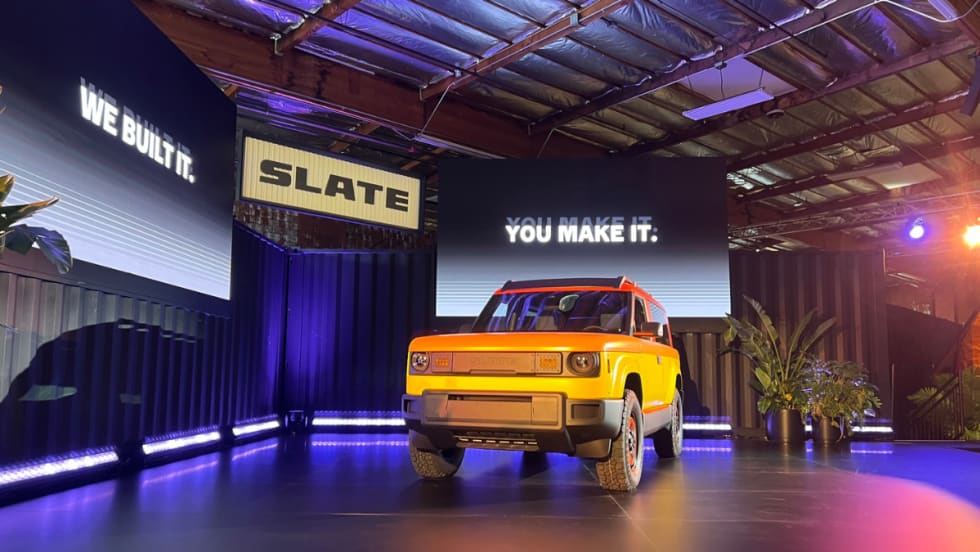
Slate Debuts Colorful, Unique EV Models
A recent media and client event, studded with electric vehicles dressed up on platforms, planted a new position for the manufacturer in the wider EV market. Fleets will find cost-saving advantages.
Read More →
Slate Electric SUV, Pickup Switchable Model Aims For Light-Duty Fleets
Everything about this EV is counterintuitive and understated, making it stand out from the crowd.
Read More →
Inspiration Mobility Acquires Key Electrada Assets
Inspiration Mobility Group has acquired select assets of Electrada, adding the fleet electrification provider's team, technology, and charging infrastructure development capabilities to its energy management business.
Read More →
Turning Connected Vehicle Data Into Decisions That Matter
Fleet leaders have more data than ever, but turning that data into clear, actionable decisions remains a challenge. This white paper shows how leading organizations are using connected vehicle data to improve safety, reduce costs, and optimize fleet performance. Learn how to turn insight into action across your fleet.
Read More →