




NREL to Test Plug-in Hybrid Electric Trucks
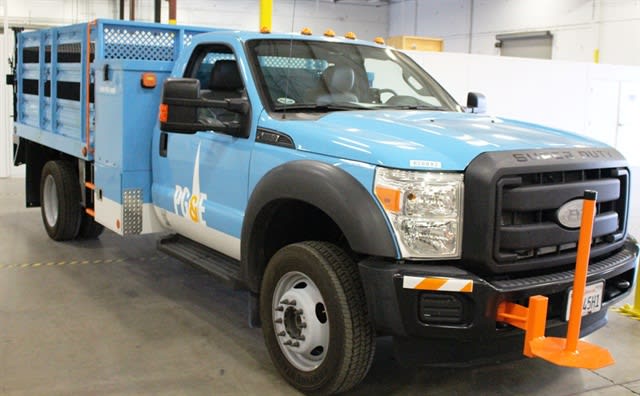
The utility vehicle is equipped with batteries and an electric generator that can export up to 120 kW of power - enough to power a neighborhood while repairs are being made by electric crews.
File photo.
NREL's fleet test and evaluation, electric vehicle grid integration, and fuel performance teams have partnered with Pacific Gas and Electric (PG&E) and Efficient Drivetrains Incorporated (EDI) to evaluate the performance of their Class 5 plug-in hybrid electric bucket truck.
The utility vehicle is equipped with batteries and an electric generator that can export up to 120 kW of power – enough to power a neighborhood while repairs are being made by electric crews. The truck has a 40-mile all-electric range, after which it switches to hybrid mode.
"NREL test results will help PG&E better understand vehicle system performance under controlled conditions, identify issues and requirements associated with vehicle operation, and fine-tune the design of such vehicles before expanding their use in the PG&E or other utility fleets," said NREL's Ken Kelly.
Collecting and Analyzing Vehicle Performance
"NREL has been working with PG&E to characterize vehicle operations and help guide technology choices that meet the company's bottom line and operational goals," Kelly said. "NREL recently installed data loggers on select PG&E trucks to determine how the vehicles are being used and to evaluate how well electric drive systems and electric accessories function in real-world operation."
To date, NREL has captured and is currently analyzing four months of in-use field data from 20 hybrid electric and conventional utility trucks operating in the PG&E service area. In addition to using the on-road performance data in its vehicle evaluation, NREL is using the data to develop chassis dynamometer drive cycles representative of actual on-road operation.
NREL ran the hybrid electric and conventional utility trucks on the chassis dynamometer at the Renewable Fuels and Lubricants Laboratory to capture energy efficiency metrics and emissions data and improve understanding of how the vehicles will function in large-scale commercial service.
Additionally, NREL is analyzing various vehicle parameters to help PG&E and EDI understand opportunities for improving efficiency and decreasing emissions during various modes of operation.
Testing and Analyzing the Vehicle's Exportable Power to the Grid
NREL also used the thermal chamber and research electrical distribution bus system at the Energy Systems Integration Facility - where researchers can literally plug in and test new energy technologies on real and simulated power systems before hooking them up to the grid – to simulate typical grid operation and capture output power quality data from the truck.
These testing and analysis activities are geared to improve understanding of the vehicle's export power mode and on-board thermal control under a variety of ambient conditions.
A member of the Clean Cities National Clean Fleets Partnership, PG&E operates one of the greenest utility fleets in the nation.
Originally posted on Work Truck Online
More Green Fleet

Merchants Fleet Reports 290M EV Miles as Fleets Navigate Changing Electrification Market
From millions in operating savings to hundreds of millions of EV miles, Merchants Fleet’s latest report reveals what’s working and what’s changing in fleet electrification.
Read More →
The EV Breakdown Nobody's Talking About: Why Most Electric Vehicle Roadside Calls Aren't Mechanical Failures
Here's why EV breakdowns are widely misunderstood.
Read More →
ChargePoint Now Available in Energy Pass
ChargePoint and additional planned charging network integrations were added to GM's Energy Pass.
Read More →
First Look: Slate Auto's Electric Fleet Pickup
Could an affordable, modular EV pickup make electrification more practical for fleets?
Read More →
Slate Debuts Colorful, Unique EV Models
A recent media and client event, studded with electric vehicles dressed up on platforms, planted a new position for the manufacturer in the wider EV market. Fleets will find cost-saving advantages.
Read More →
Slate Electric SUV, Pickup Switchable Model Aims For Light-Duty Fleets
Everything about this EV is counterintuitive and understated, making it stand out from the crowd.
Read More →
Inspiration Mobility Acquires Key Electrada Assets
Inspiration Mobility Group has acquired select assets of Electrada, adding the fleet electrification provider's team, technology, and charging infrastructure development capabilities to its energy management business.
Read More →
Turning Connected Vehicle Data Into Decisions That Matter
Fleet leaders have more data than ever, but turning that data into clear, actionable decisions remains a challenge. This white paper shows how leading organizations are using connected vehicle data to improve safety, reduce costs, and optimize fleet performance. Learn how to turn insight into action across your fleet.
Read More →
Are You Tracking Your Fleet's True Total Cost of Ownership?
Bobit Business Media surveyed 190 fleet professionals and found that while most fleets are tracking costs, fragmented systems and data gaps are keeping true TCO visibility out of reach. With rising pressure to control spend in an increasingly volatile environment, the gap between what fleets think they know and what the data actually shows is wider than you might expect. See how your peers are managing costs today and where the industry still has room to improve.
Read More →