




Nissan's New U.S.-Built NV Passenger Van to Debut Spring 2012
FRANKLIN, TN – Nissan has announced that its new 12-passenger version of its NV commercial van, the 2012-MY NV3500HD Passenger Van, will come in three models and offer two engine choices, a V-6 and a V-8.
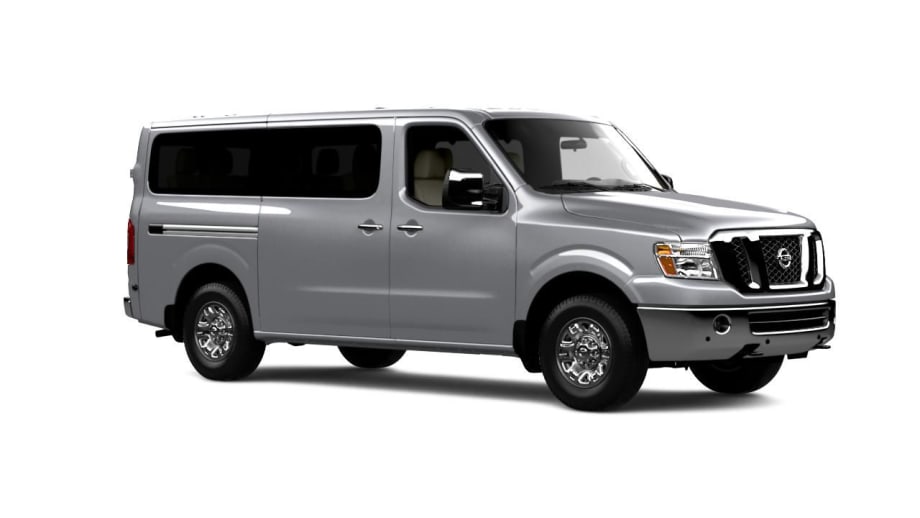
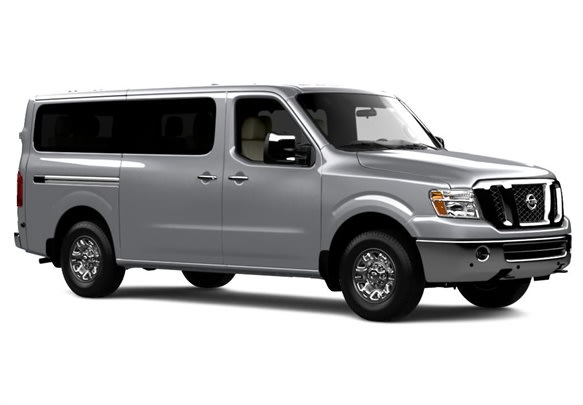
FRANKLIN, TN – Nissan has announced that a new version of its NV commercial van, the 2012-MY NV3500HD Passenger Van, will debut in spring 2012. The vehicle will be offered to fleet and retail customers, according to Nissan.
Nissan said it will offer the NV3500 HD in three models, the NV3500 HD S, the NV3500 HD SV, and NV3500 HD SL, which comes with the V-8 engine only. The company said the vehicle will be available through a select network of certified Nissan Commercial Vehicle dealers nationwide. The new NV3500 HD will be manufactured in Canton, Mississippi, according to the automaker.
Performance
The 2012 Nissan NV3500 HD Passenger Van will feature two engine choices, a 4.0L DOHC 24-valve V-6 capable of producing up to 261 horsepower and 281 lb. ft. of torque, or a DOHC 32-valve V-8 capable of producing 317-horsepower and 385 lb. ft. of torque. Nissan hasn’t yet announced fuel economy figures for the NV Passenger Van.
Both engines use the automaker’s Continuous Valve Timing Control (C-VTC) technology. The engines are also each equipped with a five-speed automatic transmission. The Nissan NV3500 is built on a fully boxed ladder frame with independent front strut/solid rear axle with rigid leaf spring suspension, disc brakes with ABS, and power steering that’s sensitive to the engine speed. The vehicle comes standard with a 28-gallon fuel tank.
Interior
The new model’s interior offers a flexible seating arrangement. Capable of seating up to 12, the vehicle offers up to 324 possible seating configurations. The large first-row seats are designed for comfort. A user can completely remove or reposition the second- and third-row seats and partially or completely remove the 50/50-split fourth-row seats.
The vehicle offers a number of interior features designed to allow the vehicle to operate as a mobile office. Features include a large center console with storage for items such as a laptop computer and charger, business cards, hanging files, pens and paper, etc. Other features include available 120V outlets, seat wear patches, a fold-down front passenger seat with under-seat storage, and no engine intrusion in the cabin area.
In terms of entering and exiting the van, the NV3500 HD Passenger Van features a low step-in height, easy entry and exit to and from the van without seat belts in the way (the belts are integrated into the rear seats), wide door openings, and rear 50/50-split French doors.
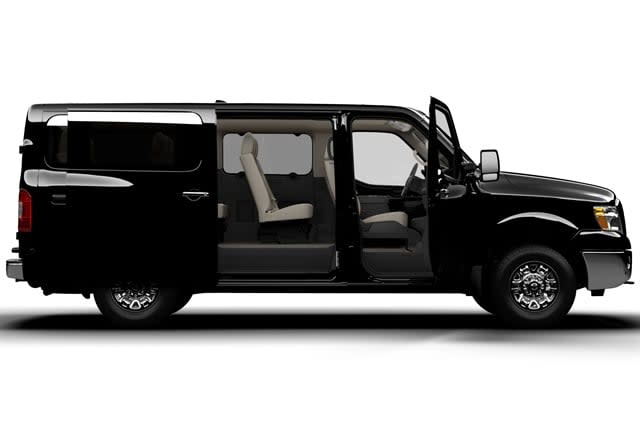
Other interior comfort and convenience features include a rear HVAC system, available personal lamps for the second, third, and fourth rows; a rear cargo lamp behind the fourth row; an available third-row 12V outlet; and a number of cup and bottle holders.
In-vehicle Connectivity
The NV3500 HD Passenger Van offers an available navigation system, a Bluetooth hands-free phone system, telematics pre-wiring, XM Satellite Radio, which requires an XM subscription, and an integrated rear-view camera.
Safety
The NV3500HD Passenger Van features integrated seat belts for all rear seating positions, standard headrests for all seating positions, and standard side curtain air bags for all four rows of passengers.
Appearance
The NV Passenger Van’s styling features Nissan’s truck twin strut signature grille, a pickup-truck-style front end, large windows with privacy glass, and 17-inch wheels.
Option Packages
Nissan said that it will offer a range of option packages for the vehicle, including a Power Basic Package, available on the S models only; a Tow Package on the V-8 only; a Power Basic Package + Tow Package, on the S model and V-8 only; and a Technology Package, on the SV and SL only.
The Power Basic Package will offer power windows and door locks. The Tow Package will offer extendable heated outside mirrors and a Class-IV receiver hitch, wiring, and heavy-duty battery. The Power Basic Package + Tow Package will offer both sets of features, and the Technology Package will offer the rear-view camera, XM Satellite Radio, a 5-inch touchscreen SD navigation system, and a Bluetooth hands-free phone system (which is standard on the SL model) and a rear-view monitor.
More Operations

A buyer's guide to fleet management software in 2027
Buying fleet management software in 2027 means looking beyond features and price. As fleet operations, technology and expectations evolve, this guide explores what today’s fleet professionals should consider when choosing a system that can deliver value now and adapt to what comes next.
Read More →
What Will Shape the Next Era of Fleet Management?
EVs, AI, and autonomous vehicles are reshaping fleet management. Discover what’s ahead—and how fleet leaders can prepare for the next era.
Read More →
How Fleets Can Recruit and Train Veterans for Technician Roles
Here's how the technician shortage has affected uptime for fleets, and what to do about it.
Read More →

Avis Budget Group Deploys Neology Toll Management Technology Across Major Brands
Neology’s neoFleet platform will manage toll transactions and toll-authority operations for vehicles across Avis, Budget, Payless, Budget Truck and Zipcar.
Read More →
Fleet Personal-Use Charges Edge Higher in 2026
Nearly eight in 10 surveyed fleets allow personal use of company vehicles, while just over half of respondents report charging employees for the privilege.
Read More →
The Future of Fleet + What’s Changing Right Now | AF News Recap
Could developments overseas offer a preview of what’s coming for U.S. fleets? This week, we’re looking at the future of AI, autonomy, and electrification, plus Ford Pro’s new certified pre-owned program, smarter vehicle offboarding, and a new way for fleets to manage toll expenses.
Read More →
How to Handle Vehicle Offboarding
What do fleet managers need to do when a driver leaves?
Read More →
Fleet Manager’s Ultimate Playbook: Navigating the New Standard in OEM Connectivity
Rising operating costs, driver safety concerns, and unplanned downtime are putting unprecedented pressure on modern fleets. Discover how fleet managers use embedded OEM connectivity and real-time vehicle data to cut TCO, prevent downtime, and protect drivers without aftermarket telematics hardware.
Read More →
U.S. Bank Adds Verra Mobility Toll Management to Voyager Fleet Platform
The integration allows U.S. Bank Voyager fleet customers to manage toll payments and violations alongside fuel, EV charging and maintenance expenses.
Read More →
ADAS Prevents Crashes. But Repairs Cost More | AF News Recap
ADAS-equipped vehicles may crash less often, but they can cost more when they do. This week, we’re breaking down what that tradeoff means for fleets, plus Subaru’s first Forester Wilderness Hybrid, Nissan’s new e-POWER Rogue, and why Calstart has become Catalyst Mobility.
Read More →