





Related: Titan XD Pickup’s a New Weight Segment, Nissan Says
Nissan's Gasoline Titan XD Goes On Sale
Nissan's 2016 Titan XD Crew Cab pickups powered by an advanced 5.6L Endurance V-8 gasoline engine went on sale April 15. The Titan XD Gas pickup joins the XD with the Cummins 5.0L Turbo Diesel V-8 released last December.
April 28, 2016

Endurance gasoline V-8s are made in Tennessee and Titans are assembled in Mississippi.
Photo: Nissan North America
2 min to read

Photo: Nissan North America
Nissan North America says list prices for 2016 Titan XD Crew Cab pickups powered by an advanced 5.6L Endurance V-8 gasoline engine will range from $35,290 to $55,520. They went on sale April 15, executives said at a press event this week at its headquarters near Brentwood, Tenn.
The Titan XD Gas joins the XD (for eXtra Duty) with the Cummins 5.0L Turbo Diesel V-8 released this past December. Diesel-powered XDs cost roughly $10,000 more than the gasoline models.
With either engine, the XD is a 5/8-ton pickup that falls between ½- and ¾-ton pickups in capacity and ride quality, they said.
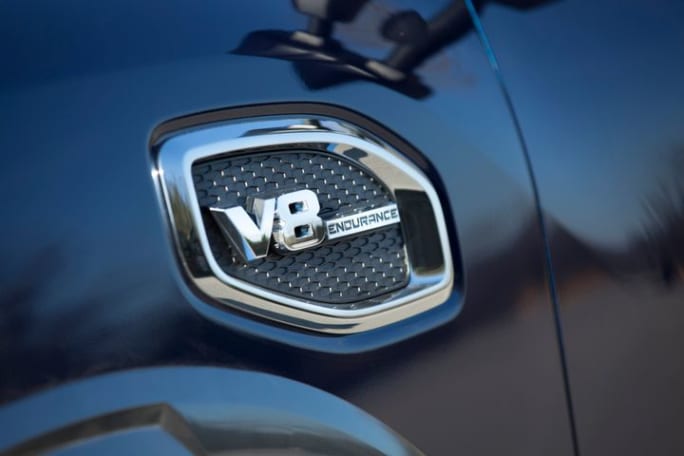
Photo: Nissan North America
The XD Gas’s engine is rated at 390 hp and 401 lb.-ft., compared to the diesel’s 310 hp and 555 lb.-ft. As with the diesel, the gasoline model will initially be available in five four-door Crew Cab trim levels in 4x4 and 4x2 drive configurations.
The lowest-priced XD Gas has 2-wheel-drive and the basic S trim. The highest is a 4x4 with Platinum Reserve trim. Between them are SV, Pro-4X and SL trim levels. A 2-door Single Cab version will be available this fall, and later will come a 4-door King Cab.
This summer, the ½-ton Titan pickup will go into production, and also be powered by the 5.6L V-8 and a 4.0L gasoline V-6. All Endurance V-8s are mated to a new 7-speed double-overdrive automatic transmission with adaptive shift control and downshift rev matching.
Titan is very much an American truck, executives said. It was designed in California, engineered in Michigan, and assembled in Mississippi with components made mostly in Tennessee.
More Operations
Here's When You Should Make an Exception to Fleet Policy
Fleet policies are designed to create consistency, but not every driver or situation fits neatly within standard rules.
Read More →
AI-Native or AI-Acquired: What Should Fleet Managers Look for in an AI Platform?
Six questions can help fleet managers look beyond AI marketing claims to evaluate integration, data access, and real-world operational performance.
Read More →
Sponsored•October 14, 2026
A buyer's guide to fleet management software in 2027
Buying fleet management software in 2027 means looking beyond features and price. As fleet operations, technology and expectations evolve, this guide explores what today’s fleet professionals should consider when choosing a system that can deliver value now and adapt to what comes next.
Read More →

What Will Shape the Next Era of Fleet Management?
EVs, AI, and autonomous vehicles are reshaping fleet management. Discover what’s ahead—and how fleet leaders can prepare for the next era.
Read More →
How Fleets Can Recruit and Train Veterans for Technician Roles
Here's how the technician shortage has affected uptime for fleets, and what to do about it.
Read More →
Avis Budget Group Deploys Neology Toll Management Technology Across Major Brands
Neology’s neoFleet platform will manage toll transactions and toll-authority operations for vehicles across Avis, Budget, Payless, Budget Truck and Zipcar.
Read More →
Fleet Personal-Use Charges Edge Higher in 2026
Nearly eight in 10 surveyed fleets allow personal use of company vehicles, while just over half of respondents report charging employees for the privilege.
Read More →
The Future of Fleet + What’s Changing Right Now | AF News Recap
Could developments overseas offer a preview of what’s coming for U.S. fleets? This week, we’re looking at the future of AI, autonomy, and electrification, plus Ford Pro’s new certified pre-owned program, smarter vehicle offboarding, and a new way for fleets to manage toll expenses.
Read More →
How to Handle Vehicle Offboarding
What do fleet managers need to do when a driver leaves?
Read More →
Sponsored•October 1, 2026
Fleet Manager’s Ultimate Playbook: Navigating the New Standard in OEM Connectivity
Rising operating costs, driver safety concerns, and unplanned downtime are putting unprecedented pressure on modern fleets. Discover how fleet managers use embedded OEM connectivity and real-time vehicle data to cut TCO, prevent downtime, and protect drivers without aftermarket telematics hardware.
Read More →