




Nissan Unveils Electric Car
The Nissan LEAF, which will be available in 2010, is a zero-emission vehicle, specifically designed for a lithium-ion battery powered chassis, according to the company.
Nissan Motor Co., Ltd. unveiled Nissan LEAF, the world's first affordable, zero-emission car. Designed specifically for a lithium-ion battery-powered chassis, Nissan LEAF is a medium-size hatchback that comfortably seats five adults and has a range of more than 160km (100 miles) to satisfy real-world consumer requirements.
Nissan Leaf
Slated for launch in late 2010 in Japan, the United States, and Europe, Nissan LEAF ushers in a new era of mobility-the zero-emission era. The car is the embodiment of Nissan's radical, transformative vision for the future and the culmination of decades of investment and research.
"Nissan LEAF is a tremendous accomplishment-one in which all Nissan employees can take great pride," said Nissan President and CEO Carlos Ghosn. "We have been working tirelessly to make this day a reality - the unveiling of a real-world car that has zero-not simply reduced-emissions. It's the first step in what is sure to be an exciting journey-for people all over the world, for Nissan and for the industry."
Key characteristics of the LEAF include:
Zero-emission power train and platform
Affordable pricing
Distinctive design
Real-world range autonomy - 160km (100 miles)
Connected Mobility: Advanced intelligent transportation (IT) system
The "LEAF" name is a significant statement about the car itself. Just as leaves purify the air in nature, so Nissan LEAF purifies mobility by taking emissions out of the driving experience. Pricing details will be announced closer to start of sales in late 2010; however, the company expects the car to be competitively priced in the range of a well-equipped C-segment vehicle. Additionally, Nissan LEAF is expected to qualify for an array of significant local, regional and national tax breaks and incentives in markets around the world. As an added benefit, because the vehicle has less mechanical complexity than a traditional gasoline-powered car, Nissan LEAF is designed to be friendly to the wallet as well as to the environment.
Zero-Emission Mobility
Nissan LEAF is powered by laminated compact lithium-ion batteries, which generate power output of over 90kW, while its electric motor delivers 80kW/280Nm. This ensures a highly responsive, fun-to-drive experience that is in keeping with what consumers have come to expect from traditional, gasoline-powered automobiles.
Unlike internal-combustion engine (ICE) equipped vehicles, Nissan LEAF's power train has no tail pipe, and thus no emission of CO2 or other greenhouse gases. A combination of Nissan LEAF's regenerative braking system and innovative lithium-ion battery packs enables the car to deliver a driving range of more than 160km (100 miles) on one full charge*. (*US LA4 mode)
Extensive consumer research demonstrates that this range satisfies the daily driving requirements of more than 70 percent of the world's consumers who drive cars.
And, Nissan's approach makes charging easy and convenient. Nissan LEAF can be charged up to 80 percent of its full capacity in just under 30 minutes with a quick charger. Charging at home through a 200V outlet is estimated to take approximately eight hours - ample time to enable an overnight refresh for consumer and car alike.
Real-World Car
The engineers and designers behind Nissan LEAF worked to create a competitively priced real-world car that would enable Nissan to lead mobility into the zero-emission era. To ensure comfort, spaciousness and cargo capacity, Nissan LEAF employs a completely new chassis and body layout.
"Our car had to be the world's first, medium-size, practical EV that motorists could afford and would want to use every day. And that's what we've created. The styling will identify not only Nissan LEAF but also the owner as a participant in the new era of zero-emission mobility," said Masato INOUE, Product Chief Designer.
[PAGEBREAK]
Distinctive Design
Even the smallest details can yield tremendous effect.
Nissan LEAF's frontal styling is characterized by a sharp, upright V-shaped design featuring long, up-slanting light-emitting diode (LED) headlights that employ a blue internal reflective design that announces, "This car is special." But the headlights do more than make a statement. They are also designed to cleverly split and redirect airflow away from the door mirrors, thus reducing wind noise and drag. And, the headlights provide yet one more benefit in that they consume just 10 percent of the electricity of conventional lamps, which helps Nissan LEAF to achieve its world-class range autonomy.
Through bright trim colors inside, Nissan LEAF creates a pleasing and stylish cabin environment. An environmentally friendly "blue earth" color theme originates from the Aqua Globe body color of Nissan LEAF's introductory model. This theme is carried into the interior through blue dashboard highlights and instrument illumination.
Connect Mobility IT System
Nissan LEAF employs an exclusive advanced IT system. Connected to a global data center, the system can provide support, information, and entertainment for drivers 24 hours a day.
The dash-mounted monitor displays Nissan LEAF's remaining power-or "reachable area"-in addition to showing a selection of nearby charging stations.
Another state-of-the-art feature is the ability to use mobile phones to turn on air-conditioning and set charging functions-even when Nissan LEAF is powered down. An on-board remote-controlled timer can also be pre-programmed to recharge batteries.
"The IT system is a critical advantage," says Tooru Abe, chief product specialist. "We wanted this vehicle to be a partner for the driver and an enhancement for the passengers. We also wanted this vehicle to help create a zero-emission community, and these IT features will help make that possible."
Holistic Approach to Zero-Emission Mobility and Eco-Friendly Innovation
Nissan LEAF is a critical first step in establishing the era of zero-emission mobility; however, Nissan recognizes that internal-combustion engine (ICE) technologies will play a vital role in global transportation for decades to come. Because of this, Nissan is implementing its zero-emission vision through a holistic approach, which provides consumers a comprehensive range of eco-friendly technologies from which to choose.
For some consumers, Nissan LEAF will be the perfect match, and the only car they will ever need. For others, Nissan LEAF will be a logical addition to the family fleet - the optimal choice for the daily commute, for example.
While zero-emission is the ultimate goal, the company is committed to ongoing innovation in eco-friendly technologies that increase efficiency and reduce emissions. As a result, Nissan offers a comprehensive suite of automotive technologies, including CVT, Idle Stop, HEV, Clean Diesel, and ongoing research and investment in FCV technology.
Worldwide Partners
Zero-emission mobility programs under the banner of the Renault-Nissan Alliance include partnerships with countries such as the UK and Portugal, local governments in the Japan and the USA, and other sectors, for a total of nearly 30 partnerships worldwide.
In these partnerships major efforts focus on three areas:
1) Development of a comprehensive charging infrastructure through public and private investment,
2) Incentives and subsidies from local, regional, and national governments, and
3) Public education on the individual and societal benefits of zero-emissions mobility.
More Green Fleet
EV Charging Use Is Outpacing Infrastructure Growth
ChargePoint’s 2026 Charging Forward Report points to rising charger use, higher-powered charging, commercial vehicle electrification, and energy-management technology. Here’s what fleets should know.
Read More →
Merchants Fleet Reports 290M EV Miles as Fleets Navigate Changing Electrification Market
From millions in operating savings to hundreds of millions of EV miles, Merchants Fleet’s latest report reveals what’s working and what’s changing in fleet electrification.
Read More →
The EV Breakdown Nobody's Talking About: Why Most Electric Vehicle Roadside Calls Aren't Mechanical Failures
Here's why EV breakdowns are widely misunderstood.
Read More →
ChargePoint Now Available in Energy Pass
ChargePoint and additional planned charging network integrations were added to GM's Energy Pass.
Read More →

First Look: Slate Auto's Electric Fleet Pickup
Could an affordable, modular EV pickup make electrification more practical for fleets?
Read More →
Slate Debuts Colorful, Unique EV Models
A recent media and client event, studded with electric vehicles dressed up on platforms, planted a new position for the manufacturer in the wider EV market. Fleets will find cost-saving advantages.
Read More →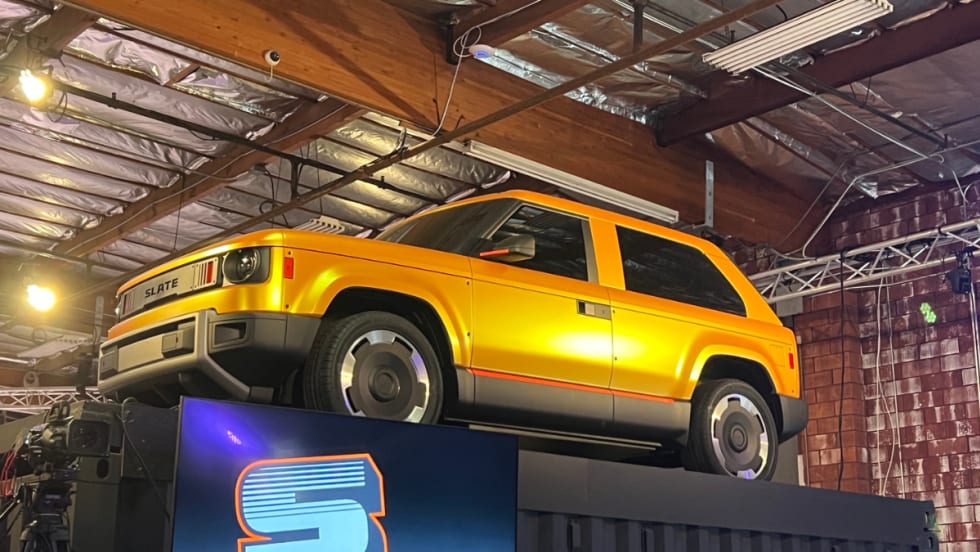
Slate Electric SUV, Pickup Switchable Model Aims For Light-Duty Fleets
Everything about this EV is counterintuitive and understated, making it stand out from the crowd.
Read More →
Inspiration Mobility Acquires Key Electrada Assets
Inspiration Mobility Group has acquired select assets of Electrada, adding the fleet electrification provider's team, technology, and charging infrastructure development capabilities to its energy management business.
Read More →
Turning Connected Vehicle Data Into Decisions That Matter
Fleet leaders have more data than ever, but turning that data into clear, actionable decisions remains a challenge. This white paper shows how leading organizations are using connected vehicle data to improve safety, reduce costs, and optimize fleet performance. Learn how to turn insight into action across your fleet.
Read More →