




Nissan Debuts 2014 Versa Note Hatchback in Detroit
The Versa Note is based on the company’s global "V" platform and is designed to provide the Versa lineup with a differently styled model that offers a mix of fuel efficiency, technology features, and hatchback functionality.
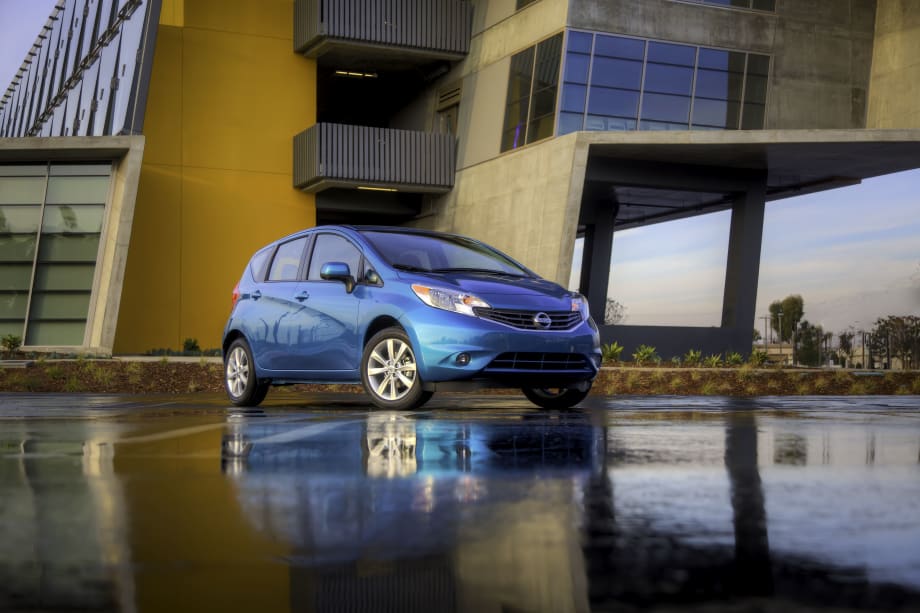
Nissan said it designed the vehicle's exterior to stand out from other vehicles in the segment and to be aerodynamic.
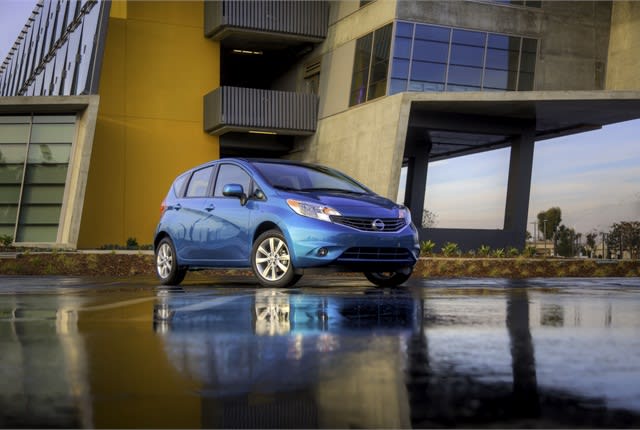
Nissan said it designed the vehicle's exterior to stand out from other vehicles in the segment and to be aerodynamic.
Nissan debuted a new hatchback version of its Versa, the all-new 2014 Versa Note at the North American International Auto Show in Detroit. The Versa Note is based on the company’s global "V" platform (in Japan the vehicle is called the “Note”) and is designed to provide the Versa lineup with a differently styled model that offers a mix of fuel efficiency, technology features, and hatchback functionality.
You can click any of the photos in the article to view additional photos of the Versa Note.
The Versa note comes in three grades, S, S Plus, and SV. The automaker also plans to offer three option packages: Convenience, SL, and SL Technology.
Nissan’s Al Castignetti, vice president and general manager, Nissan Division, Nissan North America, Inc., said he wants to provide a vehicle that meets “emotional and rational needs” in the entry-level car segment.
Under the hood, each model comes with a 1.6L DOHC four-cylinder engine with dual fuel injection and Twin Continuously Variable Timing Control (CVTC). The Versa Note S model’s powertrain comes with a five-speed manual transmission, while the S Plus and SV models come standard with a Nissan Xtronic CVT transmission. Nissan is forecasting fuel economy of 40 mpg highway, 31 mpg city, and 35 mpg combined for the CVT-equipped models.
Nissan said it styled the vehicle to help it stand out from other entry-level vehicles in the segment and improve fuel economy (CVT models have a coefficient of drag of 0.298). It comes in eight colors, is equipped with halogen headlights, and rear combination lights, though fog lights are available. Heated side-view mirrors are also an option.
Given that a hatchback is designed to provide extra cargo room, the Versa Note offers 21.4 cu. ft. of space in the cargo area. The 60/40 split rear seats fold down for more cargo room, and Nissan added a hidden space, accessible by lifting up the floor board in the back, underneath the cargo area.
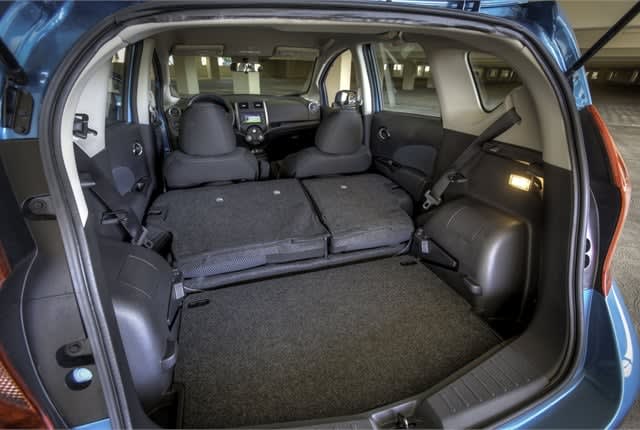
The Versa Note offers 21.4 cu. ft. of cargo space. It also has 60/40 split fold-down seats for added room.
Even though this is an entry-level vehicle, Nissan is offering its Around View Monitor, which uses four cameras on the front, sides, and rear of the vehicle to give the driver a 360-degree view of what’s around the vehicle and helps him or her maneuver. This option, part of the SL Technology package, is a segment first, according to Nissan.
The SL Technology Package also offers the automaker’s NissanConnect, which includes a navigation system with the automaker’s NavTraffic and NavWeather. The system features a 5.8-inch touchscreen and provides hands-free text messaging, Bluetooth streaming audio, Pandora radio capability when the system is connected to an iPhone, Google-provides points of interest, and Google’s Send to Car feature. Nissan also offers a rear-view monitor, push-button ignition, an interface for USB-connected devices, and SiriusXM Radio as options.
Standard safety features on the Versa Note include dual-stage front supplemental air bags, front seat-mounted side-impact supplemental air bags, roof-mounted curtain side-impact supplemental air bags, stability and traction control (Nissan’s Vehicle Dynamic Control and Traction Control System), and TPMS with Nissan’s new Easy-Fill Tire Alert as an option.
More Operations

How Fleets Can Recruit and Train Veterans for Technician Roles
Here's how the technician shortage has affected uptime for fleets, and what to do about it.
Read More →
Avis Budget Group Deploys Neology Toll Management Technology Across Major Brands
Neology’s neoFleet platform will manage toll transactions and toll-authority operations for vehicles across Avis, Budget, Payless, Budget Truck and Zipcar.
Read More →
Fleet Personal-Use Charges Edge Higher in 2026
Nearly eight in 10 surveyed fleets allow personal use of company vehicles, while just over half of respondents report charging employees for the privilege.
Read More →
The Future of Fleet + What’s Changing Right Now | AF News Recap
Could developments overseas offer a preview of what’s coming for U.S. fleets? This week, we’re looking at the future of AI, autonomy, and electrification, plus Ford Pro’s new certified pre-owned program, smarter vehicle offboarding, and a new way for fleets to manage toll expenses.
Read More →
How to Handle Vehicle Offboarding
What do fleet managers need to do when a driver leaves?
Read More →
Fleet Manager’s Ultimate Playbook: Navigating the New Standard in OEM Connectivity
Rising operating costs, driver safety concerns, and unplanned downtime are putting unprecedented pressure on modern fleets. Discover how fleet managers use embedded OEM connectivity and real-time vehicle data to cut TCO, prevent downtime, and protect drivers without aftermarket telematics hardware.
Read More →
U.S. Bank Adds Verra Mobility Toll Management to Voyager Fleet Platform
The integration allows U.S. Bank Voyager fleet customers to manage toll payments and violations alongside fuel, EV charging and maintenance expenses.
Read More →
ADAS Prevents Crashes. But Repairs Cost More | AF News Recap
ADAS-equipped vehicles may crash less often, but they can cost more when they do. This week, we’re breaking down what that tradeoff means for fleets, plus Subaru’s first Forester Wilderness Hybrid, Nissan’s new e-POWER Rogue, and why Calstart has become Catalyst Mobility.
Read More →
Moventum Fleet Management Names Mark Iorillo Head of Sales
Iorillo brings nearly 20 years of fleet management and sales experience to the role, including previous positions at Element Fleet Management, CEI, Donlen and Ryder.
Read More →
Fleet Has a Talent Pipeline Problem. What Comes Next? | AF News Recap
Where will fleet’s next generation of leaders come from? This week, we’re looking at the industry’s talent pipeline, what certification can add to a fleet career, how to build an award-worthy track record, and the return of Automotive Fleet’s Personal Use Survey.
Read More →