




Next-Generation Fuel Cell System Propels GM's Sequel
DETROIT — With a 25-percent more powerful fuel cell stack, GM announced on January 10 that its next-generation fuel cell power system helps the Sequel achieve a 300-mile range and 0-60 mph acceleration in less than 10 seconds, while emitting only water vapor.
DETROIT — With a 25-percent more powerful fuel cell stack, GM announced on January 10 that its next-generation fuel cell power system helps the Sequel achieve a 300-mile range and 0-60 mph acceleration in less than 10 seconds, while emitting only water vapor. "Sequel is the first fuel cell vehicle that delivers the range and performance people expect from their current vehicles, bringing us that much closer to commercialization," said Byron McCormick, executive director of GM's Fuel Cell Activities. Sequel's fuel cell stack and power module were designed and developed by GM engineers in Honeoye Falls, N.Y. The fuel cell power module is significantly simpler and more efficient than the module GM used to set a new world distance record for fuel cell technology in 2004 with a run of 6,025 miles through 14 European countries. The fuel cell power module consists of the actual fuel cell stack, the hydrogen and air processing subsystems, the cooling system and the high-voltage distribution system. This power module delivers 73 kW of high-voltage power for the electric traction motors, as well as auxiliaries like heating, ventilation and air conditioning, by-wire electronics and the battery. "The system design has evolved and the components are becoming simpler, which is helping drive down the cost of technology and bringing us one step closer to reality," said Daniel O'Connell, head of GM Fuel Cell Product Engineering in Honeoye Falls. Hydrogen introduced into the fuel cell is now directly converted to electric power to drive unprecedented torque control of all wheels. The two rear wheel hub motors including two inverters, as well as the power inverter module for the front electric motor, are developed by GM's Advanced Technology Center in Torrance, Calif. A high-voltage, lithium ion battery system provides extra power to the three electric motors during acceleration. It also stores power regenerated during braking to help extend the vehicle's overall mileage range. Engineers at a GM fuel cell facility in Mainz-Kastel, Germany, integrated the fuel cell propulsion system into the vehicle package. The engineers linked the drive motor development with the rest of the system for a complete, vehicle-level, system solution. This led to an increase in the overall efficiency. It makes more power with less hydrogen, improving the performance and day-to-day operation. GM's next-generation fuel cell also uses a new air intake system that is more efficient, quieter and lighter than its predecessor. The fuel cell stack, along with the cylindrical hydrogen storage tanks, is housed in a unique "skateboard" floor. Additional radiators are located under the Sequel's hood, directly behind the headlights, and in the rear of the vehicle, behind the taillights. These necessary design features help pull heat away from the fuel cell system, allowing Sequel to operate in hotter ambient temperatures. Sequel's 300-mile range is made possible by advances in high-pressure storage that enable the vehicle to carry 8 kg of hydrogen, more than double that of GM's HydroGen3 fuel cell vehicle. Developed in conjunction with Quantum Fuel Systems Technologies Worldwide, Inc., of Irvine, Calif., three lightweight, carbon composite tanks store hydrogen at 10,000 psi (700 bars), compared to 5,000 psi (350 bars) in Hy-wire, Sequel's predecessor. The larger tanks also enable a better ratio of stored hydrogen mass versus fuel storage system mass. Within the novel skateboard floor are three cylindrical tanks. The carbon-fiber material, supplied by Toray Industries, of Tokyo, Japan, is strong and wraps the all-composite tanks. It provides a storage tank that is lighter than comparable metal tanks. The all-composite tanks have been validated to extremely stringent safety and performance standards representing harsh operating environments. "Our skateboard chassis with the three-tank design is an excellent approach to providing a vehicle with a 300-mile vehicle range, without compromising overall interior and trunk space for the customer," said Chris Borroni-Bird, director of GM's Design and Technology Fusion Group and program director for Sequel. "Hydrogen storage technology will continue to evolve and, as improvements are made, we will translate this into greater range and smaller packaging designs." The electrical architecture of the Sequel consists of three systems. A high-voltage system provides power for the drive system, while a 42-volt system supplies the by-wire features. A 12-volt system powers conventional vehicle accessories such as the audio system and interior lighting. A high-voltage lithium ion battery system is an integral component in the Sequel's propulsion system. It helps power the drive system at certain times, but also stores energy from regenerative braking, and thereby extends range. The lithium ion battery, supplied by Saft, of Bagnolet, France, offers 65 kW of peak power and weighs 65 kg (143 lbs.).
More Operations

Turn Fleet Data Into Smarter Decisions
Fleet leaders have access to more operational data than ever, but disconnected systems and unclear metrics often slow decision-making instead of improving it. This article outlines five practical steps fleets can take to transform fragmented data into actionable insights that improve planning, safety, utilization, and long-term performance.
Read More →
Hybrids: Electrification Without the Challenges
For fleet managers, fuel is one of the biggest line items in the budget — and it's one hybrids can shrink without changing how your people work. Download the eBook to see the numbers, understand the technology, and get a step-by-step guide to making the switch.
Read More →
How NOV Uses Telematics to Improve Fleet Safety Across 160 Locations
James Victory of NOV discusses how the company manages fleet safety, maintenance, and telematics across more than 150 locations supporting oilfield operations throughout the U.S.
Read More →
Fleet Meets: Steven Santostasi
This edition of the Fleet Meets series features Steven Santostasi, the current TSP channel manager for Ford Pro.
Read More →
Why Fleet Managers Are Replacing Departmental Vehicles with Shared Motor Pools
Departmentally assigned vehicles often create hidden costs through underutilization, poor visibility, and increased administrative burden. This white paper explores how shared motor pool strategies help fleets reduce costs, improve accountability, and optimize vehicle utilization.
Read More →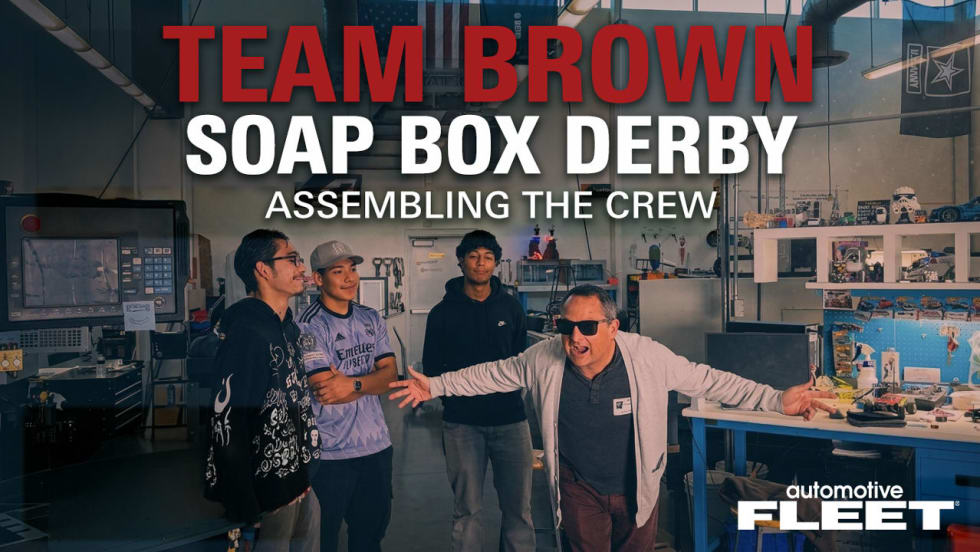
Soap Box Derby Challenge: Assembling the Crew
Meet Gabriel, Matthew, and Angel — the team helping bring this soap box derby build to life.
Read More →
BBL Fleet Acquires Velcor Leasing Corporation
BBL Fleet expanded its footprint in the fleet management industry with the acquisition of Velcor Leasing Corporation of Madison through a stock purchase agreement finalized Feb. 27, 2026.
Read More →
Lytx Introduces New AI Fleet Technologies at Protect 2026
The company introduced new AI-driven fleet safety and operations technologies during its annual user conference.
Read More →
Fleet Costs Are Rising: Here’s How Leaders Are Responding
Fleet leaders are under pressure to reduce costs, adapt to economic uncertainty, and make smarter decisions. See how peers across North America are responding with real data, proven strategies, and forward-looking insights. Download the 2026 Market Pulse Report to benchmark your strategy and uncover where you can gain an edge.
Read More →
From Waffle House to AI: Fleet Trends You Need to Know
In this AF news recap, host Faith Howell covers how Waffle House stepped up during disaster response and new AI tech on the market.
Read More →