




New Vehicle Tangle: Supply, Prices, Payments All Up as Affordability Dips
Days’ supply by end of November was 77% higher than at the same time a year ago and the highest since March 2021. While inventory is up from recent levels, it remains low by historical standards.

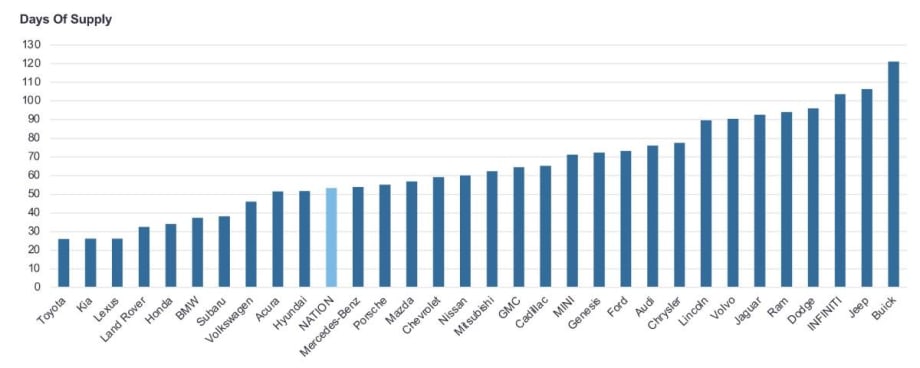
As measured by days of supply, non-luxury brands with the lowest inventories – all below the national average – were Toyota, Kia, Honda, Subaru, Volkswagen and Hyundai.
Graphic: Cox Automotive
New-vehicle inventory volume climbed through November as production increased and sales slowed, according to Cox Automotive’s analysis of vAuto Available Inventory data released Dec. 14. Unfortunately for shoppers, prices climbed in November as well.
“Timing is everything,” said Charlie Chesbrough, Cox Automotive’s senior economist, in a news release. “Production is finally ramping up after being stymied by the chip shortage just as demand started to waiver and vehicle sales slowed down.”
The highest since May 2021, total U.S. supply of available unsold new vehicles stood at 1.64 million units at the end of November, compared with a downwardly revised 1.55 million vehicles at the end of October. Supply at the end of November was 81%, or 740,000 units, higher than a year ago.
Days’ supply climbed throughout the month to 53, increasing from an upwardly revised 50 days at the end of October and up 10 days since the end of September. Days’ supply at the end of November was 77% higher than at the same time a year ago and the highest since March 2021.
While inventory is up substantially from recent levels, it remains low by historical standards. At the end of November 2020, supply stood at 2.77 million vehicles, or 70 days’ supply. For pre-pandemic November 2019, supply hit 3.55 million vehicles, or 86 days’ supply.
Closing November, the industry had non-luxury vehicle inventory totaling nearly 1.40 million vehicles for a 53 days’ supply. That was up from 1.32 million vehicles for a 49 days’ supply at the end of October. The inventory of luxury vehicles (excluding uber luxury models) stood at 244,104 units for a 57 days’ supply. That compares with 222,469 vehicles for a 51 days’ supply a month earlier.
The Cox Automotive days’ supply is based on the daily sales rate for the most recent 30-day period, which ended Nov. 28, when an estimated 925,048 vehicles were sold. “Sales had been showing slight gains since September,” Chesbrough said. “But they slowed some in November, dropping 22,000 units week-to-week in the most recent data. At the end of November, sales were up only 3% from a year ago.”
For the full calendar month of November, total new light-vehicle sales, buoyed by a big bump in fleet sales, rose 10% from a year ago. That was down 4% from October. It put the November seasonally adjusted annual rate (SAAR), or sales pace, at 14.1 million, up from 13.1 million a year ago but down from 15.1 million in October. Through November, the SAAR is 13.8 million. Cox Automotive forecasts 2022 sales at 13.7 million.
Supply Shows Wide Variation by Brand
November continued to show wide variation in supply by brand and segment.“A real dichotomy has emerged,” Chesbrough said. “Asian brands have super tight inventories while not so much for domestic brands. In 2023, we’ll be looking for heftier incentives to kick in for some brands and in some segments – particularly pickup trucks.”
Asian and European luxury and non-luxury brands continued to have the lowest inventories as measured by days’ supply, according to Cox Automotive’s analysis of vAuto Available Inventory data.
As measured by days of supply, non-luxury brands with the lowest inventories – all below the national average – were Toyota, Kia, Honda, Subaru, Volkswagen and Hyundai, respectively. Toyota and Kia had 26 days’ supply, which is an improvement from earlier in the year, when days’ supply dropped to 20 and lower.
Luxury brands with the lowest inventories, below the national average, were Lexus, Land Rover, BMW and Acura, in that order. Lexus has been the lowest for months, but even its supply has edged higher recently to 26 days’ supply.
At the opposite end of the spectrum were mostly domestic brands, some of which are reaching pre-pandemic inventory levels. Among all brands, Buick had the highest inventory as measured by days’ supply at an astounding 121. It was followed by Jeep and Infiniti, also with triple-digit days’ supply. Dodge, Ram, Jaguar, Volvo and Lincoln had 90 to 100 days’ supply, a glut even by pre-pandemic standards.
Aside from low-volume high-performance cars, vehicles popular with middle-class Americans had the lowest supply, including compact, subcompact and midsize cars as well as minivans. All had less than 36 days’ supply. High prices and rising interest rates are squeezing mainstream Americans, and automakers continue to focus on expensive models that generate bigger profit margins.
Both large and expensive luxury cars had the highest inventory, along with domestic SUVs and pickup trucks. Full-size cars, of which there are not many offered anymore, had a whopping 93 days’ supply. Uber luxury and luxury cars had more than 80 days of supply. Pickup trucks were at 77 days’ supply, which is not outsized since inventory typically is higher for trucks because they come in so many different configurations.
“Usually, the fourth quarter is a brisk selling season for luxury vehicles and big trucks,” Chesbrough said. “This year the inventory is avaialble to continue the tradition, but those sales may not materialize due to economic headwinds.”
Of the 30 highest-selling models in the 30 days that ended Nov. 28, 11 with the lowest inventories were Asian brands, specifically Kia, Toyota, Honda and Subaru. At the bottom were Kia Sportage, Toyota Corolla, Honda CR-V and Toyota 4Runner, all with days’ supply below 22.
Of the 30 top-selling models, full-size domestic pickup trucks and SUVs had the most inventory, with Ram 1500 having the most at an outsized 118 days’ supply, followed by Ford Escape, with 105 days’ supply. The Chevrolet Silverado, Ford Explorer and Ford F-150 fell in behind Ram and Escape at 90 days’ supply or more.
As has been the case for months, the lower the price category, the tighter the supply. Under $20,000, days’ supply was a scant 21, even less than the month earlier. Between $20,000 and $30,000, days’ supply was up to 35. All other price categories had 45 days’ supply and higher.
Prices Stay High but Stabilize
The average listing price – or the asking price – was $46,823 at the end of November, up from a downwardly revised $46,277 at the end of October, according to Cox Automotive’s analysis of vAuto Available Inventory data. The listing price still is running only 4% ahead of a year ago and remains elevated from years past.
The average transaction price – or the price paid – hit a record of $48,681 in November, surpassing the previous high set in August, according to Kelley Blue Book, a Cox Automotive company.
Affordability Tumbles Amid 20-Year High in Auto Loan Rates
That meant new-vehicle affordability declined again in November as auto loan rates reached another 20-year high, and the average new-vehicle price increased and set a record, according to the Cox Automotive/Moody’s Analytics Vehicle Affordability Index. The number of median weeks of income needed to purchase the average new vehicle in November increased to 43.3 weeks from 42.8 weeks in October.
Average Monthly Payment for New Car Hits Another Record High
Supporting affordability, median income grew 0.4%, and incentives from manufacturers also increased modestly. All other factors moved against affordability. The average price paid for a new vehicle increased by 0.9%, according to Kelley Blue Book. The average interest rate increased another 40 basis points. As a result of these moves, the estimated typical monthly payment increased by 1.8% to $762, which was another record.
New-vehicle affordability in November was much worse than a year ago when prices were lower, incentives were higher, and rates were lower. The estimated number of weeks of median income needed to purchase the average new vehicle in November was up 7% from last year.
“As we entered December, the latest data show consumers’ views of buying conditions for vehicles improved and is at the second-best reading since March," said Cox Automotive chief economist Jonathan Smoke in a news release. "Although auto credit access tightened sharply in November, and now we see vehicle affordability decline again, consumers remain resilient.”
Originally posted on Vehicle Remarketing
More Remarketing

FLD Promotes Three Executives in Leadership Changes
FLD has promoted three longtime executives, naming Gary Mott CEO, Richard Mallek president, and Ron Sanders managing partner.
Read More →
Ford Pro Launches Certified Pre-Owned Program for Commercial Vehicles
Ford Pro Advantage will offer certified pre-owned Class 1-7 commercial vehicles through more than 700 Ford Pro Commercial Vehicle Centers.
Read More →
Copart to Acquire ACV in $1.9 Billion Deal
The acquisition would expand Copart beyond its traditional salvage business into dealer-to-dealer wholesale remarketing while adding ACV’s vehicle data, inspection, and valuation technology.
Read More →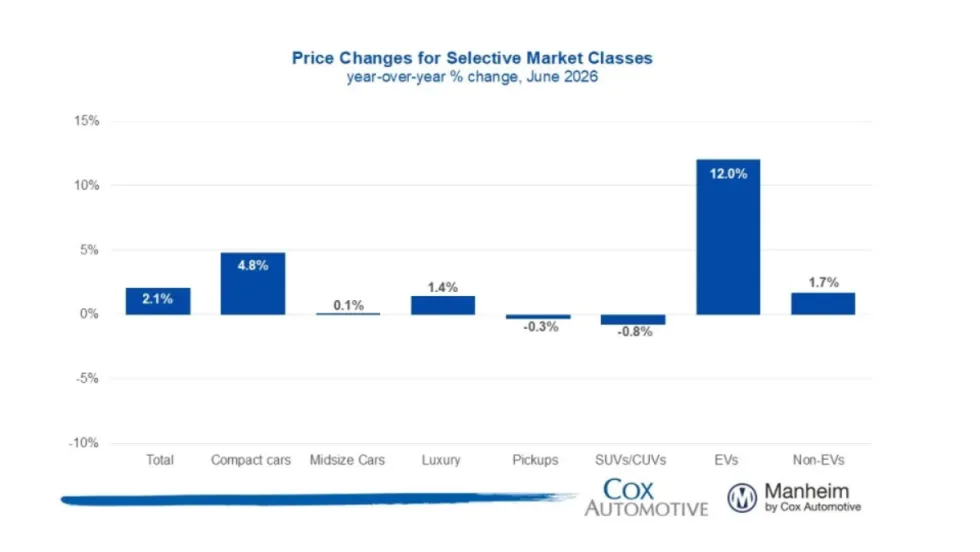
Manheim Index Shows Used-Vehicle Wholesale Prices Up 2.1% in June
The market is seeing stronger appreciation in older used vehicles this year, and the most affordable segments have been among the year’s best performers.
Read More →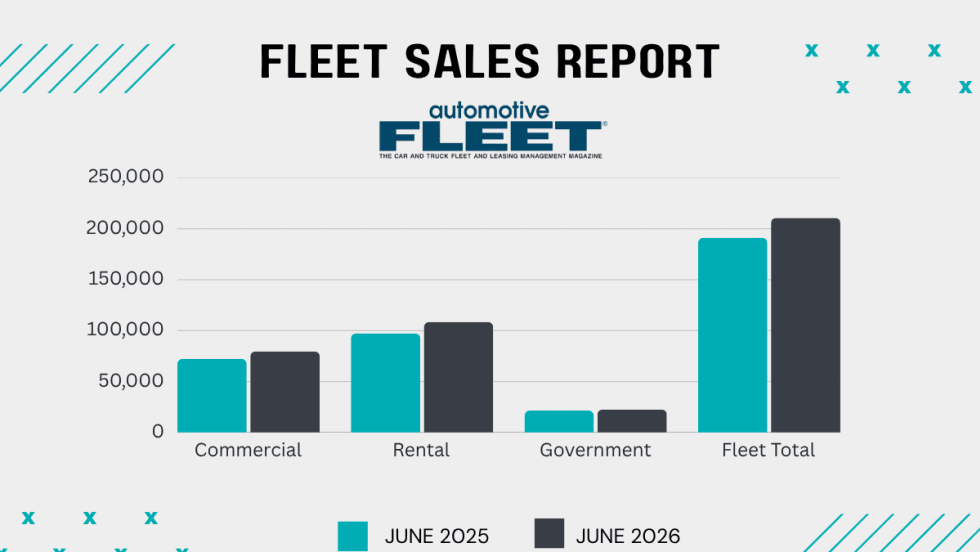
Commercial Fleet Sales Contribute To June, YTD Gains
The fleet sector has boosted its vehicle purchases at a reliable pace in the first half of this year compared with 1H 2025.
Read More →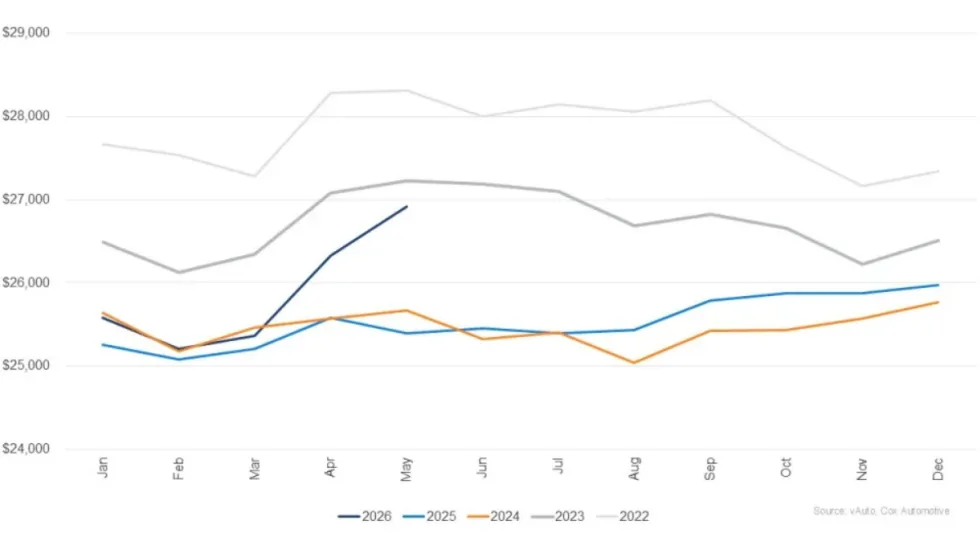
Used Vehicle Prices Climb Higher As Sales Pace Slows
The higher prices at used retail reflect strong wholesale values earlier in the spring, particularly for older, more affordable vehicles.
Read More →
Wholesale Used Vehicle Market Sustains Moderate Rise In Values, Prices
Trends continue to normalize after a strong start to the year, as consumers contend with higher gas prices in the coming summer months.
Read More →
Commercial Fleet Sales Still Lead Sectors Despite May Mini Dip
The U.S. economy's continued growth and positive business investment are creating a favorable environment for fleet vehicle demand.
Read More →
How Connected Vehicle Data Is Lifting Fleet Resale Values
A vehicle health score could improve the value of fleet vehicles at remarketing. The path to a universal standard is forming, and fleets that understand the process early will be better positioned when it arrives.
Read More →
Wholesale Used Vehicle Prices Slightly Up In April
The Iranian conflict and rising gas prices inject much uncertainty into the future wholesale used vehicle markets, as higher gas prices soak up spendable income from vehicle buyers.
Read More →