




New Vehicle Sales Increase 3% in March
New-vehicle sales are expected to increase 3% year over year to 1.63 million units retailed in March 2017, resulting in an estimated 17.4 million seasonally adjusted annual rate (SAAR), according to Kelley Blue Book.
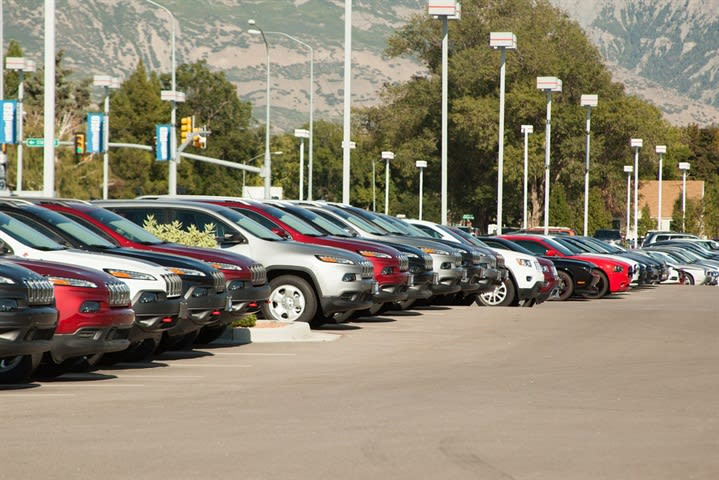
Photo courtesy of EveryCarListed via Flickr.
Photo courtesy of EveryCarListed via Flickr.
New-vehicle sales are expected to increase 3% year over year to 1.63 million units retailed in March 2017, resulting in an estimated 17.4 million seasonally adjusted annual rate (SAAR), according to Kelley Blue Book. There were 27 selling days in March, the same as last year.
If the vehicle valuation site is correct, March’s sales total brings first quarter total to 4.1 million units, a slight 0.3% year-over-year increase. This would also be the second highest first quarter on record, surpassed only by the first quarter of 2000, when the industry sold 1.66 million units.
“Kelley Blue Book expects manufacturers to report mostly positive sales numbers this month, capping a steady first quarter with an average SAAR of 17.4 million,” said Tim Fleming, analyst for Kelley Blue Book. “Despite considerably higher discounts and incentives, first quarter sales totals will likely only finish flat versus last year, a signal of weakening consumer demand for new vehicles.
“As sales cool after years of robust growth, adjusting production accordingly and managing supply, especially in car segments, should be top priorities for automakers,” Fleming added.
After record sales in 2016 and seven consecutive year-over-year sales increases, Kelley Blue Book’s forecast for 2017 calls for sales in the range of 16.8 million to 17.3 million units, a 1% to 4% decrease from last year.
General Motors is expected to gain the most market share this month, up nearly a full percentage point. In particular, the automaker’s SUV lineup could grow sales by 25%, led by three all-new models introduced last year, including the Chevrolet Equinox, Buick Envision and GMC Acadia. GM trucks, especially the Silverado, could have a strong month as well, with sales likely growing 10% on heavier incentives.
Ford Motor Co. could post the greatest sales declines of all major manufacturers; although a large drop in fleet volume is responsible. Retail sales should be flat or slightly up. As a result, Fusion and Focus could report declines of more than 20% in March 2017. Similarly, Transit and other Ford vans, which are popular in commercial fleets, could fall 20%.
The significant shift from cars to SUVs shows no sign of slowing, with double-digit growth projected for the popular compact and mid-size SUV/crossover segments. This month, analysts expect an overall light truck mix of 63%, up from 58% last March.
“Mid-size cars continue to suffer as a result of shifting consumer preference toward utility vehicles, and Kelley Blue Book anticipates the segment will lose nearly 3 percentage points of market share,” said Fleming. “This segment, which was the top-selling category in the industry as recently as 2013, is in a rapid decline, which does not bode well for the upcoming redesigns for the Toyota Camry and Honda Accord, due later this year.”
More Operations

Top 50 Executive Fleets
It is that time of year again! Time for the 2026 list of the Top 50 Executive Fleets, presented by Automotive Fleet and Volvo as part of its annual Fleet 500. Download now to see this year's list of companies!
Read More →
Gary Van Orden Retires After Nearly Four Decades in Commercial Fleet
From answering customer calls at Ford Motor Company to leading fleet sales across multiple OEMs and a fleet management company, Gary Van Orden's career reflects nearly four decades of leadership in commercial fleet.
Read More →
How Stellantis Plans to Get Ahead of Fleet Downtime
Vehicle acquisition may grab the headlines, but fleet uptime increasingly determines operating success. Darren Bradshaw of Mopar North America gives the details.
Read More →
Hyundai Releases 2027 Commercial Program Incentives
The 2027 Model Year "Fleet Street Incentives" are available to commercial and government fleets.
Read More →
It's All Downhill from Here! Fleet Industry Raises $22,000 for Skilled Trades Scholarships
Work Truck’s Lauren Fletcher and Automotive Fleet’s Chris Brown turned a friendly racing rivalry into $22,000 for automotive technology and skilled trades scholarships.
Read More →
The Top 300 Commercial Fleets
The Top 300 Commercial Fleets: See the List
Read More →

Your Local Dealer Knows More Than You Think
Your local dealer can provide an information advantage that extends well beyond courtesy deliveries.
Read More →
Fleet Meets: Austin Schutte
Here are some industry insights, personal touches, and words of advice from the CEO and Founder of Anew Solutions.
Read More →
Soap Box Derby Challenge: What’s Powering Team Brown
The car is coming together, the students are solving real build problems, and the fleet industry is helping push Team Brown toward the starting line.
Read More →