




New Testing Methods Urged for Self-Driving Cars
A new study from think tank RAND concludes that alternative means for testing autonomous vehicles are needed to adequately assess their safety.
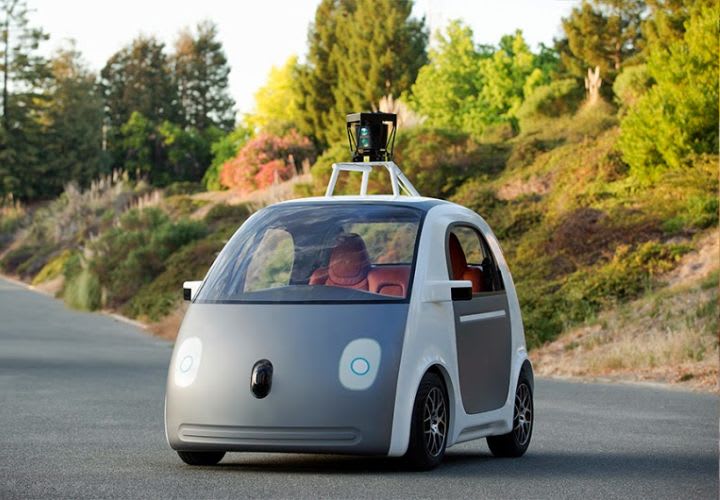
Photo of self-driving car courtesy of Google.
Photo of self-driving car courtesy of Google.
Autonomous vehicles would have to be driven hundreds of millions of miles and, under some scenarios, hundreds of billions of miles to create enough data to clearly demonstrate their safety, according to a new report from RAND Corp.
Under even the most aggressive test-driving assumptions, it would take existing fleets of autonomous vehicles tens and even hundreds of years to log sufficient miles to adequately assess the safety of the vehicles when compared to human-driven vehicles, according to the analysis.
Researchers said the findings suggest that to advance autonomous vehicles into daily use, alternative testing methods must be developed to supplement on-the-road testing. Alternative methods might include accelerated testing, virtual testing and simulators, mathematical modeling, scenario testing and pilot studies.
“Our results show that developers of this technology and third-party testers cannot drive their way to safety,” said Nidhi Kalra, co-author of the study and a senior scientist at RAND, a nonprofit research organization. “It’s going to be nearly impossible for autonomous vehicles to log enough test-driving miles on the road to statistically demonstrate their safety, when compared to the rate at which injuries and fatalities occur in human-controlled cars and trucks.”
According to the Center for Disease Control and Prevention, motor vehicle accidents cost the nation more than $80 billion annually in medical care and lost productivity resulting from injuries. Researchers believe autonomous vehicles could significantly reduce the number of accidents caused by human error.
More than 90% of automobile crashes are caused by human errors such as driving too fast, as well as alcohol impairment, distraction and fatigue, according to the National Highway Traffic Safety Administration. But autonomous vehicles are never drunk, distracted or tired.
However, the researchers acknowledged that autonomous vehicles may not eliminate all crashes, and the safety of human drivers is a critical benchmark against which to compare the safety of autonomous vehicles.
Although the total number of crashes, injuries and fatalities from human drivers is high, the rate of these failures is low in comparison with the number of miles that people drive. Americans drive nearly 3 trillion miles every year, according to the Bureau of Transportation Statistics. In 2013, there were 2.3 million injuries reported, which is a failure rate of 77 injuries per 100 million miles driven. The related 32,719 fatalities correspond to a failure rate of about one fatality per 100 million miles driven.
“The most autonomous miles any developer has logged are about 1.3 million, and that took several years. This is important data, but it does not come close to the level of driving that is needed to calculate safety rates,” said Susan M. Paddock, co-author of the study and senior statistician at RAND. “Even if autonomous vehicle fleets are driven 10 million miles, one still would not be able to draw statistical conclusions about safety and reliability.”
Researchers cautioned that it may not be possible to establish, with certainty, the reliability of autonomous vehicles prior to making them available for public use. In addition to creating new testing methods, the country needs regulations and policies that evolve with the technology, they concluded.
“Driving to Safety: How Many Miles of Driving Would It Take to Demonstrate Autonomous Vehicle Reliability?” is available at www.rand.org. The authors are Nidhi Kalra and Susan M. Paddock.
More Safety

NETS Sets 2026 Fleet Safety Benchmark Conference for Indianapolis
The Sept. 15–17 program will feature fleet benchmarking data, case studies, emerging technologies, and implementation strategies while running alongside the NSC Safety Congress & Expo.
Read More →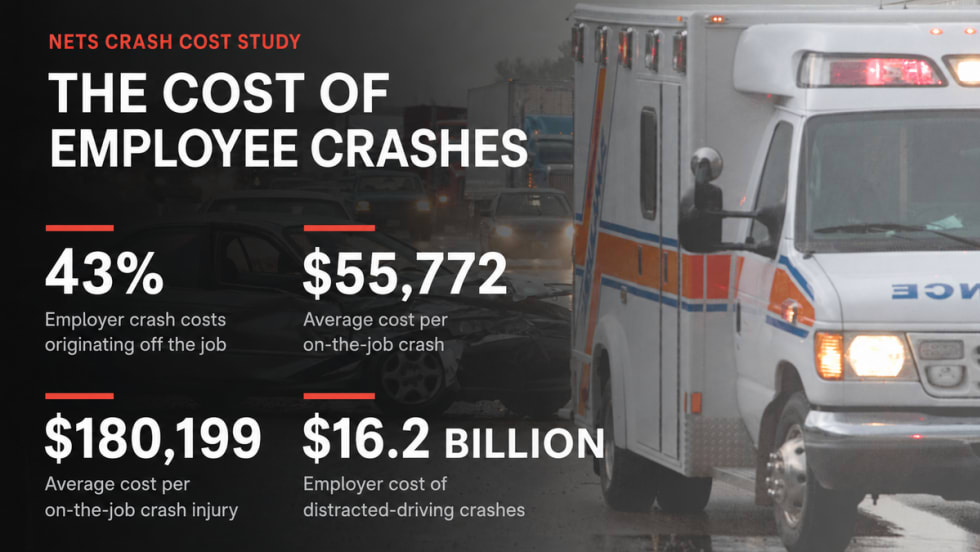
Off-the-Job Crashes Account for 43% of Employers’ $61.7 Billion Crash Burden
NETS quantifies costs dispersed across fleet, risk, HR, and other departments while providing new per-crash benchmarks for employers.
Read More →
Ram Recalls More Than 1.27 Million 1500 Pickups for Seat Belt Anchor Issue
The recall affects certain 2019-2026 Ram 1500 pickups that may have improperly attached second-row seat belt buckle anchors.
Read More →
Top 50 Executive Fleets
It is that time of year again! Time for the 2026 list of the Top 50 Executive Fleets, presented by Automotive Fleet and Volvo as part of its annual Fleet 500. Download now to see this year's list of companies!
Read More →
How Better Visibility Cut Speeding Violations by 48%
Fleet leaders don't need more data, they need clearer visibility into what the data is saying. This case study explores how one utility replaced speeding-event counts with a single metric — miles driven in violation — to strengthen safety and significantly reduce speeding violations.
Read More →
Operation Safe Driver Week: Why the Industry's Oldest Safety Campaign Still Matters to Fleets
A look at how a 2007 enforcement initiative became one of the most consequential weeks on the fleet safety calendar, and what it means for your drivers in 2026.
Read More →
Nexar-Nauto Merger Aims to Give Fleets Better Safety Intelligence Through Larger Driving Dataset
Stefan Heck tells Automotive Fleet that combining more than 10 billion miles of driving history with Nexar's AI models will give fleets deeper insights into driver risk and roadway conditions than either company could provide independently.
Read More →
From Silos to Solutions: Relationship Management for Safer Fleets
From telematics adoption and driver accountability to policy consistency and risk mitigation, this episode breaks down what it really takes to build a safer fleet culture without slowing business down.
Read More →
IIHS Launches First Commercial Vehicle Safety Evaluations
The Insurance Institute for Highway Safety has begun evaluating heavy-duty pickups and cargo vans for driver protection. Which models earned top marks?
Read More →
Reducing Risk by Eliminating Phone Use Behind the Wheel
Hosted with the cofounder of Lifesaver Mobile, this episode addresses phone use behind the wheel and how to design a driving environment that actually helps prevents accidents.
Read More →