




New GM Recall Pulls In Express, Savana Vans
General Motors will recall 303,000 Chevrolet Express and GMC Savana vans from six model years amid a broadening internal and external evaluation of the company's handling of vehicle safety.
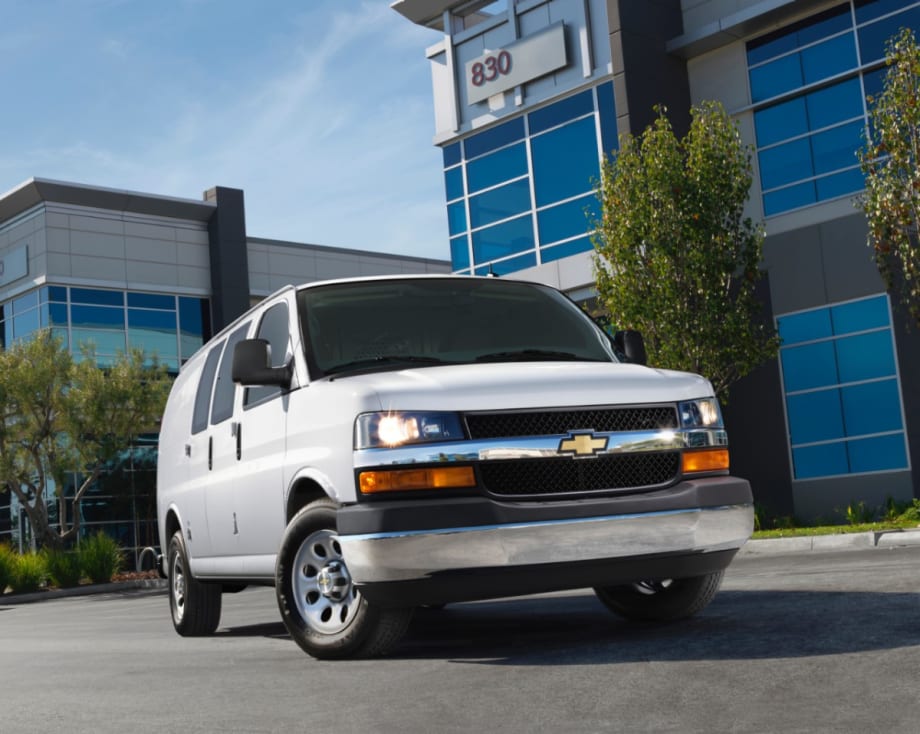
Photo of 2014 Chevrolet Express courtesy of General Motors.

Photo of 2014 Chevrolet Express courtesy of General Motors.
General Motors will recall 303,000 Chevrolet Express and GMC Savana vans from six model years amid a broadening internal and external evaluation of the company's handling of vehicle safety.
Because the full-size vans don't comply with a head-impact requirement for passengers not wearing seat belts, the vehicles need reworking of the passenger instrument panel material. The recalled vans come from the 2009 to 2014 model years and have a gross vehicle weight of 10,000 pounds or less.
Unsold vehicles have been placed on a stop-delivery until a remedy is developed and parts are available, GM announced March 17.
The company decided to launch these new recalls after conducting an internal safety review. Questions arising from the ignition safety switch recall prompted the safety review.
"I asked our team to redouble our efforts on our pending product reviews, bring them forward and resolve them quickly," said Mary Barra, GM's CEO. "That is what today's GM is all about."
Fleet buyers of the Chevrolet Express full-size van will be most impacted by the recall. In calendar-year 2012, fleets registered 52,515 Express vans, including 26,072 commercial and 19,896 government vehicles. Fleets registered 12,825 GMC Savana vans, including 3,823 in commercial fleets and 8,498 in rental fleets.
In a separate action, the automaker is recalling 1.18 million 2008- to 2013-MY Buick Enclave and GMC Acadia vehicles, 2009- to 2013-MY Chevrolet Traverse vehicles and 2008- to 2010-MY Saturn Outlook vehicles.
Mostly rental fleets registered the recalled mid-size SUVs, including the Chevrolet Traverse (15,211), Buick Enclave (5,734), GMC Arcadia (10,513). Commercial fleets added 2,340 Traverse SUVs in 2012, according to the Automotive Fleet 2013 Fact Book.

GM's CEO Mary Barra gives a update on the recalls and federal probe.
VIDEO: GM CEO Gives Recall Update
A third recall involves 63,900 2013- to 2014-MY Cadillac XTS full-size sedans. Fleets registered 855 XTS vehicles in 2012.
In the XTS, a brake booster pump can create positive pressure within the wiring harness attached to the pump relay. This pressure can lead to the dislodging of a plug in the brake booster pump relay, allowing corrosive elements to enter the connector and form a low-resistance short. This short could lead to overheating, melting of plastic components and a possible engine compartment fire.
GM said it is aware of two engine compartment fires in unsold vehicles at dealerships and two cases of melted components.
The Enclave, Traverse, Acadia and Outlook vehicles are equipped with a service air bag warning light in the driver information center. Ignoring the service air bag warning light will eventually result in the non-deployment of the side impact restraints, which include driver and passenger seat-mounted side air bags, a front center air bag (if equipped), and the seat belt pretensioners.
To repair the condition, dealers will remove the driver and passenger side air bag wiring harness connectors and splice and solder the wires together.
"Today's announcement underscores the focus we're putting on the safety and peace of mind of our customers," Barra said. "We are conducting an intense review of our internal processes and will have more developments to announce as we move forward."
GM expects to take a charge of approximately $300 million in the first quarter primarily for the cost of the repairs for the three safety actions and the previously announced ignition switch recall.
More Safety

What’s Next for Fleet? Safety, AI & Industry Recognition | AF News Recap
Could your company's culture be encouraging distracted driving? This week, we're exploring how workplace expectations affect driver safety, what AI, EVs, and autonomous vehicles could mean for the future of fleet management, and how fleet professionals can strengthen their award nominations.
Read More →
Does Your Fleet's Culture Encourage Distracted Driving?
What happens when the people responsible for enforcing safety rules are the ones setting the wrong example? The answer may reveal why some of the biggest risks to fleet drivers have little to do with what's written in the employee handbook.
Read More →
Fleet Manager’s Ultimate Playbook: Navigating the New Standard in OEM Connectivity
Rising operating costs, driver safety concerns, and unplanned downtime are putting unprecedented pressure on modern fleets. Discover how fleet managers use embedded OEM connectivity and real-time vehicle data to cut TCO, prevent downtime, and protect drivers without aftermarket telematics hardware.
Read More →
From Driver Well-Being to EV Charging | AF News Recap
Mental health belongs in the fleet safety conversation. This week, we’re looking at five ways fleets can support employee well-being before a crisis, plus Holman’s expansion in Mexico, new one-day Fleet Forward passes, and why EV charging demand is outpacing infrastructure growth.
Read More →
Nexar-Nauto Merger Aims to Give Fleets Better Safety Intelligence Through Larger Driving Dataset
Stefan Heck tells Automotive Fleet that combining more than 10 billion miles of driving history with Nexar's AI models will give fleets deeper insights into driver risk and roadway conditions than either company could provide independently.
Read More →
Don't Wait for a Crisis: 5 Ways to Build Mental Health Into Your Fleet Safety Program
For Suicide Prevention Month, fleet and safety leaders have an opportunity to put mental health where it belongs: at the center of workplace safety.
Read More →
How Camera Data Can Strengthen a Fleet’s Insurance Renewal
Insights from a commercial insurance carrier and a broker show how fleets can turn video telematic data, driver coaching, and improved claims results into a stronger case at insurance renewal.
Read More →
The Safest Fleets Aren’t the Ones with the Most Technology
You’ve made the telematics investment. Here’s how to capture the other half of its value and build the safest fleet on the road.
Read More →
Hidden in Plain Sight: Fleet Compliance Risks
Fleet compliance isn't just about having policies — it's about consistently enforcing them. This practical guide reveals six hidden compliance risks common in public sector and shared fleet operations and outlines proven strategies to improve visibility, accountability, and audit readiness
Read More →
NETS Sets 2026 Fleet Safety Benchmark Conference for Indianapolis
The Sept. 15–17 program will feature fleet benchmarking data, case studies, emerging technologies, and implementation strategies while running alongside the NSC Safety Congress & Expo.
Read More →