




New Calif. Regulations Will Restrict Use of Aftermarket Replacement Parts in Collision Repair
The California Department of Insurance announced it has drawn approval from the state’s Office of Administrative Law to begin implementing regulatory changes the department sought to restrict the use of non-OEM replacement crash parts. Insurers strongly oppose the changes.

The California Department of Insurance announced it has drawn approval from the state’s Office of Administrative Law to begin implementing regulatory changes the department sought to restrict the use of non-OEM replacement crash parts.
These amended regulations, expected to become effective on Jan. 30, are intended to protect motorists from defective or inferior aftermarket parts and to strengthen insurer accountability in the claims process, California Insurance Commissioner Dave Jones said. The regulations require the following:
An insurer must pay for the costs associated with returning a defective part and the cost to remove and replace the defective part with a compliant non-OEM part or an OEM (original equipment manufacturer) part
The current insurer's warranty must be expressly stated in the repair estimate generated by the insurer
An insurer must cease use of a part known to be non-compliant, and to notify the part distributer within 30 days
An insurer must pay for an amount to repair the damaged vehicle to its pre-loss condition in a good and workmanlike manner, based upon the repair standards required by auto body repair shops licensed by the Bureau of Automotive Repair.
Ninety days after these regulations are filed with the Secretary of State, or March 30, insurers must be in compliance.
"The amendments build on existing protections by requiring insurers to settle automobile insurance claims using repair standards described by the Bureau of Automotive Repair, and not the insurer's own standards of repair," said Commissioner Jones. "This also places greater accountability on the insurer when they require use of an aftermarket replacement part so that damaged automobiles are repaired properly and safely."
The California Department of Insurance (CDI) said it first proposed the regulatory changes in 2012 after investigating a number of complaints from consumers and collision repair shops. According to the department, the investigation led staff to conclude that the insurance industry was failing to protect clients from the use of defective or non-compliant aftermarket parts in the collision repair process.
CDI said it discovered instances of insurers calling for the use of defective aftermarket bumper reinforcements, hood latches and other safety-related parts that failed to comply with current repair standards. The department added that it also learned of “substantial costs borne by automobile repair shops and their customers associated with installing defective or poorly fitting parts required by insurers.”
Such faulty repair work, along with the use of inferior aftermarket replacement parts, might pose safety risks and hasten vehicle depreciation, the department said.
However, insurers in the state have called CDI’s assessment biased, arguing that the new regulations will hinder the insurance industry’s ability to keep collision repair costs in check.
Last summer, during a hearing about the proposed regulatory changes, the Association of California Insurance Companies (ACIC) testified that the proposed requirements would unfairly benefit body shops and OEMs. The changes would lead to higher auto repair costs and possibly higher insurance premiums for motorists, industry representatives said.
“These regulations essentially allow the auto body repair shops to name their own price, charging whatever they want for auto repairs, and insurers will be required by these regulations to pay,” said Armand Feliciano, ACIC vice president, back in August 2012. “Insurers pay for approximately 90% of the auto body repairs in the nation. The current free market system provides checks and balances by allowing the parties to work together to determine prices for auto repairs and parts – these regulations will undermine insurers’ ability to manage costs and basically provide auto body shops a blank check. These regulations completely ignore the fact that auto body shops are vendors with a financial stake in the system, not consumers. It is not the role of the insurance commissioner to interfere in the free market system and propose regulations that will financially benefit one party – auto body shops – at the expense of policyholders.”
Two months later, during a workshop on the proposed regulations, ACIC again argued against the changes. The association predicted that, if passed, the regulations would invite unnecessary litigation, slow an insurer’s ability to respond to customer needs, and unfairly force insurance companies to make trade secret information publicly available.
More Safety

Nexar-Nauto Merger Aims to Give Fleets Better Safety Intelligence Through Larger Driving Dataset
Stefan Heck tells Automotive Fleet that combining more than 10 billion miles of driving history with Nexar's AI models will give fleets deeper insights into driver risk and roadway conditions than either company could provide independently.
Read More →
Don't Wait for a Crisis: 5 Ways to Build Mental Health Into Your Fleet Safety Program
For Suicide Prevention Month, fleet and safety leaders have an opportunity to put mental health where it belongs: at the center of workplace safety.
Read More →
How Camera Data Can Strengthen a Fleet’s Insurance Renewal
Insights from a commercial insurance carrier and a broker show how fleets can turn video telematic data, driver coaching, and improved claims results into a stronger case at insurance renewal.
Read More →
The Safest Fleets Aren’t the Ones with the Most Technology
You’ve made the telematics investment. Here’s how to capture the other half of its value and build the safest fleet on the road.
Read More →
Hidden in Plain Sight: Fleet Compliance Risks
Fleet compliance isn't just about having policies — it's about consistently enforcing them. This practical guide reveals six hidden compliance risks common in public sector and shared fleet operations and outlines proven strategies to improve visibility, accountability, and audit readiness
Read More →
NETS Sets 2026 Fleet Safety Benchmark Conference for Indianapolis
The Sept. 15–17 program will feature fleet benchmarking data, case studies, emerging technologies, and implementation strategies while running alongside the NSC Safety Congress & Expo.
Read More →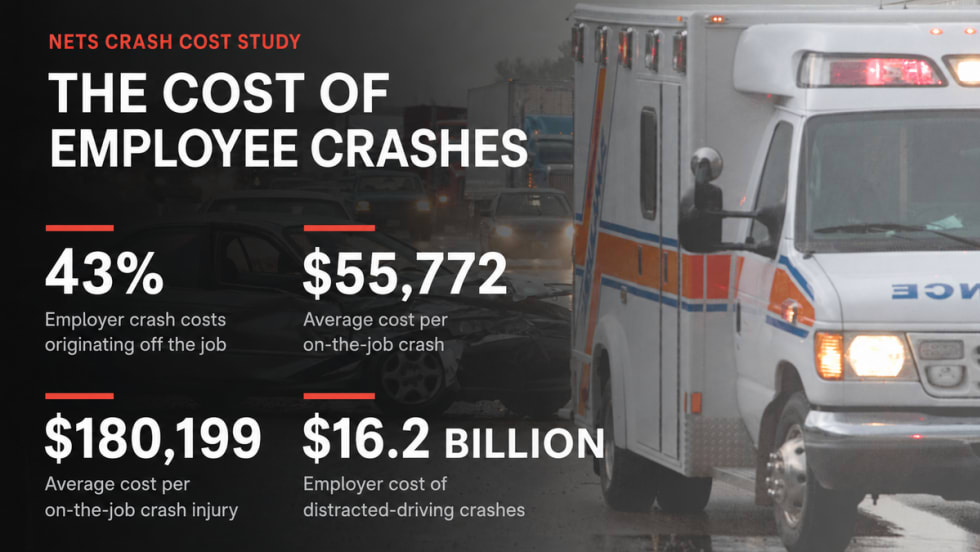
Off-the-Job Crashes Account for 43% of Employers’ $61.7 Billion Crash Burden
NETS quantifies costs dispersed across fleet, risk, HR, and other departments while providing new per-crash benchmarks for employers.
Read More →
Ram Recalls More Than 1.27 Million 1500 Pickups for Seat Belt Anchor Issue
The recall affects certain 2019-2026 Ram 1500 pickups that may have improperly attached second-row seat belt buckle anchors.
Read More →
How Better Visibility Cut Speeding Violations by 48%
Fleet leaders don't need more data, they need clearer visibility into what the data is saying. This case study explores how one utility replaced speeding-event counts with a single metric — miles driven in violation — to strengthen safety and significantly reduce speeding violations.
Read More →
Operation Safe Driver Week: Why the Industry's Oldest Safety Campaign Still Matters to Fleets
A look at how a 2007 enforcement initiative became one of the most consequential weeks on the fleet safety calendar, and what it means for your drivers in 2026.
Read More →