




New 2011 Lincoln MKX Delivers Best-in-Class Power, Torque & Fuel Economy
DEARBORN, MI - The 2011 Lincoln MKX is the newest vehicle in the automaker's lineup to offer best-in-class horsepower and torque and the best fuel economy of any luxury crossover vehicle on the market.
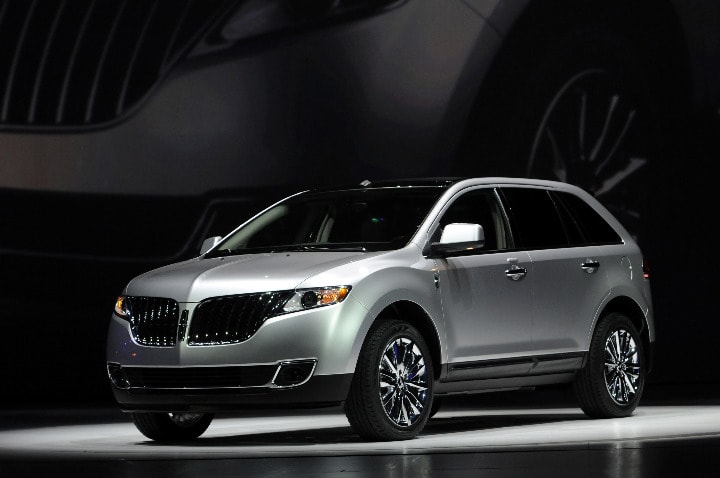
2011 Lincoln MKX
DEARBORN, MI - The 2011 Lincoln MKX is the newest vehicle in the automaker's lineup to offer best-in-class horsepower and torque and the best fuel economy of any luxury crossover vehicle on the market.
The 2011 Lincoln MKX received final fuel economy certification this week, achieving 19 mpg city and 26 mpg highway, with a combined fuel economy of 21 mpg, topping all competitors, including the Lexus RX350, Cadillac SRX and BMW X5, with not only horsepower but now fuel efficiency as well.
"The new 2011 MKX is the latest vehicle to deliver on Lincoln's commitment of industry-leading performance and fuel efficiency," said Derrick Kuzak, Ford's group vice president, Global Product Development. "It offers no compromises with best-in-class fuel economy, horsepower and torque."
2011 Lincoln MKX vs. the Competition
City | Highway | Combined | |
2011 Lincoln MKX 3.7L V6 FWD | 19 | 26 | 21 |
2010 Acura ZDX 3.7L V6 AWD | 16 | 23 | 19 |
2010 Audi Q5 3.2L V6 AWD | 18 | 23 | 20 |
2011 BMW X5 3.0L V6 4WD | 17 | 25 | 20 |
2010 Cadillac SRX 3.0L V6 FWD | 18 | 25 | 21 |
2010 Infiniti FX35 3.5L V6 RWD | 16 | 23 | 19 |
2010 Lexus RX350 3.5L V6 FWD | 18 | 25 | 21 |
2010 Mercedes-Benz ML350 3.5L V6 FWD | 16 | 21 | 18 |
2010 Volkswagen Touareg 3.6L V6 4WD | 14 | 19 | 16 |
2010 Volvo XC70 AWD | 16 | 22 | 18 |
*All numbers certified by the EPA. Best-in-class numbers in bold
The horsepower of the 2011 Lincoln MKX has increased to 305 - a 15 percent increase compared to the outgoing product - while torque has increased 12 percent to 280 lb.-ft.
"The Lincoln MKX doesn't sacrifice power to receive its great fuel economy," Kuzak said. "Our engineers were able to deliver an increase in power and torque in a fashion that reflects the luxurious driving experience that Lincoln is known for."
Lincoln's first-ever hybrid - the 2011 Lincoln MKZ Hybrid - was recently named the most fuel-efficient luxury sedan in America, delivering 41 mpg in city driving and 36 mpg on the highway. This tops the vehicle's nearest competitor - the Lexus HS 250h - by 6 mpg.
The 2010 Lincoln MKT with EcoBoostTM continues to provide better gas highway fuel economy - 21 mpg - than any other all-wheel-drive vehicle in its class.

For the 2011 MKX, engineers integrated the new 3.7L V-6 engine, which uses twin independent variable camshaft timing (Ti-VCT) to increase the vehicle's power and fuel economy. The broadened torque curve allows the intake valve to be advanced, delivering about a 10 percent power increase compared to non-Ti-VCT engines. Variable timing control of both the intake and exhaust camshafts helps extract more energy from each drop of fuel, leading to a 4.5 percent improvement in fuel economy.
The engine also employs a control strategy called aggressive deceleration fuel shutoff to save fuel. This strategy shuts off the engine when the driver doesn't need engine torque. It uses the momentum from the torque delivered to the transmission to move the vehicle, rather than more fuel.
"The 2011 Lincoln MKX will continue to propel the Lincoln lineup that is already ahead of the curve," Kuzak said.
The 2011 Lincoln MKX continues to reinforce Ford Motor Company's record largest increase in fuel economy gains over the past five years, according to the EPA.
More Operations

Fleet Has a Talent Pipeline Problem. What Comes Next? | AF News Recap
Where will fleet’s next generation of leaders come from? This week, we’re looking at the industry’s talent pipeline, what certification can add to a fleet career, how to build an award-worthy track record, and the return of Automotive Fleet’s Personal Use Survey.
Read More →
Smith System Launches Driver Risk Management Program
Fleets have more driver data than ever, but identifying risky behavior doesn't necessarily correct it. Smith System's new Driver Risk Management program combines monitoring, training, and follow-up coaching to help fleets connect risk signals with driver intervention.
Read More →
Automotive Fleet Opens 2026 Personal Use Survey for Commercial Fleet Managers
Less than two weeks left! Commercial and corporate fleet managers are invited to share how their organizations handle company vehicle personal-use policies, charges, and driver eligibility.
Read More →
From AI Prompts to AI-Generated Safety Songs | AF News Recap
Can better prompts make AI more useful for fleet managers? This week, we’re breaking down smarter fleet analysis, an AI-assisted experiment that turned safety training into music, and what happened to fuel prices in August.
Read More →
How to Write Better AI Prompts for Fleet Analysis
Include these six elements in your fleet prompts to generate more relevant analysis and accurate answers.
Read More →
Fleet Meets: Eric Kilgore
This edition of the Fleet Meets series features one of the industry's best leaders driving multi-market and national operations.
Read More →
Why Reactive Fleet Management Is Becoming Too Expensive to Sustain
Research highlights a growing need for proactive management strategies to address rising costs in fleet operations effectively.
Read More →
What Your Fleet KPIs Aren’t Telling You
Tracking fleet metrics is only useful when the data leads to better decisions. This guide helps fleet leaders assess cost, utilization, and downtime more accurately, identify performance gaps, and prioritize the actions that can improve operational results.
Read More →
Hidden in Plain Sight: Fleet Compliance Risks
Fleet compliance isn't just about having policies — it's about consistently enforcing them. This practical guide reveals six hidden compliance risks common in public sector and shared fleet operations and outlines proven strategies to improve visibility, accountability, and audit readiness
Read More →
Turning Fleet Payment Data into Executive Insights
Does data alone drive results in operations?
Read More →