




Navistar Launches eStar All-Electric Truck in 'Sustainable City'
PORTLAND, OR - Navistar, Inc. announced that Portland, Ore., will be the initial launch market for Navistar's eStar truck-the first full-production, purpose-built all-electric truck
PORTLAND, OR - Navistar, Inc. announced that one of the nation's most environmentally sustainable cities and a leading advocate for energy-efficient transportation.- Portland, Ore.- will be the initial launch market for Navistar's eStar truck-the first full-production, purpose-built all-electric truck.
"We're excited to debut the eStar in Portland and give local media and government officials an up-close look at one of the coolest, most environmentally friendly commercial trucks on the road today," said Jim Hebe, senior vice president, North American sales operations, Navistar. "As one of the most sustainable cities in the nation, a city like Portland can appreciate the amazing potential of the eStar all-electric truck when it comes to clean, energy-efficient transportation."
"Freight and service trucks present the biggest opportunity for real and significant reductions in carbon emissions and pollution, especially in the urban environment," said Portland Mayor Sam Adams. "Because of all Portland is doing to be a more sustainable and prosperous city and encourage the electric vehicle industry, I'm proud that Navistar chose Portland as its initial launch city for the eStar purpose-built, all-electric truck."
Navistar also announced its eStar dealer for the Pacific Northwest market-Cascadia International Trucks of Tacoma, Wash. With more than 50 years experience, Cascadia International has a reputation for outstanding customer service and will provide all sales, service and parts needs for eStar customers in the region.
"With the eStar truck making its debut in Portland today, Navistar is fully capable to support our customers through select dealers networked in our initial launch regions," Hebe added. "No other commercial electric vehicle competes with the eStar in terms of capacity, size and application. We believe customers will love the eStar because of its capabilities as an electric vehicle and won't have to change their fleet usage in order to take advantage of the truck's performance."
The eStar all-electric truck is the first medium-duty commercial vehicle to receive U.S. Environmental Protection Agency (EPA) certification as a clean fuel fleet vehicle as well as California Air Resources Board (CARB) certification as a zero-emissions vehicle.
This Class 2c-3 electric truck-the first in its category-has a range of 100 miles per charge, making it ideal for many urban applications. When it returns to its home base at the end of the day, it can be plugged in and fully recharged within six to eight hours.
"The all-electric eStar commercial truck is a groundbreaking product and Navistar is once again leading the way in bringing innovative, game-changing products to market," Hebe added. "Along with the advancements we've made in aerodynamics and fuel efficiency for heavy trucks, our comprehensive line-up of hybrid trucks and school buses, and now with the addition of the eStar all-electric truck, Navistar has the largest portfolio of energy-efficient, environmentally friendly trucks in the industry."
The eStar all-electric truck transitioned from concept to reality in August 2009, when President Barack Obama visited Navistar's manufacturing plant in Indiana to announce a $39.2 million federal stimulus grant to build electric trucks. Less than one year later, Navistar has completed testing and validation, developed and delivered prototype vehicles, and received EPA and CARB certifications. The eStar meets all Federal Motor Vehicles Safety Standards (FMVSS) and Navistar is now taking orders and building these all-electric trucks.
Unlike other electric trucks that are reconfigured models of fossil-fuel trucks, the eStar truck has been purpose-built for electric power, creating an advantage with a low center of gravity (the battery is between the frame rails, not mounted on top) and a 36-foot turning radius. The eStar is engineered with superior aerodynamics, a walk-through cab and a quick-change cassette-type battery that can be swapped out in 20 minutes, enabling around the clock operation. It is capable of carrying payloads up to two tons.
With zero tailpipe emissions, each eStar truck can reduce greenhouse gas emissions by as much as 10 tons annually. Drivers will be able to experience the ultimate in ergonomic design as the windshield provides nearly 180-degree visibility, the low-floor design provides easy loading/unloading and the noise level is near zero, which makes this nimble vehicle ideal for urban areas facing noise challenges.
Sales of the eStar all-electric vehicle are conducted through a wholly owned Navistar affiliate. The eStar truck is produced through the Navistar-Modec EV Alliance, LLC, the joint venture between Navistar, Inc. and Modec Limited of the United Kingdom.
For decades, Navistar has demonstrated a commitment to technologies that benefit the environment and its customers. In 1989, Navistar was the first original equipment manufacturer to release the smokeless diesel engine and, in 2001, Navistar was the first engine manufacturer to gain certification from the EPA for meeting particulate and hydrocarbon emissions standards - six years ahead of schedule. The company was also the first to enter line production of hybrid commercial trucks and hybrid school buses.
More Green Fleet
EV Charging Use Is Outpacing Infrastructure Growth
ChargePoint’s 2026 Charging Forward Report points to rising charger use, higher-powered charging, commercial vehicle electrification, and energy-management technology. Here’s what fleets should know.
Read More →
Merchants Fleet Reports 290M EV Miles as Fleets Navigate Changing Electrification Market
From millions in operating savings to hundreds of millions of EV miles, Merchants Fleet’s latest report reveals what’s working and what’s changing in fleet electrification.
Read More →
The EV Breakdown Nobody's Talking About: Why Most Electric Vehicle Roadside Calls Aren't Mechanical Failures
Here's why EV breakdowns are widely misunderstood.
Read More →
ChargePoint Now Available in Energy Pass
ChargePoint and additional planned charging network integrations were added to GM's Energy Pass.
Read More →
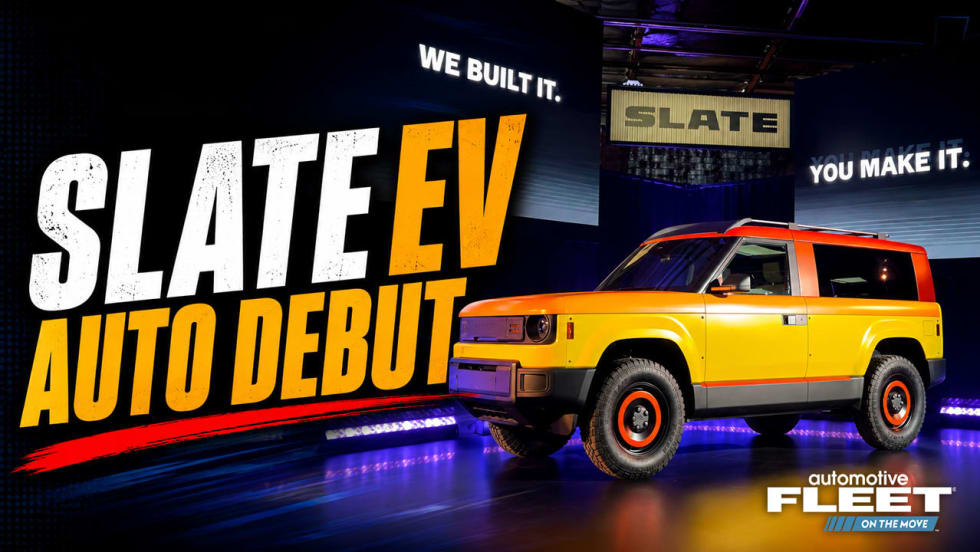
First Look: Slate Auto's Electric Fleet Pickup
Could an affordable, modular EV pickup make electrification more practical for fleets?
Read More →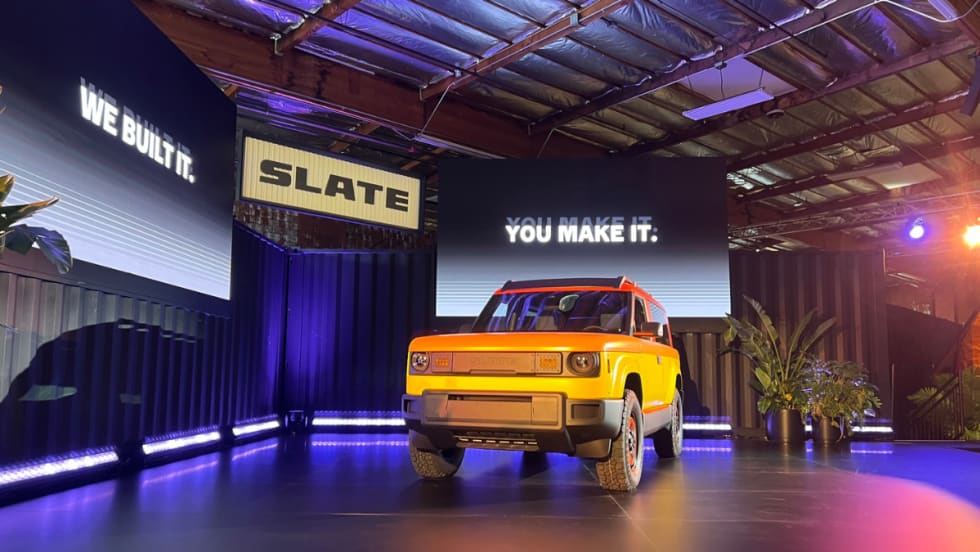
Slate Debuts Colorful, Unique EV Models
A recent media and client event, studded with electric vehicles dressed up on platforms, planted a new position for the manufacturer in the wider EV market. Fleets will find cost-saving advantages.
Read More →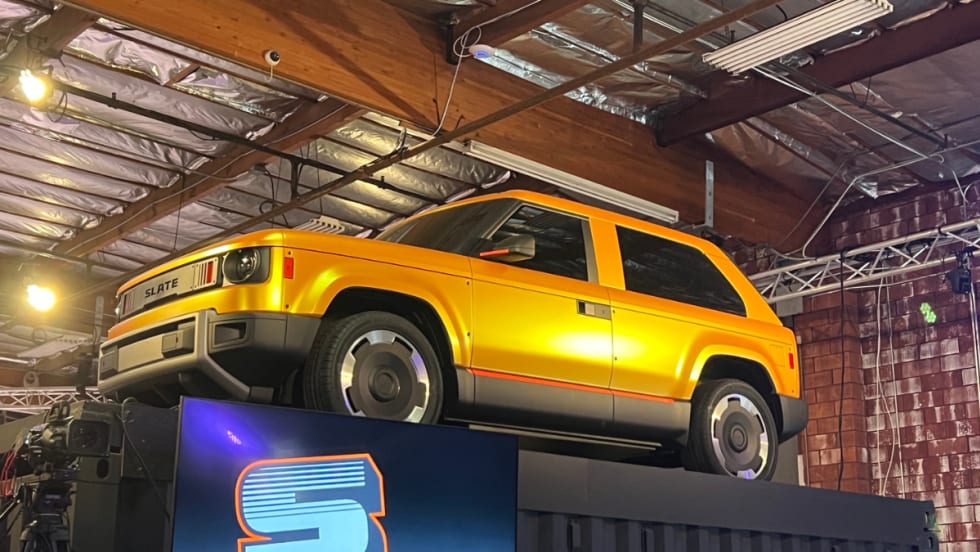
Slate Electric SUV, Pickup Switchable Model Aims For Light-Duty Fleets
Everything about this EV is counterintuitive and understated, making it stand out from the crowd.
Read More →
Inspiration Mobility Acquires Key Electrada Assets
Inspiration Mobility Group has acquired select assets of Electrada, adding the fleet electrification provider's team, technology, and charging infrastructure development capabilities to its energy management business.
Read More →
Turning Connected Vehicle Data Into Decisions That Matter
Fleet leaders have more data than ever, but turning that data into clear, actionable decisions remains a challenge. This white paper shows how leading organizations are using connected vehicle data to improve safety, reduce costs, and optimize fleet performance. Learn how to turn insight into action across your fleet.
Read More →