




Navistar Issues Statement on Fuel Efficiency and Greenhouse Gas Regulations for Heavy Trucks
WARRENVILLE, IL - Navistar issues a response to the regulatory proposal to improve fuel efficiency and reduce greenhouse gas (GHG) emissions from medium- and heavy-duty trucks and buses released Oct. 25 by the U. S. Environmental Protection Agency (EPA) and the U. S. Department of Transportation (DOT).
WARRENVILLE, IL - In response to the regulatory proposal to improve fuel efficiency and reduce greenhouse gas (GHG) emissions from medium- and heavy-duty trucks and buses released Oct. 25 by the U. S. Environmental Protection Agency (EPA) and the U. S. Department of Transportation (DOT), Navistar issued the following statement:
"As a leader in manufacturing medium and heavy-duty engines and vehicles in the United States, Navistar has been actively engaged in providing solutions for improved fuel efficiency and reduced greenhouse gas emissions," said Daniel C. Ustian, Navistar chairman, president and chief executive officer. "While it's too soon to evaluate all elements of the proposed regulations, we are committed to engaging with the EPA and DOT on this issue. We look forward to working together with government and industry leaders in the months ahead to implement changes that will benefit the customers and communities we serve with cleaner, more fuel efficient commercial vehicles."
Navistar will work closely with the EPA and DOT to ensure this program expands the use of existing technologies to reduce CO2 emissions, improves overall fuel efficiency, and properly incentivizes the early introduction of advanced technologies.
Navistar's History of Environmental Leadership
Throughout its history, Navistar has been focused on producing products that meet the commercial needs of our customers as efficiently and cost-effectively as possible. Navistar has a long and successful record of working cooperatively with EPA and DOT and other regulatory agencies.
For decades, Navistar has demonstrated its commitment to clean technologies that benefit the environment and its customers. Navistar was the first Original Equipment Manufacturer (OEM) to release the smokeless diesel engine and was the first engine manufacturer to gain EPA certification for meeting 2007 particulate and hydrocarbon emissions standards-six years ahead of schedule. Navistar was also the first OEM to enter assembly line production of diesel-hybrid commercial trucks and school buses in North America.
For its ongoing leadership, Navistar was honored with the 2007 Blue Sky Award from WestStart-CALSTART for its contributions to the commercial development of diesel-hybrid technology. This preeminent award is presented each year by WestStart-CALSTART, the nation's leading advanced transportation technology industry organization working to support and accelerate the growth of companies developing clean and energy-efficient transportation technologies.
Navistar became the first OEM to receive dual certification through the U.S. Environmental Protection Agency (EPA) SmartWay Program for helping to reduce greenhouse gas (GHG) emissions. Navistar produces two industry-leading Class 8 trucks with SmartWay certification, International® LoneStar® and International® ProStar®, a distinction they received for their superior aerodynamics and fuel economy. While the ProStar is recognized as the most fuel-efficient Class 8 tractor on the market, in June 2009, the groundbreaking LoneStar became the first classic-styled Class 8 tractor to receive the SmartWay certification. In January 2009, Navistar also became a SmartWay Transport Partner, becoming the first OEM with SmartWay-certified tractors to also be certified as a transport partner. The SmartWay Transport Partnership is a voluntary program that recognizes partners for setting and achieving greenhouse gas (GHG) reduction goals in freight transport. The program also helps lower operating costs by reducing fuel surcharges and offers customers EPA-certified, fuel-efficient tractors.
Most recently, Navistar continued its "green" product development leadership with the introduction of the eStar all-electric truck-the first medium-duty commercial vehicle to receive U.S. Environmental Protection Agency (EPA) certification as a clean fuel fleet vehicle as well as California Air Resources Board (CARB) certification as a zero emissions vehicle.
The eStar all-electric truck transitioned from concept to reality in August 2009, when President Barack Obama visited Navistar's manufacturing plant in Indiana to announce a $39.2 million federal stimulus grant to build electric trucks. A year later, Navistar has completed testing and validation, developed and delivered prototype vehicles, and received EPA and CARB certifications. With no tailpipe emissions, each eStar truck can reduce greenhouse gas emissions by as much as 10 tons annually.
More Green Fleet

The EV Breakdown Nobody's Talking About: Why Most Electric Vehicle Roadside Calls Aren't Mechanical Failures
Here's why EV breakdowns are widely misunderstood.
Read More →
ChargePoint Now Available in Energy Pass
ChargePoint and additional planned charging network integrations were added to GM's Energy Pass.
Read More →

First Look: Slate Auto's Electric Fleet Pickup
Could an affordable, modular EV pickup make electrification more practical for fleets?
Read More →
Slate Debuts Colorful, Unique EV Models
A recent media and client event, studded with electric vehicles dressed up on platforms, planted a new position for the manufacturer in the wider EV market. Fleets will find cost-saving advantages.
Read More →
Slate Electric SUV, Pickup Switchable Model Aims For Light-Duty Fleets
Everything about this EV is counterintuitive and understated, making it stand out from the crowd.
Read More →
Inspiration Mobility Acquires Key Electrada Assets
Inspiration Mobility Group has acquired select assets of Electrada, adding the fleet electrification provider's team, technology, and charging infrastructure development capabilities to its energy management business.
Read More →
Turning Connected Vehicle Data Into Decisions That Matter
Fleet leaders have more data than ever, but turning that data into clear, actionable decisions remains a challenge. This white paper shows how leading organizations are using connected vehicle data to improve safety, reduce costs, and optimize fleet performance. Learn how to turn insight into action across your fleet.
Read More →
Are You Tracking Your Fleet's True Total Cost of Ownership?
Bobit Business Media surveyed 190 fleet professionals and found that while most fleets are tracking costs, fragmented systems and data gaps are keeping true TCO visibility out of reach. With rising pressure to control spend in an increasingly volatile environment, the gap between what fleets think they know and what the data actually shows is wider than you might expect. See how your peers are managing costs today and where the industry still has room to improve.
Read More →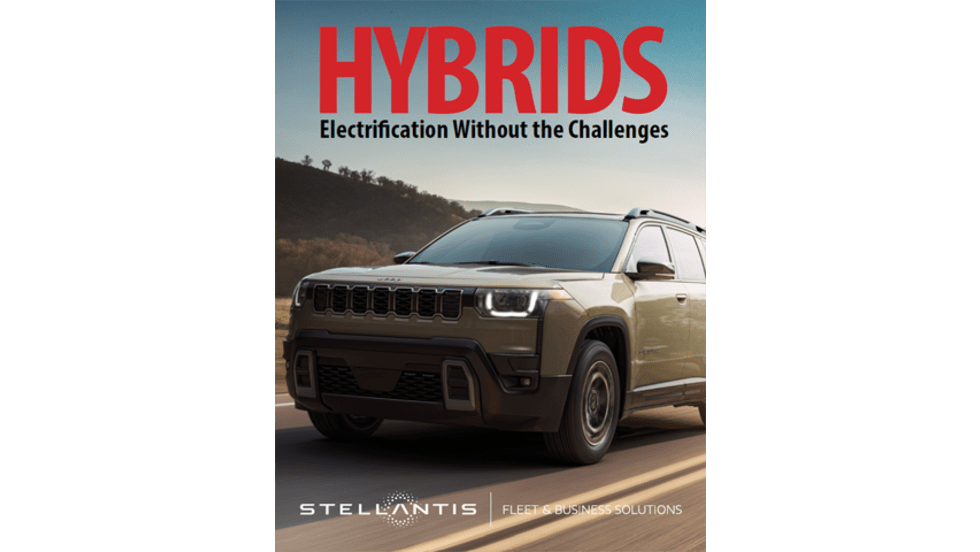
Hybrids: Electrification Without the Challenges
For fleet managers, fuel is one of the biggest line items in the budget — and it's one hybrids can shrink without changing how your people work. Download the eBook to see the numbers, understand the technology, and get a step-by-step guide to making the switch.
Read More →