




NAFA CEO Russo Shares Association's Goals
Presenting last week at San Diego’s Paradise Point Resort, NAFA CEO Phillip Russo briefed the Pacific Southwest Chapter about the Association’s initiatives and direction.
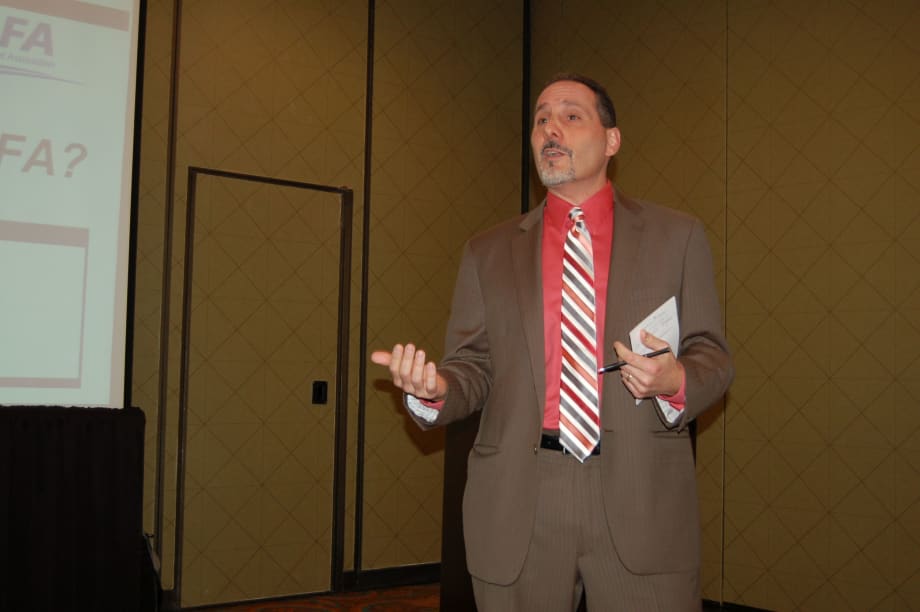
NAFA CEO Phillip Russo presented at the Pacific Southwest Chapter meeting last week.
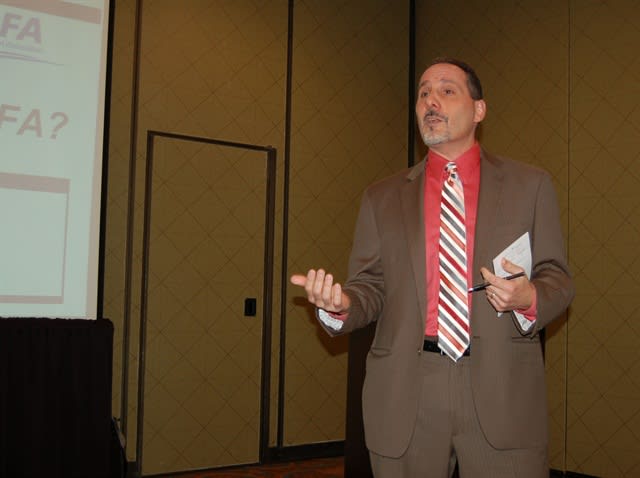
NAFA CEO Phillip Russo presented at the Pacific Southwest Chapter meeting last week.
Presenting last week at San Diego’s Paradise Point Resort, NAFA CEO Phillip Russo briefed the Pacific Southwest Chapter about the Association’s initiatives and direction.
Russo, who was recently promoted to CEO during an Association-wide reorganization, emphasized that NAFA is a member-driven Association. “Everybody is NAFA,” he exclaimed, adding that there is a renewed emphasis on giving value to the members.
NAFA will be providing this value in a number of ways. Russo broke the member value prospects into five categories: networking, continuing education, resources, advocacy, and publications.
NAFA’s annual Institute and Expo (I&E) provides various networking opportunities for members. This year’s I&E will take place at the Minneapolis Convention Center from April 9-10. Members can also network online through NAFA’s social media accounts (Facebook, Twitter, and LinkedIn).
Fleet managers can continue their fleet education by attaining one of NAFA’s certification (Certified Automotive Fleet Manager or Certified Automotive Fleet Specialist programs), in-person seminars, such as “Essentials of Fleet Management” and “Masters Seminar,” and monthly webinars. NAFA also offers multiple resources including surveys, NAFA-written guides, career resources, such as resume and job-posting services, and publications including its biweekly e-newsletter (NAFAConnection) and bimonthly magazine (FLEETSolutions).
Other highlights of Russo’s presentation included an overview of the eight disciplines to become a successful fleet manager: asset management, business management, financial management, information management, maintenance, fuel, risk and professional development.
The meeting began with the announcement of NAFA PSW’s new board members, including Mike Antich as program chair and Rick Longobart as treasurer. Tony Orta, fleet asset manager for Southern California Gas Co., and Rick Sikes, fleet manager of the City of Santa Monica, Calif., remained as president and vice president respectively.
By Amy Winter, photo by Chris Wolski
More Operations

Fleet Has a Talent Pipeline Problem. What Comes Next? | AF News Recap
Where will fleet’s next generation of leaders come from? This week, we’re looking at the industry’s talent pipeline, what certification can add to a fleet career, how to build an award-worthy track record, and the return of Automotive Fleet’s Personal Use Survey.
Read More →
Smith System Launches Driver Risk Management Program
Fleets have more driver data than ever, but identifying risky behavior doesn't necessarily correct it. Smith System's new Driver Risk Management program combines monitoring, training, and follow-up coaching to help fleets connect risk signals with driver intervention.
Read More →
Automotive Fleet Opens 2026 Personal Use Survey for Commercial Fleet Managers
Less than two weeks left! Commercial and corporate fleet managers are invited to share how their organizations handle company vehicle personal-use policies, charges, and driver eligibility.
Read More →
From AI Prompts to AI-Generated Safety Songs | AF News Recap
Can better prompts make AI more useful for fleet managers? This week, we’re breaking down smarter fleet analysis, an AI-assisted experiment that turned safety training into music, and what happened to fuel prices in August.
Read More →
How to Write Better AI Prompts for Fleet Analysis
Include these six elements in your fleet prompts to generate more relevant analysis and accurate answers.
Read More →
Fleet Meets: Eric Kilgore
This edition of the Fleet Meets series features one of the industry's best leaders driving multi-market and national operations.
Read More →
Why Reactive Fleet Management Is Becoming Too Expensive to Sustain
Research highlights a growing need for proactive management strategies to address rising costs in fleet operations effectively.
Read More →
What Your Fleet KPIs Aren’t Telling You
Tracking fleet metrics is only useful when the data leads to better decisions. This guide helps fleet leaders assess cost, utilization, and downtime more accurately, identify performance gaps, and prioritize the actions that can improve operational results.
Read More →
Hidden in Plain Sight: Fleet Compliance Risks
Fleet compliance isn't just about having policies — it's about consistently enforcing them. This practical guide reveals six hidden compliance risks common in public sector and shared fleet operations and outlines proven strategies to improve visibility, accountability, and audit readiness
Read More →
Turning Fleet Payment Data into Executive Insights
Does data alone drive results in operations?
Read More →