




MSRP for 2012-MY Mazda3 Starts at $15,200
IRVINE, CA - The new model of the Mazda3 is available as a sedan or hatchback.
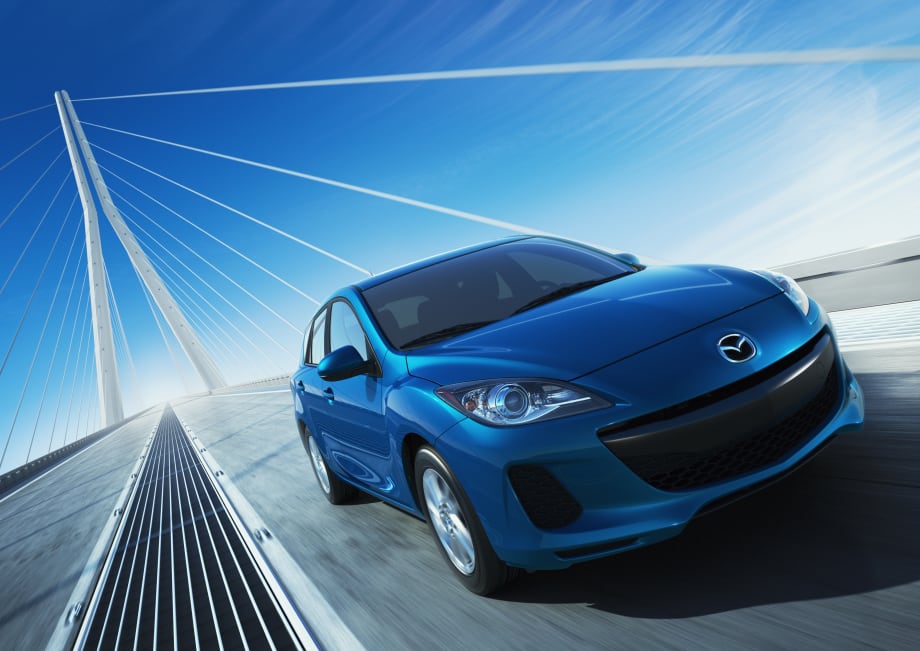
The 2012-MY Mazda3.

The 2012-MY Mazda3.
IRVINE, CA - Mazda North American Operations (MNAO) announced pricing for its refreshed 2012-MY Mazda3 compact. The new model is available as a sedan or hatchback. The Mazda3 i SV sedan starts at a MSRP of $15,200, which is a price drop from the previous model year, according to Mazda.
The Mazda3 I SV sedan features updated styling, with a revised front fascia and a five-point grille opening. Inside, the vehicle features new cloth seats and a black color scheme in the cabin. The Mazda3 I SV comes with the MZR 2.0L engine.
Moving up to the Mazda3 i Sport, the 2012 model sees the addition of remote keyless entry as standard equipment. The Mazda3 i Sport sedan starts at $16,845 MSRP and is optionally available with the five-speed Sport automatic transmission. Mazda3 i SV and Sport trims are not available on five-door models.
Next, the Mazda3 i Touring model features the all-new SKYACTIV-G 2.0L gasoline engine, which is EPA-rated to achieve 40 mpg on the highway. MSRP for the sedan model starts at $18,450. The new SKYACTIV engine produces 155 horsepower and 148 lb.-ft. of torque. Mazda said its all-new engine offers 5 percent more horsepower than the standard MZR 2.0L engine, 10 percent more peak torque, 15 percent more low- to mid-range torque, and up to 21-percent better fuel economy.
In addition, Mazda said the hatchback model will be available for the first time in the U.S. with a 2.0L engine. Priced from $18,950 for the Mazda3 i Touring hatchback with SKYACTIV-G, this model provides an EPA-rated 39 mpg on the highway. All i Touring and Grand Touring models are available with the all-new SKYACTIV-MT six-speed manual transmission or the all-new SKYACTIV-Drive six-speed automatic transmission
Available in Touring and Grand Touring trims, Mazda3 s models are equipped with an MZR 2.5-liter engine that boasts 167 horsepower and 168 lb-ft of torque. Starting at $21,300 MSRP for the sedan and $21,800 for the hatchback, new standard features for s models are all-new 17-inch aluminum alloy wheels, the Mazda Advanced Keyless Entry & Start System with push-button start, a moonroof, a dual zone automatic climate control system and a Bose® Centerpoint® 10-speaker Surround Sound System with AudioPilot®. Navigation is now standard on all s Grand Touring models.
In terms of options, the automaker is offering a MAZDASPEED3 Technology Package, an MSRP of $2,135. It adds features such as navigation, Blind Spot Monitoring (BSM) System, Adaptive Front-lighting System (AFS), self-leveling bi-xenon headlights, automatic headlights, Sirius satellite radio, a perimeter alarm, rain-sensing windshield wipers, and the Mazda Advanced Keyless Entry & Start System with push-button start.
More Operations

Fleet Has a Talent Pipeline Problem. What Comes Next? | AF News Recap
Where will fleet’s next generation of leaders come from? This week, we’re looking at the industry’s talent pipeline, what certification can add to a fleet career, how to build an award-worthy track record, and the return of Automotive Fleet’s Personal Use Survey.
Read More →
Smith System Launches Driver Risk Management Program
Fleets have more driver data than ever, but identifying risky behavior doesn't necessarily correct it. Smith System's new Driver Risk Management program combines monitoring, training, and follow-up coaching to help fleets connect risk signals with driver intervention.
Read More →
Automotive Fleet Opens 2026 Personal Use Survey for Commercial Fleet Managers
Less than two weeks left! Commercial and corporate fleet managers are invited to share how their organizations handle company vehicle personal-use policies, charges, and driver eligibility.
Read More →
From AI Prompts to AI-Generated Safety Songs | AF News Recap
Can better prompts make AI more useful for fleet managers? This week, we’re breaking down smarter fleet analysis, an AI-assisted experiment that turned safety training into music, and what happened to fuel prices in August.
Read More →
How to Write Better AI Prompts for Fleet Analysis
Include these six elements in your fleet prompts to generate more relevant analysis and accurate answers.
Read More →
Fleet Meets: Eric Kilgore
This edition of the Fleet Meets series features one of the industry's best leaders driving multi-market and national operations.
Read More →
Why Reactive Fleet Management Is Becoming Too Expensive to Sustain
Research highlights a growing need for proactive management strategies to address rising costs in fleet operations effectively.
Read More →
What Your Fleet KPIs Aren’t Telling You
Tracking fleet metrics is only useful when the data leads to better decisions. This guide helps fleet leaders assess cost, utilization, and downtime more accurately, identify performance gaps, and prioritize the actions that can improve operational results.
Read More →
Hidden in Plain Sight: Fleet Compliance Risks
Fleet compliance isn't just about having policies — it's about consistently enforcing them. This practical guide reveals six hidden compliance risks common in public sector and shared fleet operations and outlines proven strategies to improve visibility, accountability, and audit readiness
Read More →
Turning Fleet Payment Data into Executive Insights
Does data alone drive results in operations?
Read More →