




Most SUV Headlights Disappoint in Tests
In the latest round of IIHS headlight evaluations among mid-size SUVs, the Hyundai Santa Fe and Volvo XC60 are the only vehicles to offer top-rated headlight options.

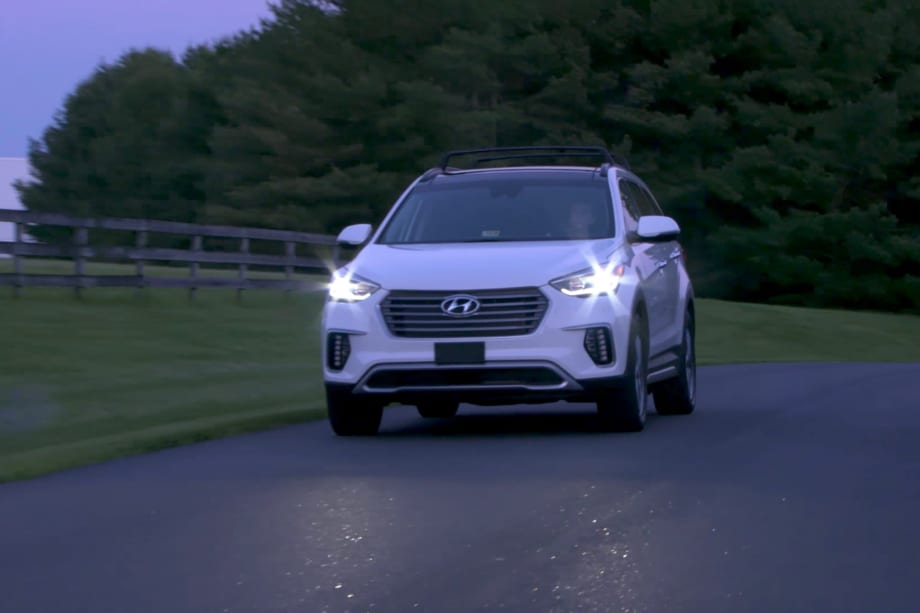
Photo: IIHS
The 2017 Hyundai Santa Fe and the 2017 Volvo XC60 were the only vehicles to garner a rating of “good” when the Insurance Institute for Highway Safety recently tested the headlights of 37 mid-size SUVs, the institute said.
Twelve SUVs are available with headlights rated “acceptable,” while 23 aren’t available with any headlights rated above “marginal” or “poor.” This is the fourth group of vehicles IIHS has tested since launching headlight ratings last year.
“As a group, midsize SUV headlights perform slightly better than the other SUVs and pickups we evaluated last year, and that’s encouraging,” said Matt Brumbelow, IIHS senior research engineer. “Still, we continue to see headlights that compromise safety because they only provide a short view down the road at night.”
Nighttime visibility is critical to highway safety because about half of traffic deaths occur either in the dark or at dawn or dusk, IIHS said in a summary of the evaluations. Differences in bulb type, headlight technology, and even how the lights are aimed all affect the amount of useful light provided. Properly aimed low beams light up the road ahead without temporarily blinding the drivers in oncoming vehicles.
During IIHS headlight tests, engineers measure how far light projects from a vehicle’s low beams and high beams as the vehicle travels straight and on curves. Engineers also measure low-beam glare for oncoming vehicles to make sure it isn’t excessive.
Headlights can vary by trim line, so vehicles often come with multiple headlight variants. The 37 SUVs that IIHS evaluated have 79 possible headlight combinations. Most headlights use one of three different light sources: halogen, high-intensity discharge (HID), or light-emitting diode (LED). Each of these can be paired with either reflectors or projector lenses. Projector headlights use one lens to spread the light, while reflectors have multiple surfaces that bounce the light forward.
In this group of mid-size SUVs, all the headlight variants that drew a rating of “good” or “acceptable” have projector lenses, IIHS noted. The three headlight variants that earned “good” ratings are HID. But having HIDs and/or projector lenses doesn’t guarantee good or acceptable performance in IIHS evaluations.
The XC60 is available with optional curve-adaptive HID projector headlights, which earned the top rating. Curve-adaptive headlights swivel with the steering wheel to better illuminate bends in the road.
The XC60’s HID headlights can also be purchased with optional high-beam assist, which helps increase high-beam use by automatically switching between high beams and low beams depending on the presence of other vehicles. Models equipped with high-beam assist earn extra credit in IIHS ratings.
The “good”-rated HID headlights on the XC60 are available with the Advanced package or the Active Dual Xenon Headlights package. With the Hyundai Santa Fe, the “good”-rated curve-adaptive HID projector headlights with high-beam assist are included in the Tech Package.
More than half of the 79 headlight variants evaluated produced too much glare, IIHS said. In 17 of those cases, the headlights would be rated “poor” based on glare alone. Driver complaints about glare from oncoming headlights are common, according to National Highway Traffic Safety Administration research.
“Managing glare can be more challenging for taller vehicles like SUVs and pickups because their headlights are mounted higher than on cars,” Brumbelow said. “Better aim at the factory can minimize glare.”
Vehicles need “good”- or “acceptable”-rated headlights to qualify for a 2017 Top Safety Pick+ award from IIHS.
Below are the test results. Click on the model name to access the vehicle's full report.
Luxury SUVs
GOOD
Volvo XC60
ACCEPTABLE
Acura MDX
Acura RDX
BMW X5
Buick Envision
Infiniti QX70
Lexus NX
Lexus RX
Mercedes-Benz GLE
MARGINAL
2018 Audi Q5
BMW X3
Cadillac XT5
Infiniti QX50
Lincoln MKT
Volvo XC90
POOR
Infiniti QX60
Lincoln MKC
Lincoln MKX
Nonluxury SUVs
GOOD
Hyundai Santa Fe
ACCEPTABLE
Honda Pilot
Jeep Cherokee
Jeep Grand Cherokee
Toyota Highlander
MARGINAL
2018 Chevrolet Equinox
Dodge Durango
Ford Flex
GMC Acadia
Nissan Murano
Nissan Pathfinder
POOR
Dodge Journey
Ford Edge
Ford Explorer
GMC Terrain
Hyundai Santa Fe Sport
Jeep Wrangler
Kia Sorento
Toyota 4Runner
More Safety

Nexar-Nauto Merger Aims to Give Fleets Better Safety Intelligence Through Larger Driving Dataset
Stefan Heck tells Automotive Fleet that combining more than 10 billion miles of driving history with Nexar's AI models will give fleets deeper insights into driver risk and roadway conditions than either company could provide independently.
Read More →
Don't Wait for a Crisis: 5 Ways to Build Mental Health Into Your Fleet Safety Program
For Suicide Prevention Month, fleet and safety leaders have an opportunity to put mental health where it belongs: at the center of workplace safety.
Read More →
How Camera Data Can Strengthen a Fleet’s Insurance Renewal
Insights from a commercial insurance carrier and a broker show how fleets can turn video telematic data, driver coaching, and improved claims results into a stronger case at insurance renewal.
Read More →
The Safest Fleets Aren’t the Ones with the Most Technology
You’ve made the telematics investment. Here’s how to capture the other half of its value and build the safest fleet on the road.
Read More →
Hidden in Plain Sight: Fleet Compliance Risks
Fleet compliance isn't just about having policies — it's about consistently enforcing them. This practical guide reveals six hidden compliance risks common in public sector and shared fleet operations and outlines proven strategies to improve visibility, accountability, and audit readiness
Read More →
NETS Sets 2026 Fleet Safety Benchmark Conference for Indianapolis
The Sept. 15–17 program will feature fleet benchmarking data, case studies, emerging technologies, and implementation strategies while running alongside the NSC Safety Congress & Expo.
Read More →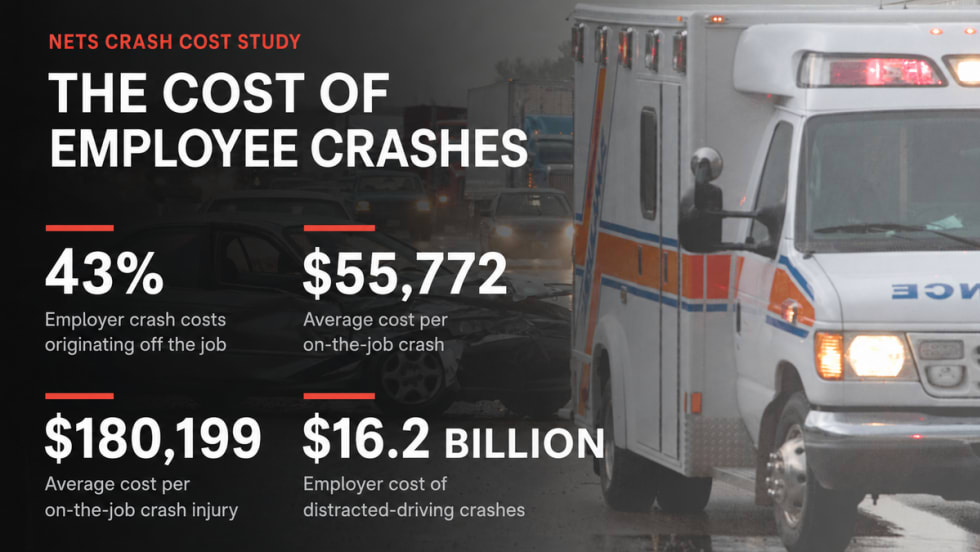
Off-the-Job Crashes Account for 43% of Employers’ $61.7 Billion Crash Burden
NETS quantifies costs dispersed across fleet, risk, HR, and other departments while providing new per-crash benchmarks for employers.
Read More →
Ram Recalls More Than 1.27 Million 1500 Pickups for Seat Belt Anchor Issue
The recall affects certain 2019-2026 Ram 1500 pickups that may have improperly attached second-row seat belt buckle anchors.
Read More →
How Better Visibility Cut Speeding Violations by 48%
Fleet leaders don't need more data, they need clearer visibility into what the data is saying. This case study explores how one utility replaced speeding-event counts with a single metric — miles driven in violation — to strengthen safety and significantly reduce speeding violations.
Read More →
Operation Safe Driver Week: Why the Industry's Oldest Safety Campaign Still Matters to Fleets
A look at how a 2007 enforcement initiative became one of the most consequential weeks on the fleet safety calendar, and what it means for your drivers in 2026.
Read More →