





More News: New Vehicle Buyers Paying Below MSRP
More New Vehicle Supply Boosts Sales
Post-pandemic pent-up demand is moving into the automotive market. Strong sales growth into fleets strengthened April numbers.
May 11, 2023
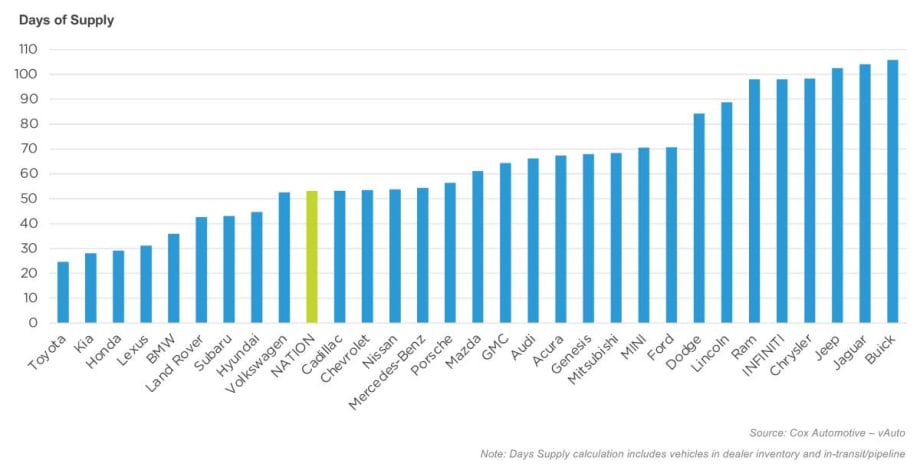
Non-luxury brands with the lowest inventory in April were Toyota, Kia and Honda, all with under 30 days supply, followed by Subaru, Hyundai and Volkswagen, all with below-industry average supply.
Graphic: Cox Automotive
6 min to read
New-vehicle inventory closed April up from a month earlier to its highest level in two years, supporting brisk sales, according to Cox Automotive’s analysis of vAuto Available Inventory data released May 11.
Meanwhile, days of supply dipped on higher sales. The average listing price of a new vehicle returned to above $47,000 in April.
Days Supply Up YOY
The total U.S. supply of available unsold new vehicles stood at 1.9 million units at the end of April, up from a revised 1.89 million at the end of March. Inventory numbers include vehicles available on dealer lots and some in transit. The close of April marked the highest level of supply since April 2021. Supply was up 71% from a year ago, or 790,000 units higher.
Days of supply stood at 53 at the end of April, down from an upwardly revised 57 at the end of March but up 47% from the same time a year ago. Historically, a 60 days’ supply across the industry was considered normal and ideal.
The Cox Automotive days’ supply is based on the daily sales rate for the most recent 30-day period that ended April 24, when about 1.08 million vehicles were sold, up 16% from the same period in the previous year.
“New-vehicle inventory continues to improve, supporting a pick-up in the sales pace,” said Charlie Chesbrough, Cox Automotive senior economist, in a news release. “Clearly, pent-up demand is being unleashed. How much pent-up demand exists is the question. We still expect sales to slow in the second half as economic headwinds, particularly rising interest rates, grow.”
For the full calendar month of April, total new-vehicle sales were up 9% from a year ago for a sales pace, or seasonally adjusted annual rate (SAAR), of 15.9 million, solidly beating analysts’ forecasts. April’s SAAR increased from last year’s 14.3 million and March’s 14.8 million. As has been the case for the last several months, the strength in April was supported by strong sales growth into fleets. The month also saw more leasing and discounts.
While inventory is up substantially from 2021 and 2022 levels, it remains low by historical standards. At the end of the pre-pandemic, pre-chip shortage in April 2020, the total supply was 3.51 million vehicles for days’ supply in the triple digits. In April 2019, supply was 3.88 million vehicles for a 95 days’ supply.
New-Vehicle Prices Rise Throughout April
After falling week after week through March to below $47,000, the average new-vehicle listing price – the asking price – climbed every week in April past $47,000, ending the month at $47,409. It was the highest average listing price since early February and was up 5% over a year ago.
“Prices have been at this growth rate since February and are holding up well despite economic uncertainty and rising interest rates,” Chesbrough said.
The average transaction price (ATP) – the price paid – in April was relatively flat from March, closing the month at $48,275, down 0.03% or $14 from March, according to Kelley Blue Book. Still, ATP is up 3.7%, or nearly $1,744, from a year ago.
The average price Americans paid for a new vehicle in April remained below the manufacturer’s suggested retail price (MSRP) for the second straight month. Incentives climbed to their highest level in the past year at 3.6% of the April ATP, averaging $1,714 per vehicle.
“Some brands and segments have far too much inventory, so we are seeing discounts and incentives increase,” Chesbrough said. “We also are seeing more lease deals that have been almost non-existent that past couple of years.”
Inventory Varies by Brand, Segment, Price and Region
At the close of April, the industry had non-luxury vehicle inventory totaling 1.61 million vehicles, up from 1.60 million at the end of March, for a 52 days’ supply. The inventory of luxury vehicles (excluding uber-luxury ones) stood at 291,520, about the same as at the end of March, but for a lower 52 days’ supply due to higher sales.
Import non-luxury and luxury brands had the lowest inventories. The highest inventories were a mix of non-luxury domestic brands, dominated by Stellantis’ makes, and a mix of luxury brands.
Non-luxury brands with the lowest inventory were Toyota, Kia and Honda, all with under 30 day’s supply, followed by Subaru, Hyundai and Volkswagen, all with below-industry average supply. Luxury brands at the low end were Lexus, at under 30 days of supply, followed by BMW and Land Rover, both below the industry average.
Non-luxury brands with the highest inventory were mostly Stellantis brands, with four among the top for supply – Jeep, at 102 days’ supply, Chrysler, Ram and Dodge, at 88 days’ supply. Buick, Jaguar, Infiniti and Lincoln were the luxury brands with the highest inventory.
Aside from low-volume, high-performance cars, compact, midsize and subcompact cars had the lowest inventory, all with below 40 days of supply. This year, these cars have seen an increase in market share penetration due to somewhat improved production and supply from Asian automakers. Other segments with supply at the low end of the spectrum were minivans along with compact and subcompact SUVs.
Segments with the highest inventories were a mix of electric vehicles, hybrids and full-size pickup trucks plus super luxury vehicles. It should be noted, however, that segments like EVs, hybrids, as well as super luxury and sports cars, can show wild fluctuations in days’ supply due to low sales volumes.
Of the 30 best-sellers for the 30 days that ended April 24, Honda Civic had the lowest supply, followed by Honda CR-V, Kia Forte and Toyota Corolla. Honda posted particularly strong sales in April, drawing down its lean inventory.
Full-size pickup trucks from the Detroit Three had the biggest supply. The Ford F-150 had the most at 99 days’ supply, followed by Ram 1500 and Chevrolet Silverado.
As has been the case for months, Florida and California designated market areas (DMAs) had the lowest supply while northern ones had the highest, but April marked an exception. Orlando had the lowest inventory at 45 days’ supply, followed by Los Angeles and Miami. Cleveland landed at the low end as well. Detroit had the highest at 59 days’ supply, followed by Houston and Seattle.
Lower price categories had the tightest supply by the end of April. The under $20,000 segment had an active supply of fewer than 3,000 units, a 26-day supply. New vehicles priced between $20,000 and $40,000 had days’ supply of 41 or less. The $40,000 to $50,000 category had a 50 days’ supply. The $50,000 to $80,000 category had days’ supply of more than 70. The over $80,000 segment had 55 days of supply.
Non-luxury brands with the highest inventory were mostly Stellantis brands, with four among the top for supply. Ram was the highest with 119 days’ supply, followed by Jeep and Chrysler. Luxury brands with the highest inventory were Buick, at 117 days’ supply, followed by Jaguar and Infiniti.
More Remarketing
Wholesale Used-Vehicle Values Fall as Cox Automotive Cuts 2026 Forecast
Wholesale used-vehicle prices declined in September as depreciation accelerated, prompting Cox Automotive to lower its year-end forecast.
Read More →
FLD Promotes Three Executives in Leadership Changes
FLD has promoted three longtime executives, naming Gary Mott CEO, Richard Mallek president, and Ron Sanders managing partner.
Read More →
Ford Pro Launches Certified Pre-Owned Program for Commercial Vehicles
Ford Pro Advantage will offer certified pre-owned Class 1-7 commercial vehicles through more than 700 Ford Pro Commercial Vehicle Centers.
Read More →
Copart to Acquire ACV in $1.9 Billion Deal
The acquisition would expand Copart beyond its traditional salvage business into dealer-to-dealer wholesale remarketing while adding ACV’s vehicle data, inspection, and valuation technology.
Read More →
Manheim Index Shows Used-Vehicle Wholesale Prices Up 2.1% in June
The market is seeing stronger appreciation in older used vehicles this year, and the most affordable segments have been among the year’s best performers.
Read More →
Commercial Fleet Sales Contribute To June, YTD Gains
The fleet sector has boosted its vehicle purchases at a reliable pace in the first half of this year compared with 1H 2025.
Read More →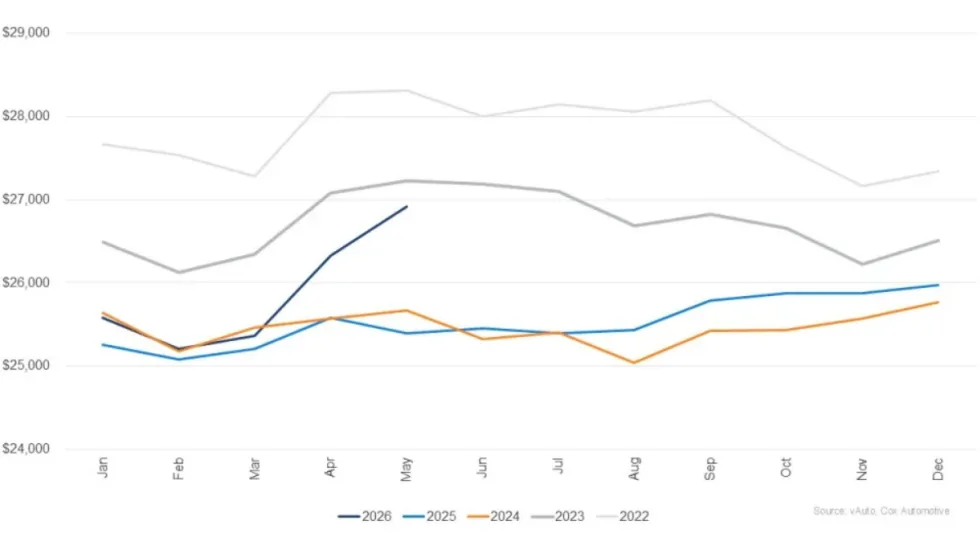
Used Vehicle Prices Climb Higher As Sales Pace Slows
The higher prices at used retail reflect strong wholesale values earlier in the spring, particularly for older, more affordable vehicles.
Read More →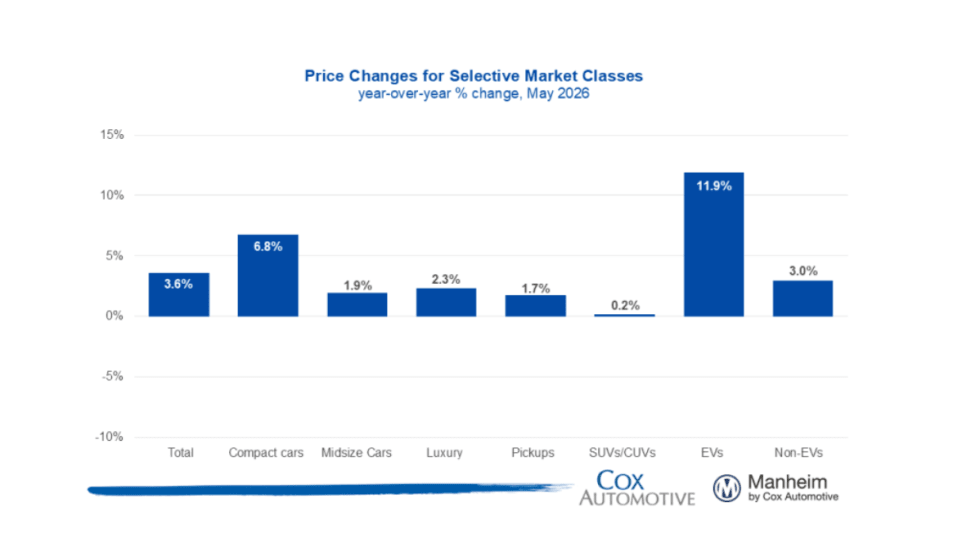
Wholesale Used Vehicle Market Sustains Moderate Rise In Values, Prices
Trends continue to normalize after a strong start to the year, as consumers contend with higher gas prices in the coming summer months.
Read More →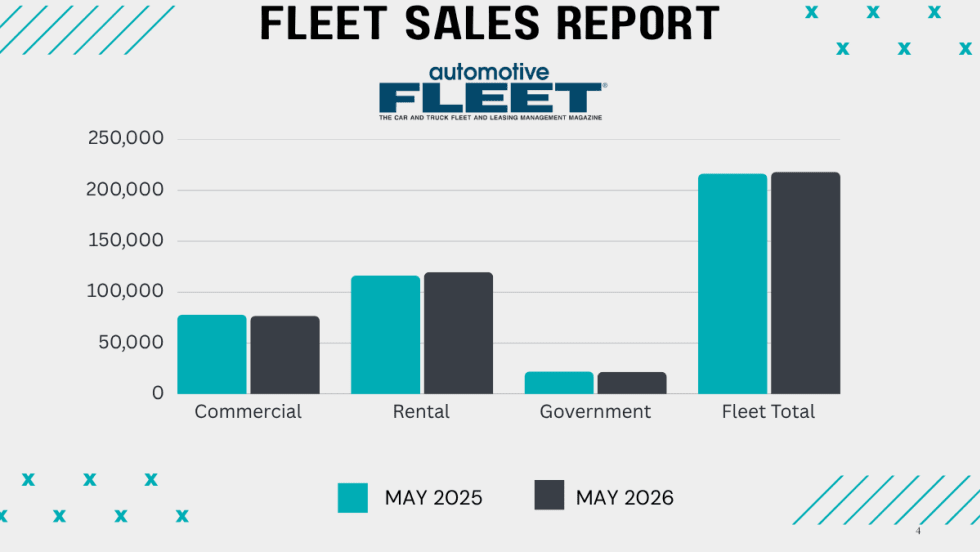
Commercial Fleet Sales Still Lead Sectors Despite May Mini Dip
The U.S. economy's continued growth and positive business investment are creating a favorable environment for fleet vehicle demand.
Read More →
How Connected Vehicle Data Is Lifting Fleet Resale Values
A vehicle health score could improve the value of fleet vehicles at remarketing. The path to a universal standard is forming, and fleets that understand the process early will be better positioned when it arrives.
Read More →