




CAR 2026 Recap Part 2: Closing the Gap Between Data & Remarketing Value
The second half of CAR 2026 examined how fleets can translate lifecycle strategy, vehicle data, and market shifts into higher real-world results.
April 30, 2026

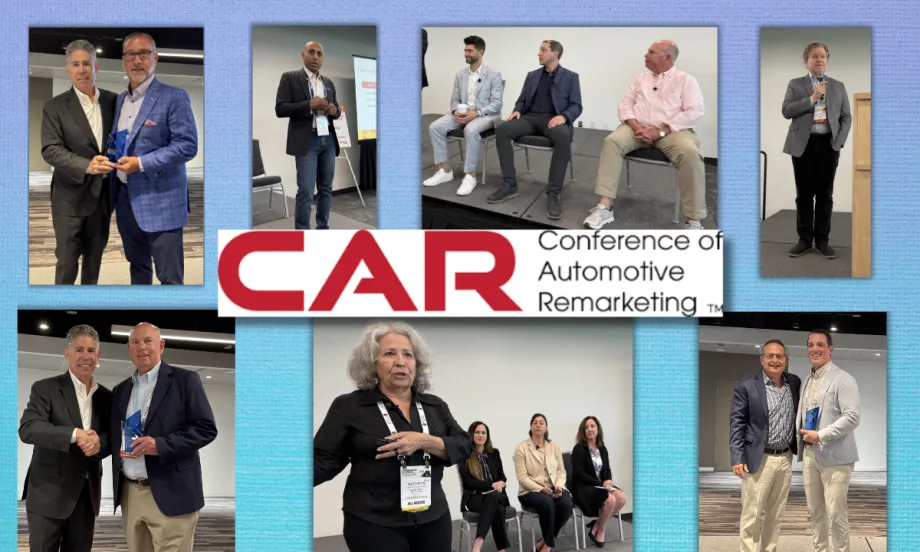
CAR 2026 brought together fleet, auction, and technology leaders who outlined that greater coordination will be required to manage the growing complexities of remarketing.
Credit: Automotive Fleet
7 min to read
This is the second and final article recapping the 2026 Conference of Automotive Remarketing (CAR) that took place April 15-16 in Cleveland, Ohio, in conjunction with NAFA I&E.
The first article covering CAR 2026 outlined missed opportunities for fleet operators to recover additional value from their remarketed vehicles, while understanding the need for speed to market — the concept of value + velocity. This article covers the second half of the day, when the content shifted more toward execution.
Later sessions examined how remarketers can close the gap between the data that exists and the value that is actually realized at sale, while understanding the realities on the ground.
Value Retention Starts at Acquisition
In the first recap article we reviewed Kathryn Schifferle’s presentation, which outlined the opportunity to better align vehicle specs, upfitting, and remarketing strategy to preserve value over the lifecycle. Schifferle then moderated a panel discussion that focused on the practical challenges fleets face when capturing that value in the real world.
The core idea of the panel discussion was this: The decisions that most affect end-of-life value are made at the beginning of a vehicle’s life.
Amy Hudson, COO of Mike Albert Fleet Solutions, walked through a vehicle lifecycle’s economic considerations. Vehicles should be specified to meet operational needs, but not beyond them. Over-spec’ing may improve functionality in the short term, but it rarely translates into a proportional increase in resale value.
Upfitting decisions carry similar trade-offs. Modular, non-structural equipment — toppers, racks, slide-outs — preserve optionality for the second buyer. More invasive upfits serve their purpose in operation, but can narrow the resale market.
Timing age and miles in the cycle matters just as much. Holding a vehicle too long introduces rising maintenance costs and declining condition. Cycling too early leaves depreciation on the table. The optimal window — selling after initial depreciation but before condition deteriorates — is where disciplined fleet management creates greater value.
At the end of the lifecycle, “You need to be in the right lane at the right time,” Hudson said, emphasizing that not all auctions or buyers are the same.
But even with the right strategy, execution remains a challenge.
Lori Rasmussen, president of PARS, emphasized how movement through the remarketing pipeline is not passive, with vehicles actively handled, serviced, and staged while in transit.
Remarketing isn’t just about when and where you sell — it’s about everything that happens between “in service” and “at sale.”
Diana Holland, founder of fleet consultancy Cavis, pointed to a more subtle issue: decision paralysis. Fleet managers often have access to extensive data from telematics, maintenance records, and FMC reporting, but it exists in silos. Synthesizing that data takes time, and by the time a decision is made, the optimal market window may have passed.
Her prescription was pragmatic: “Start small. Don’t boil the ocean. And be nimble enough to act when the window is open.”
Using Vehicle Data to Increase Value
If the lifecycle panel framed the problem, Arun Rajagopalan’s presentation provided a more technical explanation of why it persists.
Rajagopalan, founder and CEO of Motorq, described a disconnect between what modern vehicles can tell us and what the market actually uses to value them.
Today, 96% of new vehicles are equipped with embedded modems that can transmit detailed operational data. For lease returns, roughly 85% are connected. Even among smaller fleets, which tend to hold vehicles longer, connectivity is already around 65% and rising.
In a pilot study of 14,000 fleet pickup trucks, nearly 80% of vehicles scored “excellent” on that metric. Yet in the wholesale market, those same vehicles were priced as average.
“The market is pricing it based on averages,” Rajagopalan said, adding that fleet operators should be rewarded for better conditioned vehicles.
That disconnect is more a function of missing information than it is of poor maintenance.
Traditional condition reports and history tools like Carfax and Experian AutoCheck are effective at identifying major incidents. But those events represent a small minority of vehicles. The remaining 98% are effectively grouped together, regardless of their maintenance.
Motorq augments those tools by adding a vehicle health certificate alongside existing reports at auction intake. Early A/B testing by JD Power (a Motorq investor) has shown measurable improvements in both resale value and days-to-sell when that data is visible.
The implications for EV remarketing are even more significant. Battery health — the single most important factor in an EV’s value — cannot be assessed visually. As EVs begin to represent a larger share of off-lease returns, that gap becomes more consequential.
As Bobit CEO Colin Sutherland noted at the end of the session, the next step should be to create consumer demand for this data, much as a CarFax became an expectation.
The Coming EV Wave
The conference's final session gathered the practitioners who would have to execute on everything the day's earlier speakers had described. Pierre Pons of TPC Management moderated a panel that included Jimmy Douglas of Plug, the EV-specialist remarketing platform; Lawrence Knapp of Wheels; and Nathan Cummings of Anew Solutions.
The panel got into EVs, multi-channel strategy, and the hold-versus-sell decision.
The 1.1 million off-lease EVs expected to enter the remarketing pipeline over the next three years — roughly half of them Teslas — represent a volume the wholesale infrastructure has not previously encountered and is not fully prepared to absorb.
Lessee buyout rates are expected to be low, and dealer opt-in rates are similarly modest. The path of least resistance for most of these vehicles is through wholesale channels, and the wholesale channels are still developing the tools, training, and pricing frameworks to handle them at scale.
Douglas, whose Plug platform focuses specifically on EV disposition, pushed back on the apocalyptic conversations around this wave.
The demand side is more constructive than the pessimists assume, he argued. Oil prices have moved back above $100 per barrel, strengthening the economic case for electrification as this wave hits.
Studies consistently show that 70 to 80% of current EV owners re-lease or re-purchase EVs when their cycle ends, which grows the pool of experienced EV buyers. And for first-time buyers priced out of new EVs, a late-model used EV now represents an accessible entry point. "Used EVs may be a gateway drug," Douglas said, to chuckles in the room.
Honing Your Channel Strategy
Knapp brought the fleet management company perspective to the channel strategy question, which was consistent with the day's broader theme that no single remarketing channel is optimal for all vehicle types, conditions, or markets. The discipline is in the matching — knowing which vehicle belongs in which channel based on its configuration, condition, and the geography of demand, rather than defaulting to the nearest available option.
Cummings, with a transportation and logistics perspective, added that EVs pose operational complexity, noting they pose physical handling challenges that transport companies are only beginning to address. They weigh significantly more than comparable ICE vehicles, affecting load economics and carrier capacity planning in ways that have not yet been fully priced into transportation contracts.
A depleted EV requires different pickup equipment and handling procedures to avoid drivetrain damage, which means carriers need advance notice of battery state before dispatch.
Hold-Vs.-Sell Decisions
The hold-versus-sell discussion was more nuanced. The right answer depends entirely on where you sit in the ecosystem.
OEM captives, rental companies, fleet management companies, and independent dealers all face fundamentally different economics when deciding whether to hold inventory or move it. Rental companies that historically sold 20% of their fleets at retail and wholesaled the rest are now targeting 80% retail sell-through — a reversal that is reshaping wholesale channel dynamics in ways the industry is still absorbing.
The discipline every operator agreed on was to stay alert to the macro forces that make timing consequential: oil prices, interest rates, tariff impacts, regional demand signals, and the regulatory environment for EVs in key markets. "You can't keep your head in the sand," said Knapp. "Things that happen on the other side of the world will affect what your vehicle is worth tomorrow."
AI and the Next Layer of Disruption
Sutherland took the conversation beyond the current market to the next wave of disruption.
He shared observations from Bobit’s Agent’s Summit (an F&I conference in Las Vegas the same week), where AI-driven finance-and-insurance processes are already operating in production — from fully automated interactions to AI-assisted human workflows.
In remarketing, the immediate impact is less about replacing human decision-making and more about accelerating it by synthesizing data, automating back-office processes, and improving customer interactions.
The implication is that the industry has vehicle health, upfit, and lifecycle data. What’s missing is integration, and that’s where the industry is headed next: The conference ended with a meeting to discuss the formation of the Fleet Remarketing Industry Council and the Fleet Remarketing Association.
Standardization of vehicle health data, greater transparency in condition reporting, and better alignment across remarketing channels will require coordination across the ecosystem. These two new organizations were created to do just that.
Subscribe to Our Newsletter
More Remarketing
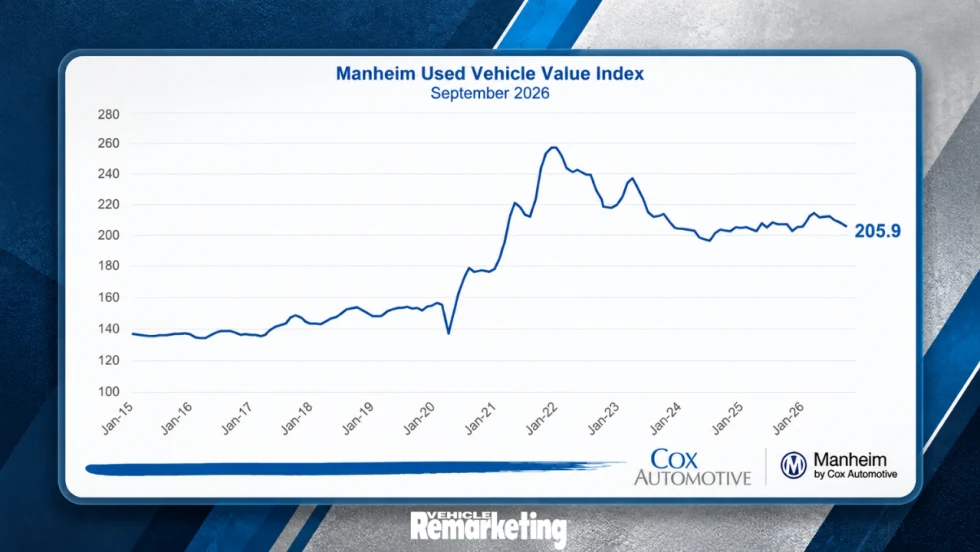
Wholesale Used-Vehicle Values Fall as Cox Automotive Cuts 2026 Forecast
Wholesale used-vehicle prices declined in September as depreciation accelerated, prompting Cox Automotive to lower its year-end forecast.
Read More →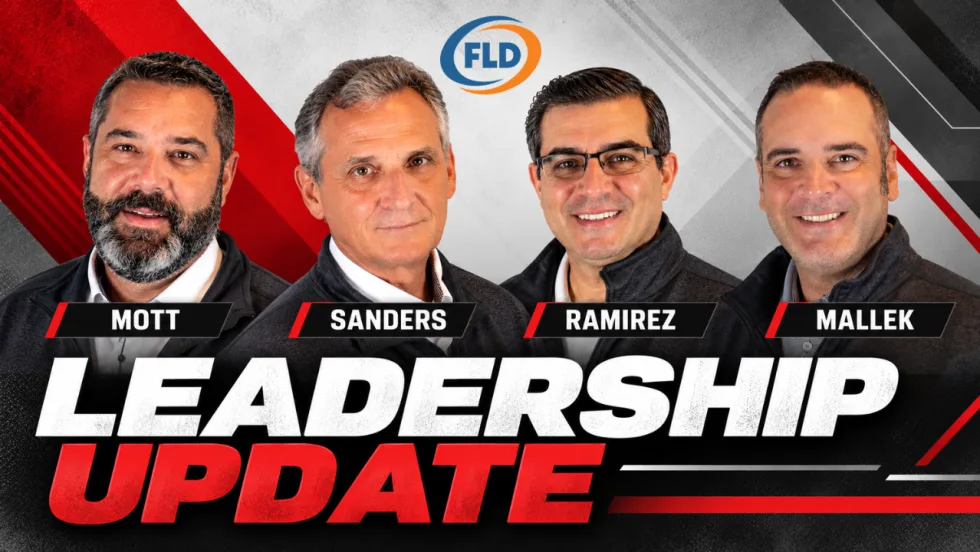
FLD Promotes Three Executives in Leadership Changes
FLD has promoted three longtime executives, naming Gary Mott CEO, Richard Mallek president, and Ron Sanders managing partner.
Read More →
Ford Pro Launches Certified Pre-Owned Program for Commercial Vehicles
Ford Pro Advantage will offer certified pre-owned Class 1-7 commercial vehicles through more than 700 Ford Pro Commercial Vehicle Centers.
Read More →
Copart to Acquire ACV in $1.9 Billion Deal
The acquisition would expand Copart beyond its traditional salvage business into dealer-to-dealer wholesale remarketing while adding ACV’s vehicle data, inspection, and valuation technology.
Read More →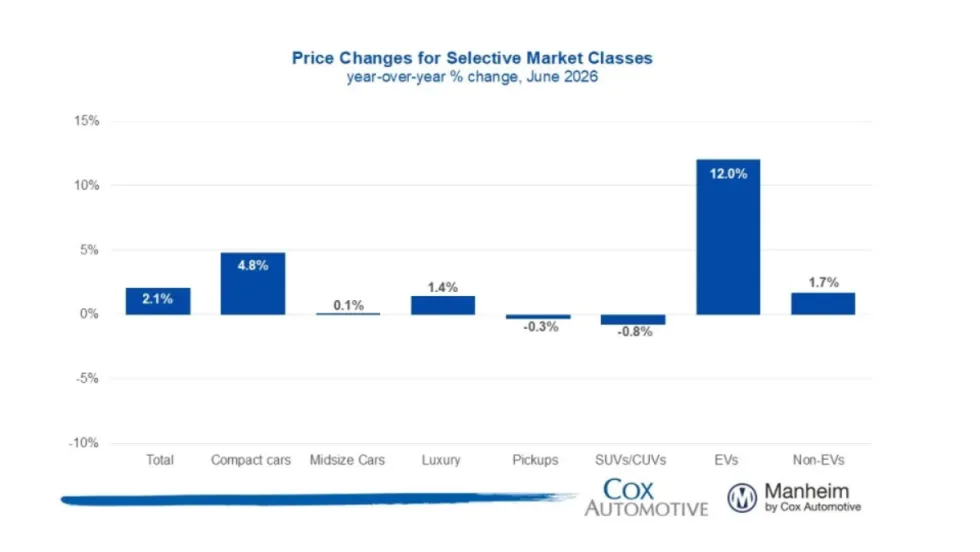
Manheim Index Shows Used-Vehicle Wholesale Prices Up 2.1% in June
The market is seeing stronger appreciation in older used vehicles this year, and the most affordable segments have been among the year’s best performers.
Read More →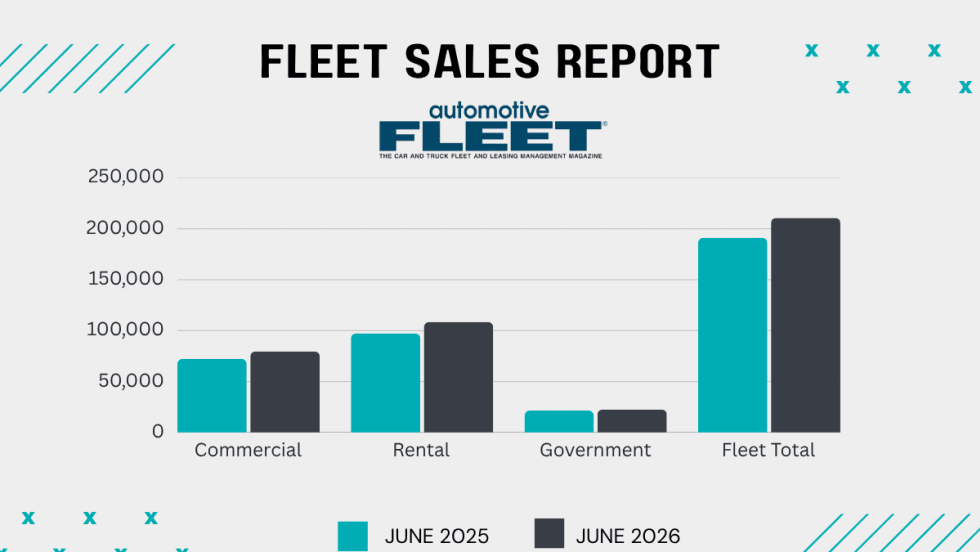
Commercial Fleet Sales Contribute To June, YTD Gains
The fleet sector has boosted its vehicle purchases at a reliable pace in the first half of this year compared with 1H 2025.
Read More →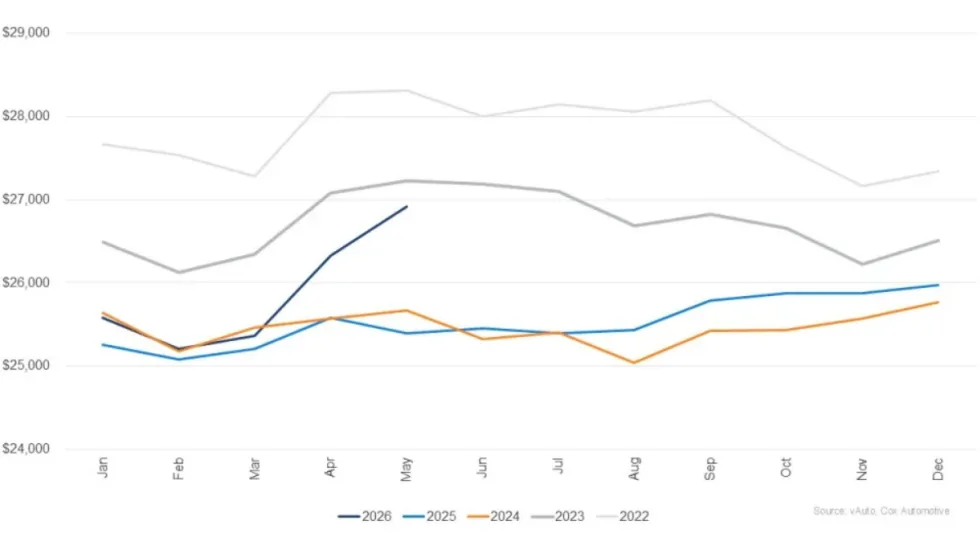
Used Vehicle Prices Climb Higher As Sales Pace Slows
The higher prices at used retail reflect strong wholesale values earlier in the spring, particularly for older, more affordable vehicles.
Read More →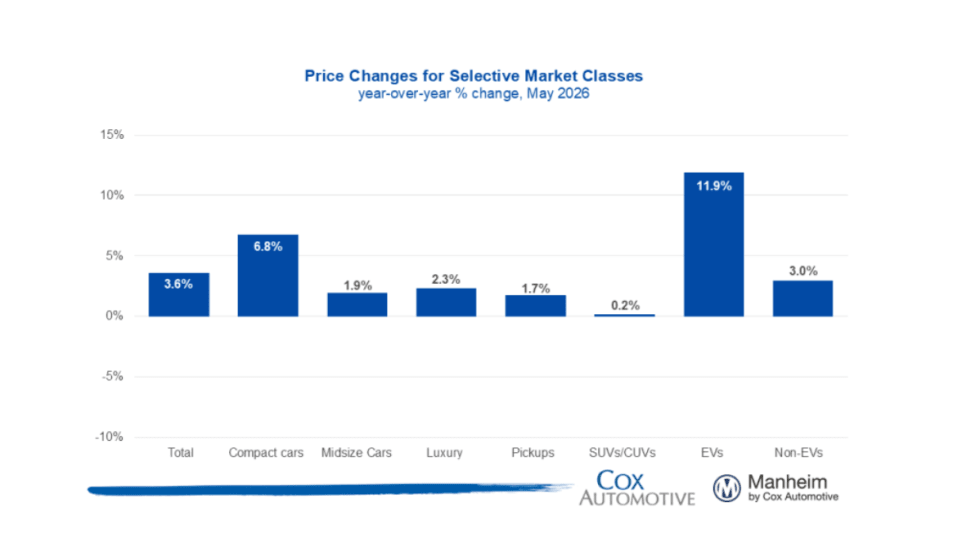
Wholesale Used Vehicle Market Sustains Moderate Rise In Values, Prices
Trends continue to normalize after a strong start to the year, as consumers contend with higher gas prices in the coming summer months.
Read More →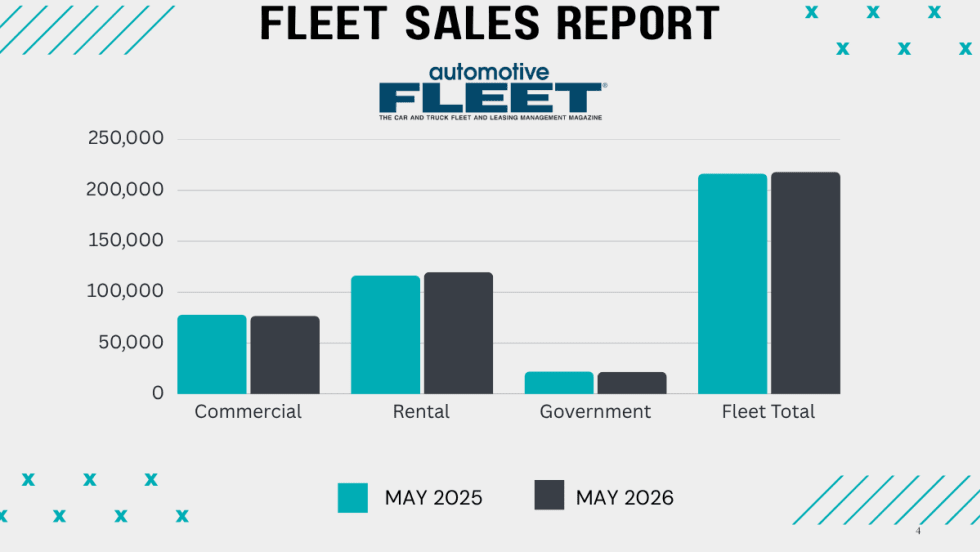
Commercial Fleet Sales Still Lead Sectors Despite May Mini Dip
The U.S. economy's continued growth and positive business investment are creating a favorable environment for fleet vehicle demand.
Read More →
How Connected Vehicle Data Is Lifting Fleet Resale Values
A vehicle health score could improve the value of fleet vehicles at remarketing. The path to a universal standard is forming, and fleets that understand the process early will be better positioned when it arrives.
Read More →