




Michelin Debuts Tire that Operates Without Air
DETROIT — At the North American International Auto Show (NAIAS) on January 9, Michelin showcased a potential future for mobility, an integrated tire and wheel combination missing one ingredient normally considered vital for traditional tire performance – air.
DETROIT — At the North American International Auto Show (NAIAS) on January 9, Michelin showcased a potential future for mobility, an integrated tire and wheel combination missing one ingredient normally considered vital for traditional tire performance – air. The company unveiled the first real-world fitments for its “Tweel” — which operates entirely without air. Michelin's Tweel is in production and available as an enhancement for future iBOT mobility systems. Invented by Dean Kamen, the iBOT mobility device has the ability to climb stairs and navigate uneven terrain, offering mobility freedom impossible with traditional wheelchairs. Additionally, Segway LLC's Concept Centaur, a prototype that applies self-balancing technology to a four-wheel device, has also been equipped with Tweel to increase its performance potential. Beyond these first real-world applications, Michelin has additional projects for Tweel on construction skidsteers and a variety of military vehicles. The most intriguing application may be Michelin's early prototype Tweel fitment for passenger cars. The mobility company released video of promising Tweel performance on an Audi A4. The heart of Tweel innovation is its simple looking hub and spoke design that replaces the need for air pressure while delivering performance previously only available from pneumatic tires. Flexible spokes are fused with a flexible wheel that deforms to absorb shock and rebound with ease. Without the air needed by conventional tires, Tweel still delivers pneumatic-like performance in weight-carrying capacity, ride comfort, and the ability to “envelope” road hazards. Michelin has also found that it can tune Tweel performances independently of each other, a significant change from conventional tires. This means that vertical stiffness (which primarily affects ride comfort) and lateral stiffness (which affects handling and cornering) can both be optimized, pushing the performance envelope in these applications and enabling performance not possible for current inflated tires. The Tweel prototype, demonstrated on the Audi A4, is within 5 percent of the rolling resistance and mass levels of current pneumatic tires. That translates to within 1 percent of the fuel economy of the OE fitment. Additionally, Michelin has increased the lateral stiffness by a factor of five, making the prototype unusually responsive in its handling.
More Operations

How Fleets Can Recruit and Train Veterans for Technician Roles
Here's how the technician shortage has affected uptime for fleets, and what to do about it.
Read More →
Avis Budget Group Deploys Neology Toll Management Technology Across Major Brands
Neology’s neoFleet platform will manage toll transactions and toll-authority operations for vehicles across Avis, Budget, Payless, Budget Truck and Zipcar.
Read More →
Fleet Personal-Use Charges Edge Higher in 2026
Nearly eight in 10 surveyed fleets allow personal use of company vehicles, while just over half of respondents report charging employees for the privilege.
Read More →
The Future of Fleet + What’s Changing Right Now | AF News Recap
Could developments overseas offer a preview of what’s coming for U.S. fleets? This week, we’re looking at the future of AI, autonomy, and electrification, plus Ford Pro’s new certified pre-owned program, smarter vehicle offboarding, and a new way for fleets to manage toll expenses.
Read More →
How to Handle Vehicle Offboarding
What do fleet managers need to do when a driver leaves?
Read More →
Fleet Manager’s Ultimate Playbook: Navigating the New Standard in OEM Connectivity
Rising operating costs, driver safety concerns, and unplanned downtime are putting unprecedented pressure on modern fleets. Discover how fleet managers use embedded OEM connectivity and real-time vehicle data to cut TCO, prevent downtime, and protect drivers without aftermarket telematics hardware.
Read More →
U.S. Bank Adds Verra Mobility Toll Management to Voyager Fleet Platform
The integration allows U.S. Bank Voyager fleet customers to manage toll payments and violations alongside fuel, EV charging and maintenance expenses.
Read More →
ADAS Prevents Crashes. But Repairs Cost More | AF News Recap
ADAS-equipped vehicles may crash less often, but they can cost more when they do. This week, we’re breaking down what that tradeoff means for fleets, plus Subaru’s first Forester Wilderness Hybrid, Nissan’s new e-POWER Rogue, and why Calstart has become Catalyst Mobility.
Read More →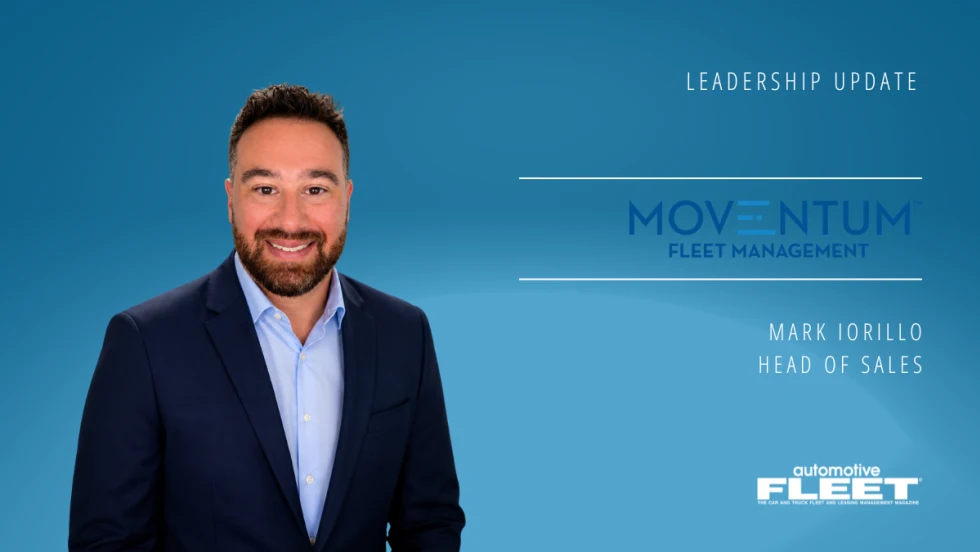
Moventum Fleet Management Names Mark Iorillo Head of Sales
Iorillo brings nearly 20 years of fleet management and sales experience to the role, including previous positions at Element Fleet Management, CEI, Donlen and Ryder.
Read More →
Fleet Has a Talent Pipeline Problem. What Comes Next? | AF News Recap
Where will fleet’s next generation of leaders come from? This week, we’re looking at the industry’s talent pipeline, what certification can add to a fleet career, how to build an award-worthy track record, and the return of Automotive Fleet’s Personal Use Survey.
Read More →