




Mercedes Concept-A Class to Debut at New York Auto Show
MONTVALE, NJ - Technical highlights of the new Concept-A Class include a new turbocharged four-cylinder gasoline engine, a dual clutch transmission, and a radar-based collision warning system with adaptive Brake Assist.


MONTVALE, NJ - The Mercedes-Benz Concept A-Class will make its debut at the 2011 New York and Shanghai Auto Shows later this month. Technical highlights include a new turbocharged four-cylinder gasoline engine, a dual clutch transmission, and a radar-based collision warning system with adaptive Brake Assist.
Mercedes said the Concept A-Class previews a new compact class era at Mercedes-Benz. This front-wheel drive model is powered by a four-cylinder gasoline engine from the new M270 series. It was designed for transverse installation and thanks to direct injection and turbocharging, offers high performance together with minimal emissions and fuel consumption, according to the company. The Concept A-Class is equipped with the two-liter variant of the new engine, capable of producing 210 hp. This BlueEFFICIENCY engine is mated to the new Mercedes-Benz dual clutch transmission.
As a world first in the compact class, the concept car features a radar-based collision warning system with adaptive Brake Assist, which lowers the risk of rear-end collisions. This assistance system gives a visual and acoustic warning to an inattentive driver and prepares Brake Assist for a precise braking response. Braking is initiated when the driver forcefully operates the brake pedal.
Mercedes said the design of the Concept-A is inspired by the style showed in the company’s F800. The side view is structured with three prominent lines: the front structural edge above the front fender forms a dropping line, while the prominent shoulder muscle above the rear axle underlines the car's coupe-like character. A further line extends upwards from the rear wheel arch in a sweeping curve.

The front end of the Concept A-Class shows the Mercedes-Benz star logo surrounded by a starry sky. Where there are usually openings or louvers, the radiator grille consists of numerous metallic silver hexagons on black stems. This theme is reflected in the design of the wheels. The headlights of the Concept A-Class continue this design element with full-LED high-performance headlamps repeating the starry sky motif with numerous light points. The daytime running lamps consist of 90 optical fibers with aluminum sleeves which are arranged in a wing-shape within the headlamp.
In the interior, the dashboard has the shape of an aircraft wing and a translucent, stretchable fabric lining. The prominent dials in the instrument cluster are in red. The center console’s design is inspired by a modern flight control panel, with the shift lever designed as a "reverse thrust control," the automaker stated.
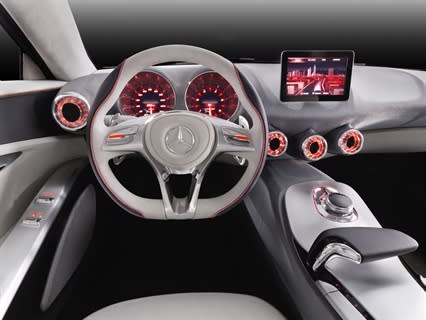
A smartphone is fully integrated into the Concept A-Class. All functions are shown in the display as applications, and can be operated using the rotary/push control, the company stated.
More Operations

Fleet Has a Talent Pipeline Problem. What Comes Next? | AF News Recap
Where will fleet’s next generation of leaders come from? This week, we’re looking at the industry’s talent pipeline, what certification can add to a fleet career, how to build an award-worthy track record, and the return of Automotive Fleet’s Personal Use Survey.
Read More →
Smith System Launches Driver Risk Management Program
Fleets have more driver data than ever, but identifying risky behavior doesn't necessarily correct it. Smith System's new Driver Risk Management program combines monitoring, training, and follow-up coaching to help fleets connect risk signals with driver intervention.
Read More →
Automotive Fleet Opens 2026 Personal Use Survey for Commercial Fleet Managers
Less than two weeks left! Commercial and corporate fleet managers are invited to share how their organizations handle company vehicle personal-use policies, charges, and driver eligibility.
Read More →
From AI Prompts to AI-Generated Safety Songs | AF News Recap
Can better prompts make AI more useful for fleet managers? This week, we’re breaking down smarter fleet analysis, an AI-assisted experiment that turned safety training into music, and what happened to fuel prices in August.
Read More →
How to Write Better AI Prompts for Fleet Analysis
Include these six elements in your fleet prompts to generate more relevant analysis and accurate answers.
Read More →
Fleet Meets: Eric Kilgore
This edition of the Fleet Meets series features one of the industry's best leaders driving multi-market and national operations.
Read More →
Why Reactive Fleet Management Is Becoming Too Expensive to Sustain
Research highlights a growing need for proactive management strategies to address rising costs in fleet operations effectively.
Read More →
What Your Fleet KPIs Aren’t Telling You
Tracking fleet metrics is only useful when the data leads to better decisions. This guide helps fleet leaders assess cost, utilization, and downtime more accurately, identify performance gaps, and prioritize the actions that can improve operational results.
Read More →
Hidden in Plain Sight: Fleet Compliance Risks
Fleet compliance isn't just about having policies — it's about consistently enforcing them. This practical guide reveals six hidden compliance risks common in public sector and shared fleet operations and outlines proven strategies to improve visibility, accountability, and audit readiness
Read More →
Turning Fleet Payment Data into Executive Insights
Does data alone drive results in operations?
Read More →