




Mercedes-Benz Revamps Van Upfitting Program
Mercedes-Benz has reformatted its van upfitting program ahead of the launch of the 2016 Metris mid-size van, which has begun arriving at dealer lots.


Photo of 2016 Metris cargo van by Paul Clinton.
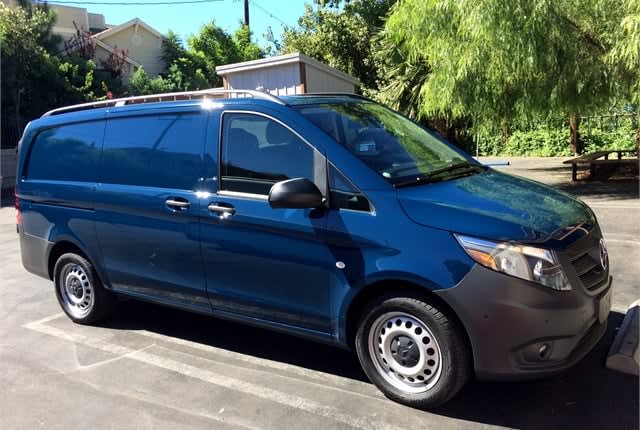
Photo of 2016 Metris cargo van by Paul Clinton.
Mercedes-Benz has reformatted its van upfitting program ahead of the launch of the 2016 Metris mid-size van, which has begun arriving at dealer lots.
The Metris will join the full-size Sprinter at Mercedes-Benz dealerships that sell vans. Right now, 179 of the 350 U.S. dealers carry vans. The Metris arrives as the lone offering in the mid-size van segment. Ram discontinued its C/V Tradesman after the 2015 model year.
For the Metris introduction, Mercedes-Benz has launched its MasterUpfitter web portal that provides various resources for commercial vehicle users and company providing racks, bins, and other equipment for the Metris and Sprinter vans. The program offers fleets a list of 36 qualified upfitters, including Ranger Design, Leggett & Platt CVP, and Thermo King. Upfitters will provide photos, product brochures, and videos for the portal.
Under the program, upfitters agree to provide a three-year or 36,000-mile basic limited warranty covering their components and installations. Vans sold through the program also qualify for special vehicle financing options through Mercedes-Benz Financial Services.
Fleets can also take advantage of ship-thru or ship-to logistics programs that can save customers time and money, according to Mercedes-Benz.
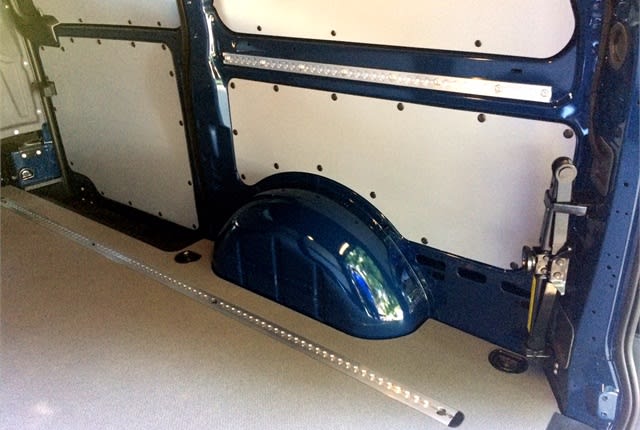
The Metris includes a cargo management system with a track on the floor and interior wall that allows a fleet to choose various tie-down positions. Photo by Paul Clinton.
Mercedes-Benz will offer the Metris as a cargo and passenger model powered by a turbocharged inline-four that delivers 208 hp and 258 lb.-ft. of torque via a 7-speed transmission to a rear-wheel drivetrain. The van should achieve 22 mpg in combined driving cycles, said Matthias Geisen, general manager of product management and marketing.
The Metris will offer 2,502 pounds of payload capacity and can tow 4,960 pounds.
Mercedes-Benz expects the bulk of cargo van sales to go to service and goods delivery fleets. Passenger and cargo model sales should be evenly split, Geisen said at an Oct. 2 media event in Los Angeles.
Metris buyers should mostly come from customers who are not satisfies with the capabilities offered by compact vans, Geisen said. The company also expects buyers who downsize from full-size vans, as well as small businesses that used the Ram C/V Tradesman.
Mercedes-Benz will initially offer a Metris cargo panel van, and will add a side-window package at some point. Standard safety equipment includes up to six airbags, a drowsy driving feature known as Attention Assist, Crosswind Assist, and load-adaptive electronic stability control.
Optional safety equipment includes parallel parking assist, lane-keeping assist, collision prevention alerts, a rear-view camera, and blind-spot assist tied to driver lane movement signaling.
The Metris cargo van retails for $29,945, while the passenger model retails for $33,495.
Editor's note: For more in-depth coverage, view the Metris page on our van channel.
More Operations

A buyer's guide to fleet management software in 2027
Buying fleet management software in 2027 means looking beyond features and price. As fleet operations, technology and expectations evolve, this guide explores what today’s fleet professionals should consider when choosing a system that can deliver value now and adapt to what comes next.
Read More →
What Will Shape the Next Era of Fleet Management?
EVs, AI, and autonomous vehicles are reshaping fleet management. Discover what’s ahead—and how fleet leaders can prepare for the next era.
Read More →
How Fleets Can Recruit and Train Veterans for Technician Roles
Here's how the technician shortage has affected uptime for fleets, and what to do about it.
Read More →

Avis Budget Group Deploys Neology Toll Management Technology Across Major Brands
Neology’s neoFleet platform will manage toll transactions and toll-authority operations for vehicles across Avis, Budget, Payless, Budget Truck and Zipcar.
Read More →
Fleet Personal-Use Charges Edge Higher in 2026
Nearly eight in 10 surveyed fleets allow personal use of company vehicles, while just over half of respondents report charging employees for the privilege.
Read More →
The Future of Fleet + What’s Changing Right Now | AF News Recap
Could developments overseas offer a preview of what’s coming for U.S. fleets? This week, we’re looking at the future of AI, autonomy, and electrification, plus Ford Pro’s new certified pre-owned program, smarter vehicle offboarding, and a new way for fleets to manage toll expenses.
Read More →
How to Handle Vehicle Offboarding
What do fleet managers need to do when a driver leaves?
Read More →
Fleet Manager’s Ultimate Playbook: Navigating the New Standard in OEM Connectivity
Rising operating costs, driver safety concerns, and unplanned downtime are putting unprecedented pressure on modern fleets. Discover how fleet managers use embedded OEM connectivity and real-time vehicle data to cut TCO, prevent downtime, and protect drivers without aftermarket telematics hardware.
Read More →
U.S. Bank Adds Verra Mobility Toll Management to Voyager Fleet Platform
The integration allows U.S. Bank Voyager fleet customers to manage toll payments and violations alongside fuel, EV charging and maintenance expenses.
Read More →
ADAS Prevents Crashes. But Repairs Cost More | AF News Recap
ADAS-equipped vehicles may crash less often, but they can cost more when they do. This week, we’re breaking down what that tradeoff means for fleets, plus Subaru’s first Forester Wilderness Hybrid, Nissan’s new e-POWER Rogue, and why Calstart has become Catalyst Mobility.
Read More →