




Mercedes-Benz Hybrid to Use New Battery
MILWAUKEE - Johnson Controls Inc. has won another contract to make lithium-ion batteries for hybrid cars that will be made in Europe.
MILWAUKEE - Johnson Controls Inc. has won another contract to make lithium-ion batteries for hybrid cars that will be made in Europe, the company said, according to the Web site www.tradingmarkets.com.
The announcement came in France during the opening of the world's first factory to make the next-generation hybrid car batteries.
The factory in Nersac, France, will produce up to 5,000 battery packs a year for Daimler AG for use in the Mercedes-Benz S-class series of luxury hybrids, Johnson Controls spokesman Steve Greene said.
Greene said he didn't have information on when production under the new contract would begin.
“This new contract is further proof of our joint venture's progress in becoming a leading supplier of batteries for hybrid and electric vehicles," said Mary Ann Wright, who heads the company's joint venture with Saft, the French battery manufacturer.
The Johnson Controls-Saft factory opened last month after an investment of $22.2 million, according to www.tradingmarkets.com.
The factory is part of a strategy by the world's leading maker of lead-acid batteries to capitalize on growing interest in hybrid-electric vehicles.
Other battery suppliers currently dominate the market for hybrid-electric batteries, supplying them for vehicles such as the Toyota Prius or Ford Escape sport utility vehicle.
But Johnson Controls is banking on lithium-ion, a lighter, more powerful battery that is seen as capable of powering not only hybrids but also all-electric vehicles.
The state's largest company is developing the battery technology in conjunction with Saft, with engineering work taking place at a hybrid battery development laboratory that opened in 2005 in Glendale.
The company announced last year that it is engaged in development work with multiple automakers for batteries for hybrid electric cars and plug-in vehicles, including the plug-in Saturn VUE under development by General Motors.
The company also is making batteries for Dodge Sprinters that are being tested in Los Angeles and New York.
The company announced a production contract with Chinese automaker Chery for hybrid batteries. Another Chinese carmaker, SAIC, has also asked Johnson Controls to supply batteries for hybrids, according to www.tradingmarkets.com.
The same French factory will be used to supply batteries under the contract announced Thursday, the company said. The French factory also will make some of the batteries that will be shipped to Chery in China, Johnson Controls said.
Pressure to build more fuel-efficient cars is surging around the world, with European carmakers seeking to comply with the Kyoto global warming treaty; North American carmakers facing stricter economy standards passed by Congress last month; and Chinese carmakers also looking to more efficient vehicles, Wright said in an interview last month.
Johnson Controls is competing against other companies such as Michigan-based Cobasys, already selling batteries for GM vehicles, as well as Japanese electronics companies Panasonic and Sanyo. In lithium-ion batteries, a key competitor is expected to be A123 Technologies of Watertown, Mass., which won a battery development contract last year for the plug-in passenger car GM hopes to unveil within a few years, the Chevrolet Volt.
More Operations
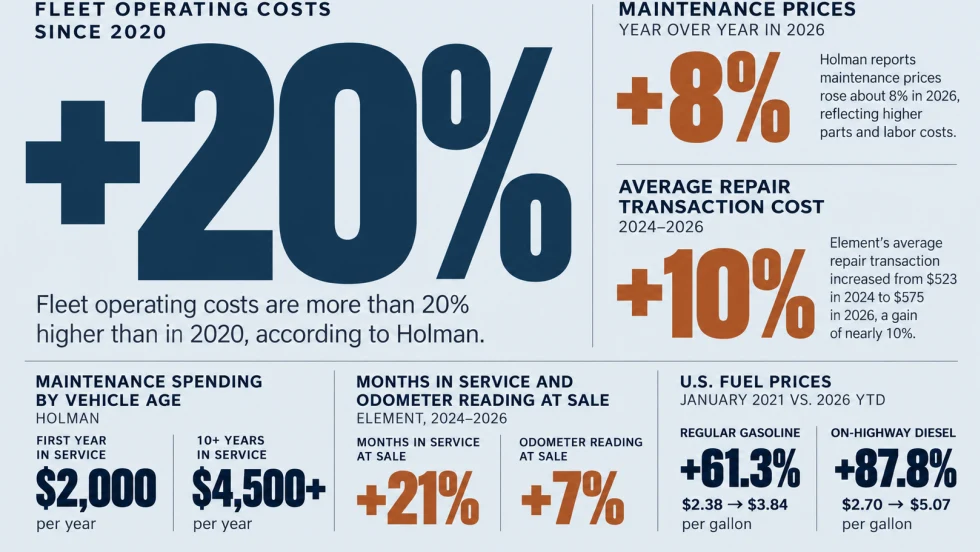
Managing Fleet Costs in an Era of Permanent Volatility
Fleet operating costs have risen more than 20% since 2020, raising a key question: When does extending a vehicle's service life stop making financial sense?
Read More →
The Next Evolution of Fleet Management: Autonomous Operations
This opening keynote session at the Fleet Forward Conference highlights the future of autonomous driving for fleets.
Read More →
How to Reduce the Total Cost of Risk From Catalytic Converter Theft
A stolen catalytic converter can cost fleets far more in downtime and lost productivity than in repairs. A total-cost-of-risk approach can help fleet managers quantify their exposure and prioritize theft prevention.
Read More →

Personal-Use Charges Rise as Vehicle Values Fall | AF News Recap
Personal-use charges are climbing, wholesale used-vehicle values are declining, and commercial fleet sales growth is slowing. This week, we're breaking down the latest fleet data, plus how Element Fleet Management is helping Waymo prepare for its first Canadian robotaxi market.
Read More →
Here's When You Should Make an Exception to Fleet Policy
Fleet policies are designed to create consistency, but not every driver or situation fits neatly within standard rules.
Read More →
AI-Native or AI-Acquired: What Should Fleet Managers Look for in an AI Platform?
Six questions can help fleet managers look beyond AI marketing claims to evaluate integration, data access, and real-world operational performance.
Read More →
A buyer's guide to fleet management software in 2027
Buying fleet management software in 2027 means looking beyond features and price. As fleet operations, technology and expectations evolve, this guide explores what today’s fleet professionals should consider when choosing a system that can deliver value now and adapt to what comes next.
Read More →
What Will Shape the Next Era of Fleet Management?
EVs, AI, and autonomous vehicles are reshaping fleet management. Discover what’s ahead—and how fleet leaders can prepare for the next era.
Read More →
How Fleets Can Recruit and Train Veterans for Technician Roles
Here's how the technician shortage has affected uptime for fleets, and what to do about it.
Read More →
Avis Budget Group Deploys Neology Toll Management Technology Across Major Brands
Neology’s neoFleet platform will manage toll transactions and toll-authority operations for vehicles across Avis, Budget, Payless, Budget Truck and Zipcar.
Read More →