




Mazda Details 2014 Mazda6 Fuel Economy, Pricing, and Features
IRVINE, CA – The automaker said this sedan is the second vehicle in its lineup to fully incorporate Mazda’s SKYACTIV technology into the design.
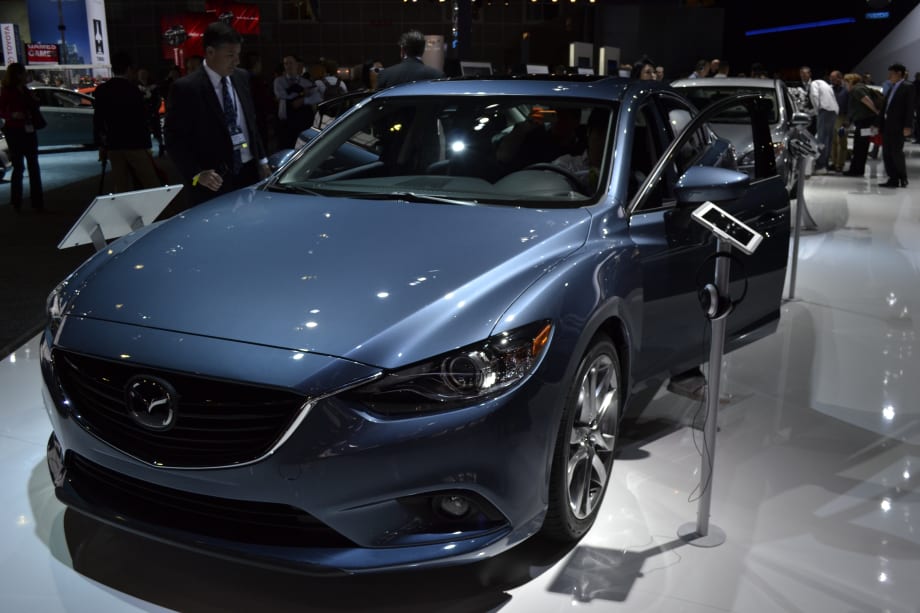
The 2014-MY Mazda6 sedan.
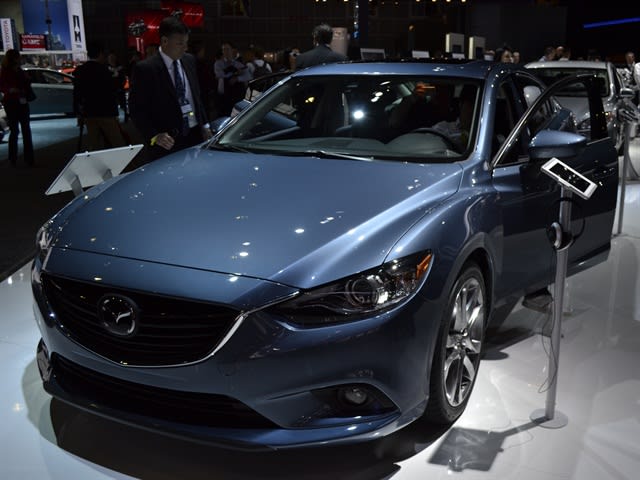
The 2014-MY Mazda6 sedan.
IRVINE, CA – Mazda North American Operations said its all-new Mazda6 mid-size sedan will start at an MSRP of $20,880 for the base trim level, not including destination charge and related fees. The automaker said this sedan is the second vehicle in its lineup to fully incorporate Mazda’s SKYACTIV technology into the design.
The 2014 Mazda6, which is on sale now, also gets best-in-class fuel economy, according to Mazda, at 38 highway, 26 city, 30 combined, when equipped with the SKYACTIV-Drive six-speed automatic transmission. Mazda also plans to offer a SKYACTIV-D 2.2L clean diesel engine on the Mazda6 during the second half of 2013. The automaker plans to announce specs and available trim levels closer to the on-sale date.
The sedan comes in three trim levels, the entry-level i Sport, which starts at $20,880 MSRP (an increase of $155 from the previous model year); the mid-grade i Touring trim level ($24,495 MSRP); and the i Grand Touring, which starts at $29,495 MSRP.
The 2014 Mazda6 sedan comes standard with a SKYACTIV-G 2.5L gasoline that gets 184 hp at 5,700 rpm and 185 lb.-ft. of torque at 3,250 rpm. When equipped with the standard manual transmission, the sedan gets an EPA-rated 25 city, 37 highway, 29 combined mpg.
Mazda offers a number of standard safety features on all 2014-MY Mazda6 models. They include six airbags, front headrests designed to reduce whiplash, power-assisted ventilated front and solid rear disc brakes, ABS with Electronic Brakeforce Distribution and Brake Assist, daytime running lights, Dynamic Stability Control, a Traction Control System, hill launch assist, a fold-away brake pedal assembly, a trunk entrapment release system, a tire pressure monitoring system, three-point safety belts for all seating positions, front seatbelt pretensioners with force limiters and Lower Anchors and Tethers for Children (LATCH).
In terms of features, the i Sport trim level features push-button start, air conditioning with a pollen filter, power windows with a driver’s-side one-touch up/down feature, a tilt-and-telescopic adjustable steering column, steering-wheel-mounted audio and cruise control functions, 17-inch alloy wheels, and auxiliary and USB connection ports.
If a buyer adds the six-speed automatic trim level to the i Sport, Mazda adds the following features: Bluetooth phone/audio connectivity, a 5.8-inch color touch screen display, a rearview camera, HD Radio Technology, Pandora, Radio Broadcast Data System program information, SMS text message receipt/delivery, E911 automatic emergency notification, and audio menu voice command.
For the mid-grade i Touring trim level, Mazda adds 19-inch allow wheels and a number of features when the vehicle is equipped with the six-speed automatic transmission. Features that come with the transmission include the same as those on the i Sport plus dual-zone automatic climate control with rear seat vents, leatherette-trimmed sport seats, a six-way power driver's seat and a “Commander Switch” for using functions on the 5.8-inch display.
Mazda offers a Technology Package on the Touring for an MSRP of $2,000. The package adds a TomTom technology-based navigation system, Bose Centerpoint 11-speaker Surround Sound System with AudioPilot, Mazda Advanced Keyless Entry System, automatic on/off headlights, rain-sensing windshield wipers, an auto-dimming rearview mirror with Homelink, an auto-dimming driver's side outside mirror, heated outside mirrors, and the automaker’s all-new Smart City Brake Support (SCBS) system. SCBS is designed to help drivers avoid collisions at low speeds (less than 19 mph).
For safety, the i Touring model adds a Blind Spot Monitoring with Rear Cross Traffic Alert (RCTA) as standard equipment. SCBS is available as an option.
The top-end trim level is the i Grand Touring, which features platinum silver 19-inch alloy wheels, a power moonroof, a rear lip spoiler, bi-xenon high-intensity discharge (HID) headlights with auto leveling, leather-trimmed sport seats with heated front seats, an eight-way power driver's seat with power lumbar support, a four-way power front passenger seat, steering wheel-mounted paddle shifters, and Sirius Satellite Radio with a complimentary four-month subscription.
The i Grand Touring models feature BSM and SCBS systems as standard safety equipment along with RCTA and an Adaptive Front-lighting System. The i Grand Touring trim level offers two packages, including the MRCC/FOW Package (which adds Mazda Radar Cruise Control (MRCC) and the automaker’s Forward Obstruction Warning (FOW) system). Next is the Advanced Package, which adds the features in the MRCC/FOW Package and Lane Departure Warning System (LDWS), High Beam Control (HBC), and i-ELOOP (the automaker’s regenerative braking technology). The automaker hasn’t announced pricing for the Advanced Package yet.
More Operations

How Fleets Can Recruit and Train Veterans for Technician Roles
Here's how the technician shortage has affected uptime for fleets, and what to do about it.
Read More →
Avis Budget Group Deploys Neology Toll Management Technology Across Major Brands
Neology’s neoFleet platform will manage toll transactions and toll-authority operations for vehicles across Avis, Budget, Payless, Budget Truck and Zipcar.
Read More →
Fleet Personal-Use Charges Edge Higher in 2026
Nearly eight in 10 surveyed fleets allow personal use of company vehicles, while just over half of respondents report charging employees for the privilege.
Read More →
The Future of Fleet + What’s Changing Right Now | AF News Recap
Could developments overseas offer a preview of what’s coming for U.S. fleets? This week, we’re looking at the future of AI, autonomy, and electrification, plus Ford Pro’s new certified pre-owned program, smarter vehicle offboarding, and a new way for fleets to manage toll expenses.
Read More →
How to Handle Vehicle Offboarding
What do fleet managers need to do when a driver leaves?
Read More →
Fleet Manager’s Ultimate Playbook: Navigating the New Standard in OEM Connectivity
Rising operating costs, driver safety concerns, and unplanned downtime are putting unprecedented pressure on modern fleets. Discover how fleet managers use embedded OEM connectivity and real-time vehicle data to cut TCO, prevent downtime, and protect drivers without aftermarket telematics hardware.
Read More →
U.S. Bank Adds Verra Mobility Toll Management to Voyager Fleet Platform
The integration allows U.S. Bank Voyager fleet customers to manage toll payments and violations alongside fuel, EV charging and maintenance expenses.
Read More →
ADAS Prevents Crashes. But Repairs Cost More | AF News Recap
ADAS-equipped vehicles may crash less often, but they can cost more when they do. This week, we’re breaking down what that tradeoff means for fleets, plus Subaru’s first Forester Wilderness Hybrid, Nissan’s new e-POWER Rogue, and why Calstart has become Catalyst Mobility.
Read More →
Moventum Fleet Management Names Mark Iorillo Head of Sales
Iorillo brings nearly 20 years of fleet management and sales experience to the role, including previous positions at Element Fleet Management, CEI, Donlen and Ryder.
Read More →
Fleet Has a Talent Pipeline Problem. What Comes Next? | AF News Recap
Where will fleet’s next generation of leaders come from? This week, we’re looking at the industry’s talent pipeline, what certification can add to a fleet career, how to build an award-worthy track record, and the return of Automotive Fleet’s Personal Use Survey.
Read More →