





FAST FACTS: See Mazda MX-30 facts and specs at bottom of this article.
Mazda Debuts Its First Electric Vehicle Model On the Road
The MX-30 is designed as a practical local car while engineered to replicate the performance and amenities of traditional vehicles.
October 4, 2021
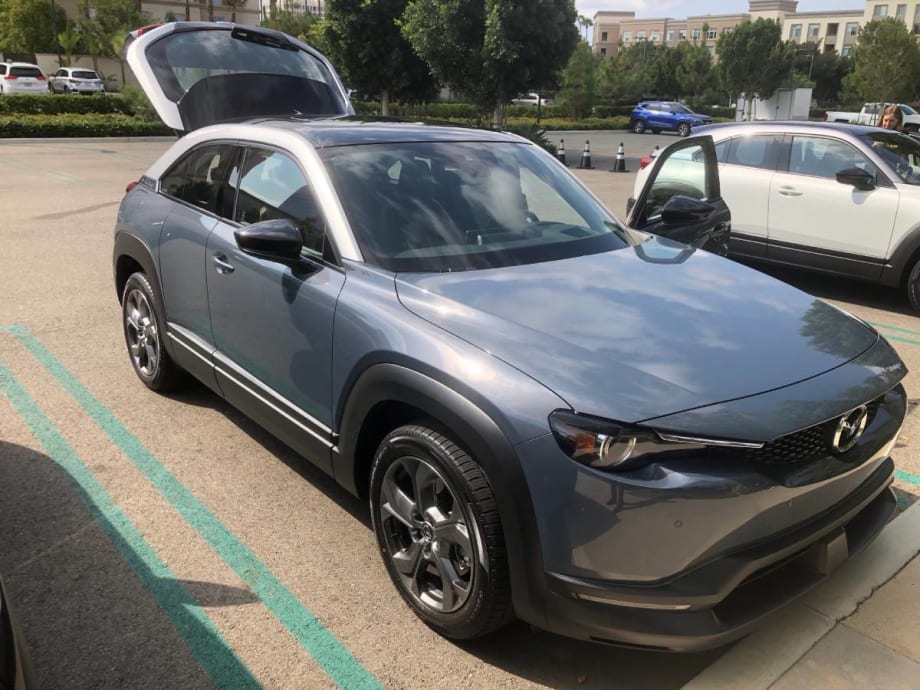
The MX-30 comes with a maximum charge range of 100 miles, which makes it more suitable to local trips and commutes. The average U.S. daily commute is 30 miles.
Photo: Martin Romjue / Bobit
5 min to read
Mazda’s first electric vehicle model, the MX-30, hits dealerships in California next week, that will be selling a first production run of 560 units.
While somewhat later to the EV market than its competitors, Mazda at a media rollout event last week emphasized the precision and quality behind its efforts to pitch the MX-30 directly to first-time EV purchasers.
MX-30 Mission
The MX-30 embodies a series of balances — in weight, design, structure, battery capacity, and performance — all engineered to make sure the compact cross-over style model doesn’t come on too strong as electric, yet still demonstrates its attributes clearly. To ease first-timers into electric mode, Mazda is offering MX-30 buyers a $500 credit for charging fees or toward installing a home-based Level 2 charger.
That approach positions the MX-30 as a non-threatening flagship for planned EV, plug-in, and plug-in hybrid models to enter the market this decade as Mazda fulfills its self-named “Sustainable Zoom Zoom 2030” electrification program.
The MX-30 comes with a maximum charge range of 100 miles, which Mazda representatives mentioned in the same breath as the purpose of the car, which is for local-urban commutes and short trips. Aaron Dembla, the launch strategy manager for Mazda, pointed out the average U.S. daily work commute is only 30 miles. The MX-30 leads the way for the coming wave of electrification, he said during a Sept. 29 presentation in Irvine, Calif.
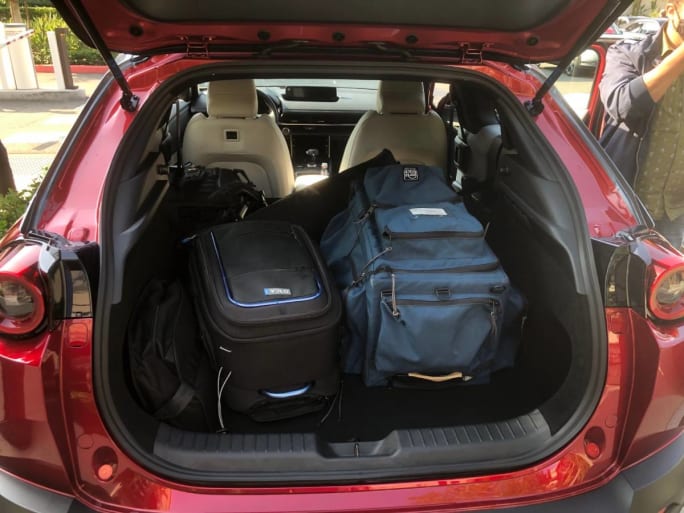
The MX-30 offers 21 cubic feet of cargo volume. While not intended for last-mile delivery, the MX-30 can accommodate light equipment and supplies as part of a fleet duty cycle.
Photo: Martin Romjue / Bobit
Fleet Potentials
For the fleet sector, a 100-mile maximum range still works, since daily duty cycles for local and regional fleet vehicles average about 70-80 miles. Mazda sees the MX-30 as a viable fleet car for corporations and municipal governments; think of the pharmaceutical rep traveling around a defined territory, or a government manager, inspector, or light deliverer making county-wide runs and stops. One competing vehicle, the Chevrolet Bolt, has already worked its way into government fleets looking to test EVs and explore electrification.
The MX-30 offers 21 cubic feet of cargo volume. While not intended for last-mile delivery, the MX-30 can accommodate light equipment and supplies as part of a fleet duty cycle.
Mazda is still developing the details of a fleet program and ROI estimates for the MX-30, but the vehicle is available for fleet terms and purchasing deals, said Bob Pan, director of national sales planning for Mazda. He sees the vehicle as a candidate for commercial and corporate fleets, municipal governments, and university and educational institutions whose drivers can access charging at home or at work-based charging facilities, and who would be using the vehicle for light-duty, short-haul, and/or ground transportation purposes.
The first 560 MX-30s built this year are designated for retail buyers at dealerships in California, since the state has one of the best charging infrastructures and EV adoption rates in the U.S. However, Mazda can arrange fleet-related orders and sales, and will work with customers on bulk order pricing, Pan said.
When factoring in federal and state rebates or credits, tax benefits, possible electric utility credits, and fuel and maintenance savings, the MX-30 can become a financially compelling offer, Pan said. Early indications from ALG show the MX30 has a strong residual value after three years, he added.
Mazda keeps its fleet sales to 10% of its overall volume to ensure the strongest residual values and maximize the brand value of its vehicle portfolio, Pan said.
Benefits of Balance
Engineers designed the MX-30 with a front/rear weight distribution of 40%/60%, putting less pressure on the front-wheel drive tires, explained Dave Coleman, vehicle dynamics manager for Mazda. The 683-pound battery sits underneath the floor in a cage structure for added safety positioning. The vehicle also has a two-inch lower center of gravity than its close cousin, the CX-30. Meanwhile, the MX-30 has 15% stiffer tires and 45% stronger body structure that contribute to improved steering response.
What it all adds up to is optimal cornering, more precise steering, improved powertrain response time, faster acceleration, and an overall supple and nimbler ride, Coleman said.
The range capacity of 100 miles reflects the fact the MX-30 carries a lighter battery than one that could supply 300 miles of range. The MX-30 battery enables the weight balances that allow the car to mimic the performance of an internal combustion engine. That “natural feel” keeps the MX-30 from moving like an appliance on wheels, said Jay Chen, powertrain manager for Mazda.
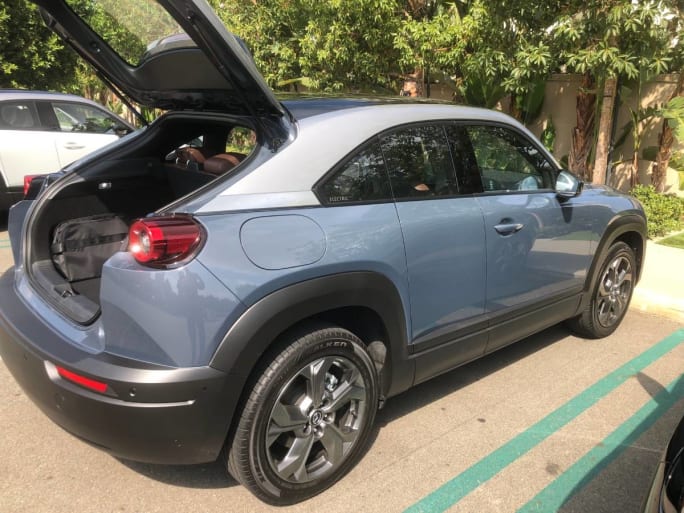
Mazda is still developing the details of a fleet program and ROI estimates for the MX-30, but the vehicle is available for fleet terms and purchasing deals.
Photo: Martin Romjue / Bobit
A Diverse Drive Test
During the week of Sept. 27, Mazda hosted several waves of media horde-lets near its Irvine, Calif., headquarters to drive test the MX-30. The 60-mile test loop around Orange County spanned canyons, coastlines, hillsides, freeways, and suburbs, as well as more congested town blocks.
The MX-30 avoids any feelings of inferiority to other vehicles on the road, with agility and acceleration that blend into the traffic flow. It drove like a normal compact car with all the electronic and connected amenities now universally expected. The low hum of the motor resembled that of an ICE vehicle, while speeding up evoked the pull and efforts of a four-cylinder conventional engine. But flooring the accelerator didn’t generate the expected surge of traditional vehicles, which means you don’t need to worry about lurching ahead.
One drawback is the narrow rear jump-style seat bench, which limits it to small kids or more likely as extra space for the two front seat occupants to fully recline and make it a “coupe.”
From a fleet standpoint, vehicles on duty cycles usually only carry a driver or at most one passenger. Achieving pleasurable hints of sports-car performance does not rank as a priority, since most fleets stress safe operation for their drivers who are dissuaded from sudden braking, quick starts, and sharp cornering.
If you eventually see MX-30s on the road with bumper stickers asking, “How’s My Driving?” we’ll know it succeeded in sparking the interest of fleets trying out electrification, or zooming (carefully) toward sustainability.
Topics:Electric VehiclesMazdaFleet electrificationGreen FleetVehicle ResearchGlobal FleetFleet Forward
Originally posted on Charged Fleet
More Green Fleet

Sponsored•October 1, 2026
New Propane Autogas Program Offers Fleet Compensation
Qualified commercial fleets can receive $7,500 per eligible propane autogas vehicle and up to $10,000 for new refueling site prep. Learn how the program works and see whether your fleet qualifies.
Read More →
EV Charging Use Is Outpacing Infrastructure Growth
ChargePoint’s 2026 Charging Forward Report points to rising charger use, higher-powered charging, commercial vehicle electrification, and energy-management technology. Here’s what fleets should know.
Read More →
Merchants Fleet Reports 290M EV Miles as Fleets Navigate Changing Electrification Market
From millions in operating savings to hundreds of millions of EV miles, Merchants Fleet’s latest report reveals what’s working and what’s changing in fleet electrification.
Read More →
The EV Breakdown Nobody's Talking About: Why Most Electric Vehicle Roadside Calls Aren't Mechanical Failures
Here's why EV breakdowns are widely misunderstood.
Read More →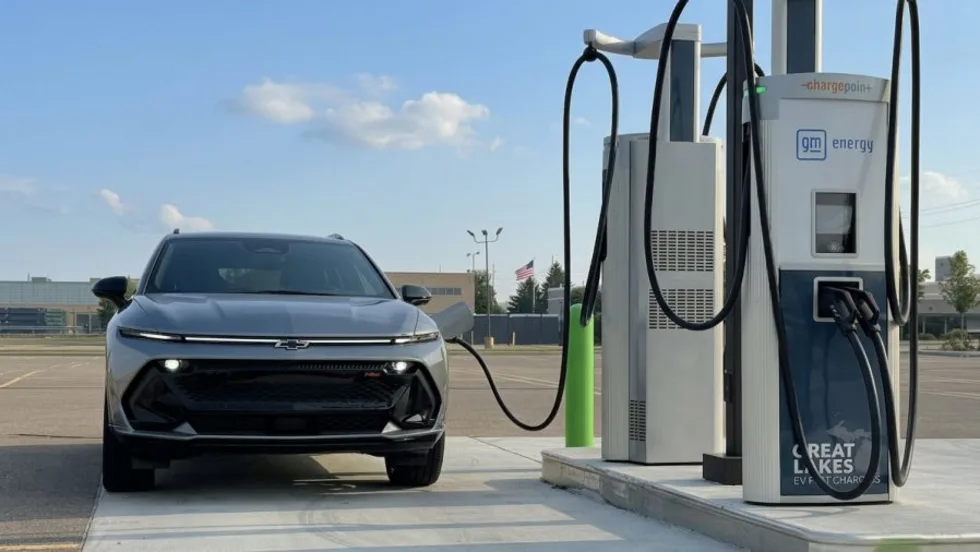
ChargePoint Now Available in Energy Pass
ChargePoint and additional planned charging network integrations were added to GM's Energy Pass.
Read More →

First Look: Slate Auto's Electric Fleet Pickup
Could an affordable, modular EV pickup make electrification more practical for fleets?
Read More →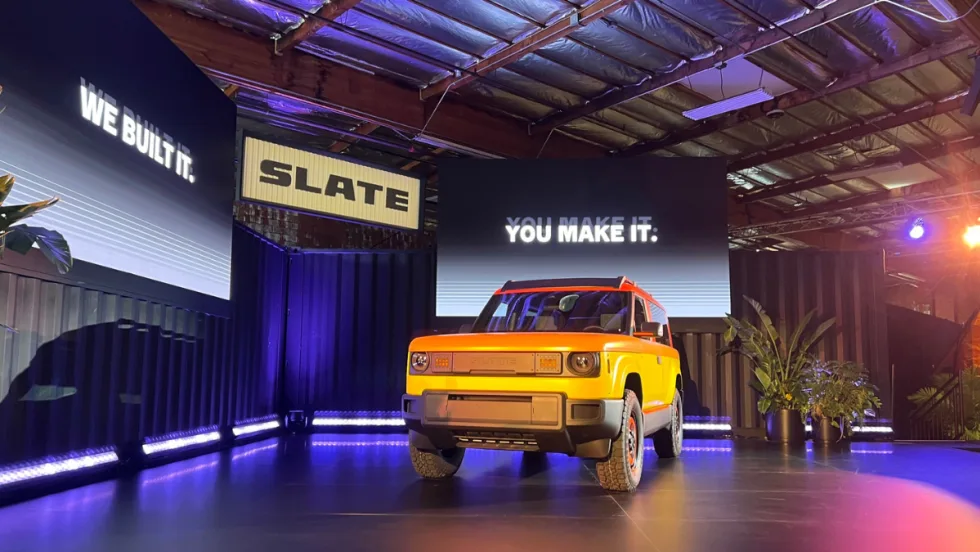
Slate Debuts Colorful, Unique EV Models
A recent media and client event, studded with electric vehicles dressed up on platforms, planted a new position for the manufacturer in the wider EV market. Fleets will find cost-saving advantages.
Read More →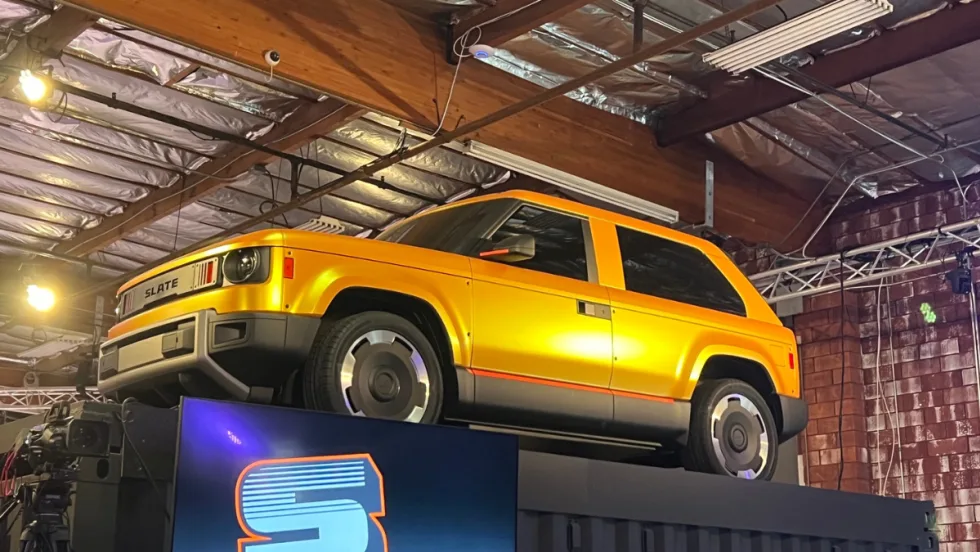
Slate Electric SUV, Pickup Switchable Model Aims For Light-Duty Fleets
Everything about this EV is counterintuitive and understated, making it stand out from the crowd.
Read More →
Inspiration Mobility Acquires Key Electrada Assets
Inspiration Mobility Group has acquired select assets of Electrada, adding the fleet electrification provider's team, technology, and charging infrastructure development capabilities to its energy management business.
Read More →