




Malfunction Fears May Haunt Self-Driving Cars
Manufacturers of autonomous vehicles will ultimately need to overcome lingering consumer concerns about potential software and hardware failures, a survey finds.
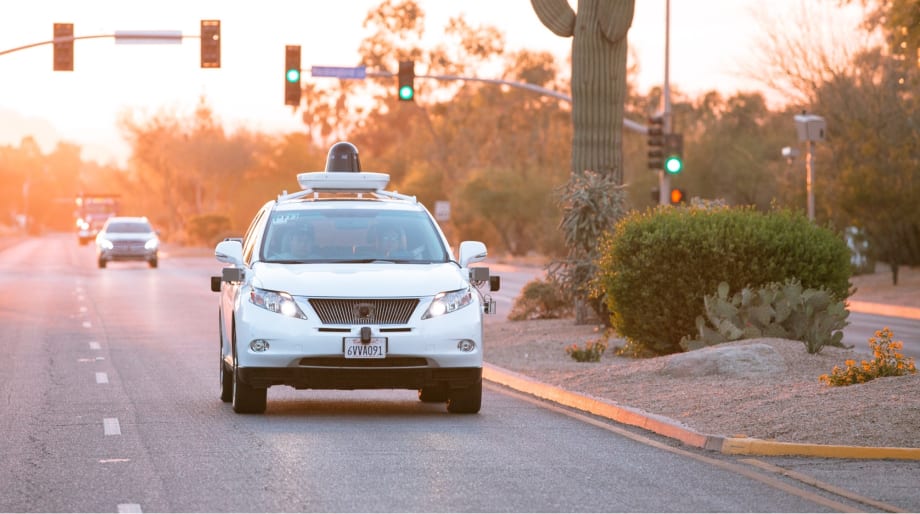
Developers of autonomous driving systems still face the challenge of winning the public's trust in the evolving technology. Photo courtesy of Waymo.
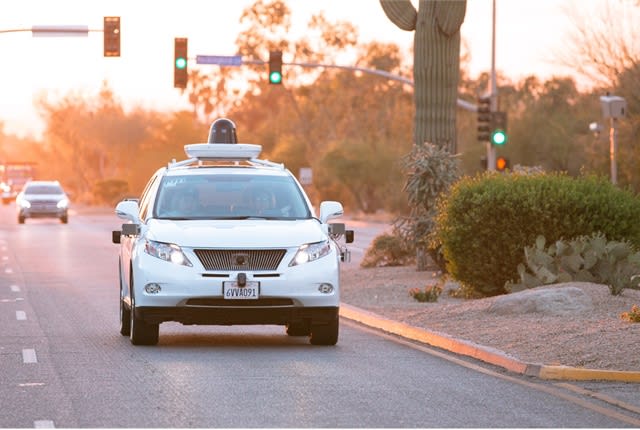
Developers of autonomous driving systems still face the challenge of winning the public's trust in the evolving technology. Photo courtesy of Waymo.
In a recent survey assessing American attitudes about autonomous vehicles, 84% of respondents expressed concerns about potential vehicle software malfunctions and 80% said they worry about possible hardware failure.
The survey, conducted by research firm AlixPartners, included 1,567 American consumers who own or operate a passenger car or light truck. The survey was administered between July 27 and Aug. 2 of this year.
Survey results also underscore Americans’ ongoing anxiety over threats to cybersecurity. A total of 77% of those questioned said they have concerns about self-driving cars being hacked and taken over, and 75% said they would worry about having their personal data stolen from an autonomous vehicle.
When asked who they would trust most to protect their data privacy in a self-driving car, 50% said tech companies — compared to just 14% who said auto companies. When asked who they trusted most to protect their vehicle from hacking, 62% said tech companies while 8% said auto companies. Ride-hailing companies, such as Uber and Lyft, placed a far-distant third in trust for both questions — just 1% for each.
While 79% said they trust traditional automakers most to design and develop autonomous vehicle hardware, only 10% said they trust automakers most with the software side. But 78% said they trust tech companies most to design and develop AV software. Just 10% said they trust tech companies most for designing and building vehicles.
Nearly half of those surveyed (49%) said they don’t currently feel confident in the ability of autonomous vehicles to navigate them safely. A total of 55% said they’re unlikely to consider purchasing a self-driving car. Additionally, just 29% of consumers said they’d be willing to consider buying an autonomous vehicle and to pay an incremental $2,600 on average for the privilege.
“When it comes to autonomous vehicles, traditional auto companies and suppliers have a big, two-front battle ahead of them: educating the consumer about AVs and figuring out how to compete in the software end with highly advantaged tech companies – or partner with them when that makes more sense,” said Mark Wakefield, global co-head of the automotive and industrial practice at AlixPartners. “Either way, traditional auto will have to undertake massive operational and organizational changes to afford the autonomous-vehicle investments, be successful with partnerships and not get left out of the profitable parts of the new automotive ecosystem.”
More Safety

The Safest Fleets Aren’t the Ones with the Most Technology
You’ve made the telematics investment. Here’s how to capture the other half of its value and build the safest fleet on the road.
Read More →
Hidden in Plain Sight: Fleet Compliance Risks
Fleet compliance isn't just about having policies — it's about consistently enforcing them. This practical guide reveals six hidden compliance risks common in public sector and shared fleet operations and outlines proven strategies to improve visibility, accountability, and audit readiness
Read More →
NETS Sets 2026 Fleet Safety Benchmark Conference for Indianapolis
The Sept. 15–17 program will feature fleet benchmarking data, case studies, emerging technologies, and implementation strategies while running alongside the NSC Safety Congress & Expo.
Read More →
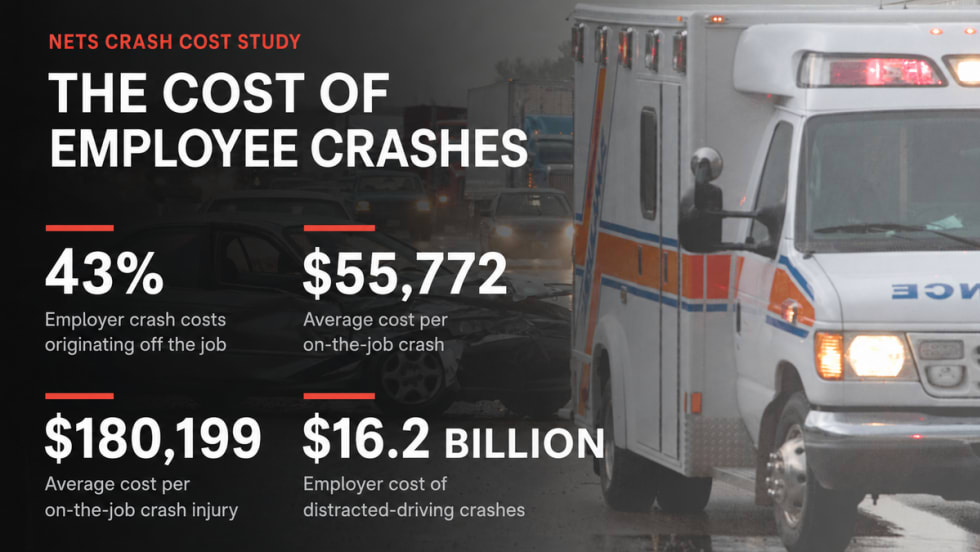
Off-the-Job Crashes Account for 43% of Employers’ $61.7 Billion Crash Burden
NETS quantifies costs dispersed across fleet, risk, HR, and other departments while providing new per-crash benchmarks for employers.
Read More →
Ram Recalls More Than 1.27 Million 1500 Pickups for Seat Belt Anchor Issue
The recall affects certain 2019-2026 Ram 1500 pickups that may have improperly attached second-row seat belt buckle anchors.
Read More →
How Better Visibility Cut Speeding Violations by 48%
Fleet leaders don't need more data, they need clearer visibility into what the data is saying. This case study explores how one utility replaced speeding-event counts with a single metric — miles driven in violation — to strengthen safety and significantly reduce speeding violations.
Read More →
Operation Safe Driver Week: Why the Industry's Oldest Safety Campaign Still Matters to Fleets
A look at how a 2007 enforcement initiative became one of the most consequential weeks on the fleet safety calendar, and what it means for your drivers in 2026.
Read More →
Nexar-Nauto Merger Aims to Give Fleets Better Safety Intelligence Through Larger Driving Dataset
Stefan Heck tells Automotive Fleet that combining more than 10 billion miles of driving history with Nexar's AI models will give fleets deeper insights into driver risk and roadway conditions than either company could provide independently.
Read More →
From Silos to Solutions: Relationship Management for Safer Fleets
From telematics adoption and driver accountability to policy consistency and risk mitigation, this episode breaks down what it really takes to build a safer fleet culture without slowing business down.
Read More →
IIHS Launches First Commercial Vehicle Safety Evaluations
The Insurance Institute for Highway Safety has begun evaluating heavy-duty pickups and cargo vans for driver protection. Which models earned top marks?
Read More →