




Long Beach Harbor Commissioners Back Incentives for Clean Trucks Program
LONG BEACH, CA --- The Long Beach Board of Harbor Commissioners have given preliminary approval to a proposal aimed at spurring private investment in the Port of Long Beach Clean Trucks Program.
LONG BEACH, CA --- The Long Beach Board of Harbor Commissioners have given preliminary approval to a proposal aimed at spurring private investment in the Port of Long Beach Clean Trucks Program.
Commissioners backed a plan that would provide incentives to port truckers to quickly acquire cleaner-running big-rigs -- especially trucks that run on alternative fuels like liquefied natural gas (LNG).
The proposal, which will come back before the Commission for final consideration on April 6, would eliminate cargo fees on some trucks starting May 4, in response to the goods movement industry's demand for privately financed big-rigs. It also drops the fee for those who buy Port-subsidized trucks that run on LNG.
The revisions will help truck owners comply with the gradual phasing out of older, dirtier vehicles, as required by the Clean Trucks Program adopted by the Port of Long Beach.
"These changes will help keep the Clean Trucks Program on target to dramatically reduce pollution from port-related trucking in Southern California," said James C. Hankla, president of the Long Beach Board of Harbor Commissioners. "The economy has changed, the drayage industry has changed, and we need to be pro-active with our response."
The Clean Trucks Program started October 1, 2008, with a ban on 1988 and older trucks. On February 18, 2009, the Port initiated a Clean Truck Fee of $35 per 20-foot container and $70 for larger containers to provide truck owners with financial assistance for replacement vehicles. In the current economic climate, many importers and exporters have favored truckers who privately finance clean trucks and are therefore not required to pay the clean truck fee.
The changes to the Clean Trucks Program would eliminate the clean truck fee for cargo hauled by the following:
Trucks bought without Port assistance. Previously, there was a 50-percent fee for some of this cargo. The scrapping of an old truck will no longer be required.
LNG-fueled trucks purchased with Port assistance. Again, the scrapping of an old truck will no longer be required. Cargo carried by privately purchased LNG trucks is already exempt.
About 500 trucks acquired with the help of the Gateway Cities Program in recent years.
And, the first 40 or so trucks financed by the Clean Trucks Program.
In order to put more emphasis on LNG in the Port-funded truck program, commissioners shelved an earlier proposal to reduce by 50 percent the fee for containers hauled by clean diesel trucks purchased with Port assistance.
The proposed changes are also expected to ease the burden on industry by making the Clean Truck Fee exemptions very similar at the ports of Long Beach and Los Angeles.
Using clean truck fee revenues, the Clean Trucks Program offers grants and leases that cover as much as 80 percent of the cost of a new truck. (To find out how to apply, call (866) 721-5686.)
Beginning Jan. 1, 2010, 1993 and older trucks will be banned from the Port, and unretrofitted 1994 to 2003 trucks will also be banned. By January 1, 2012, all trucks must meet 2007 federal emission standards.
More Green Fleet

Merchants Fleet Reports 290M EV Miles as Fleets Navigate Changing Electrification Market
From millions in operating savings to hundreds of millions of EV miles, Merchants Fleet’s latest report reveals what’s working and what’s changing in fleet electrification.
Read More →
The EV Breakdown Nobody's Talking About: Why Most Electric Vehicle Roadside Calls Aren't Mechanical Failures
Here's why EV breakdowns are widely misunderstood.
Read More →
ChargePoint Now Available in Energy Pass
ChargePoint and additional planned charging network integrations were added to GM's Energy Pass.
Read More →

First Look: Slate Auto's Electric Fleet Pickup
Could an affordable, modular EV pickup make electrification more practical for fleets?
Read More →
Slate Debuts Colorful, Unique EV Models
A recent media and client event, studded with electric vehicles dressed up on platforms, planted a new position for the manufacturer in the wider EV market. Fleets will find cost-saving advantages.
Read More →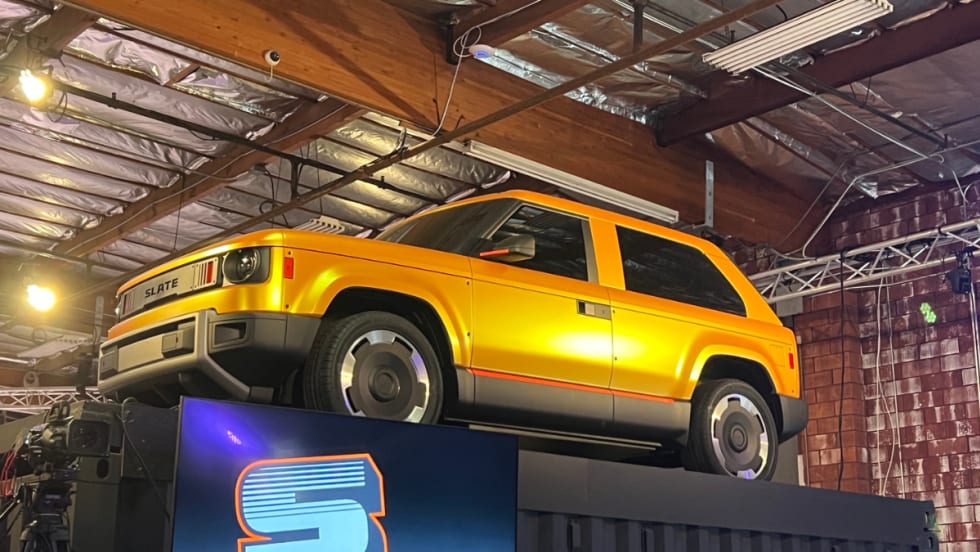
Slate Electric SUV, Pickup Switchable Model Aims For Light-Duty Fleets
Everything about this EV is counterintuitive and understated, making it stand out from the crowd.
Read More →
Inspiration Mobility Acquires Key Electrada Assets
Inspiration Mobility Group has acquired select assets of Electrada, adding the fleet electrification provider's team, technology, and charging infrastructure development capabilities to its energy management business.
Read More →
Turning Connected Vehicle Data Into Decisions That Matter
Fleet leaders have more data than ever, but turning that data into clear, actionable decisions remains a challenge. This white paper shows how leading organizations are using connected vehicle data to improve safety, reduce costs, and optimize fleet performance. Learn how to turn insight into action across your fleet.
Read More →
Are You Tracking Your Fleet's True Total Cost of Ownership?
Bobit Business Media surveyed 190 fleet professionals and found that while most fleets are tracking costs, fragmented systems and data gaps are keeping true TCO visibility out of reach. With rising pressure to control spend in an increasingly volatile environment, the gap between what fleets think they know and what the data actually shows is wider than you might expect. See how your peers are managing costs today and where the industry still has room to improve.
Read More →