




Lincoln Rolls Out Executive Fleet Program
Lincoln has rolled out an executive fleet program with 50 of its dealers and increased its efforts to improve fleet sales of a refreshed vehicle lineup with several new initiatives.

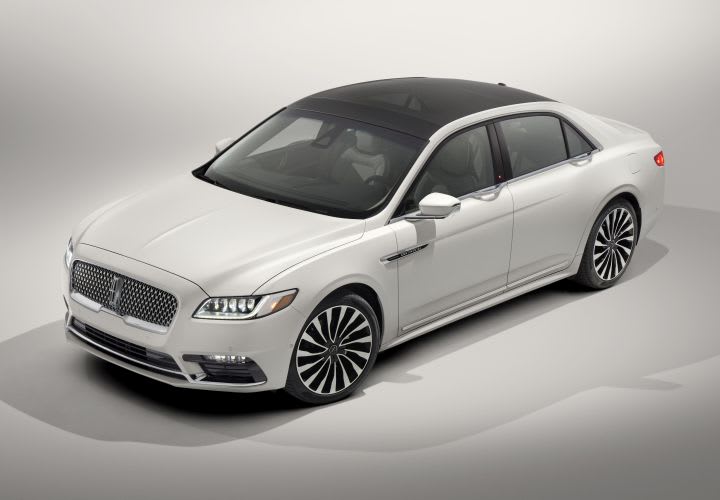
Photo of 2017 Continental courtesy of Lincoln.

Photo of 2017 Continental courtesy of Lincoln.
Lincoln has rolled out an executive fleet pilot program with 50 of its dealers with several new fleet sales initiatives to accompany a refreshed vehicle lineup.
While dealers in five Lincoln sales regions will serve as the backbone of the Lincoln Executive Business Program, the brand has also appointed a fleet sales manager, increased its incentives on 2016 model-year vehicles and implemented a dealer incentive program for courtesy deliveries.
The program arrives at a time when Lincoln has introduced four new vehicles in four years, including the second-generation 2013-MY MKZ mid-size sedan, 2015-MY MKC compact SUV, second-generation 2016-MY MKX mid-size SUV, and 2017-MY Continental full-size sedan.
"This program will create a dealer network to focus and create the processes to serve the executive fleets and fleet customers," said Crucita Santiago Santana, Lincoln's executive and business sales manager. "We have great product coming out. Having the right product with the brand transformation we're going through, it's the right time for us to work with our dealer network for them to prospect for executive fleets."

Santiago Santana
As part of the program that began in November, 50 Lincoln dealers were chosen in the brand's five regions based in Dallas, Chicago, New York, Los Angeles, and Atlanta.
Lincoln has assigned consultants who will visit these dealers help them better understand the fleet business and put a process in place that will make them "a good resource for executives and fleet management companies," Santiago Santana said. Lincoln has also begun offering an incentive per vehicle for courtesy deliveries.
For 2017-MY vehicles, Lincoln will offer a pickup and delivery service for executives who need service or repairs so they don't have to leave the office.
Lincoln has also begun making inroads with fleet management companies and corporations. Last year, Lincoln began a vehicle demo program that allows company executives a chance to test drive a Lincoln for several weeks. An internal survey showed a 30% increase in the driver giving the vehicle a "favorable" rating after driving it.
In the past six months, Lincoln vehicles have been added to 30 new selector lists, and in the past two months a West Coast pharmaceutical company has added almost 70 MKC or MKZ vehicles.
And Lincoln has raised fleet incentives for 2016-MY vehicles, while it continues to develop fleet incentives for the 2017-MY vehicles, including the Continental, which has been designed as more of a driver's car so it can reach executives, Santiago Santana said.
On Dec. 1, Lincoln increased incentives for its 2016-MY MKZ, Navigator, and MKC to $3,500, $3,500, and $2,500 respectively. The MKX incentive remains at $2,000. Companies must have an FIN (Ford Identification Number) code to gain eligibility. Ford assigns FIN codes to companies who buy at least five vehicles a year or have at least 15 vehicles in operation.
With Santiago Santana, Lincoln now has a manager dedicated to fleet sales. Santiago Santana took the new position in March of 2015, after working in Ford's Puerto Rico unit.
More Operations
Here's When You Should Make an Exception to Fleet Policy
Fleet policies are designed to create consistency, but not every driver or situation fits neatly within standard rules.
Read More →
AI-Native or AI-Acquired: What Should Fleet Managers Look for in an AI Platform?
Six questions can help fleet managers look beyond AI marketing claims to evaluate integration, data access, and real-world operational performance.
Read More →
A buyer's guide to fleet management software in 2027
Buying fleet management software in 2027 means looking beyond features and price. As fleet operations, technology and expectations evolve, this guide explores what today’s fleet professionals should consider when choosing a system that can deliver value now and adapt to what comes next.
Read More →

What Will Shape the Next Era of Fleet Management?
EVs, AI, and autonomous vehicles are reshaping fleet management. Discover what’s ahead—and how fleet leaders can prepare for the next era.
Read More →
How Fleets Can Recruit and Train Veterans for Technician Roles
Here's how the technician shortage has affected uptime for fleets, and what to do about it.
Read More →
Avis Budget Group Deploys Neology Toll Management Technology Across Major Brands
Neology’s neoFleet platform will manage toll transactions and toll-authority operations for vehicles across Avis, Budget, Payless, Budget Truck and Zipcar.
Read More →
Fleet Personal-Use Charges Edge Higher in 2026
Nearly eight in 10 surveyed fleets allow personal use of company vehicles, while just over half of respondents report charging employees for the privilege.
Read More →
The Future of Fleet + What’s Changing Right Now | AF News Recap
Could developments overseas offer a preview of what’s coming for U.S. fleets? This week, we’re looking at the future of AI, autonomy, and electrification, plus Ford Pro’s new certified pre-owned program, smarter vehicle offboarding, and a new way for fleets to manage toll expenses.
Read More →
How to Handle Vehicle Offboarding
What do fleet managers need to do when a driver leaves?
Read More →
Fleet Manager’s Ultimate Playbook: Navigating the New Standard in OEM Connectivity
Rising operating costs, driver safety concerns, and unplanned downtime are putting unprecedented pressure on modern fleets. Discover how fleet managers use embedded OEM connectivity and real-time vehicle data to cut TCO, prevent downtime, and protect drivers without aftermarket telematics hardware.
Read More →