




Lexus LX 570 - The Luxury Utility Vehicle
TORRANCE, CA - The eight-passenger LX 570 continues to be a premium luxury utility vehicle for daily driving or conquering off-road challenges.
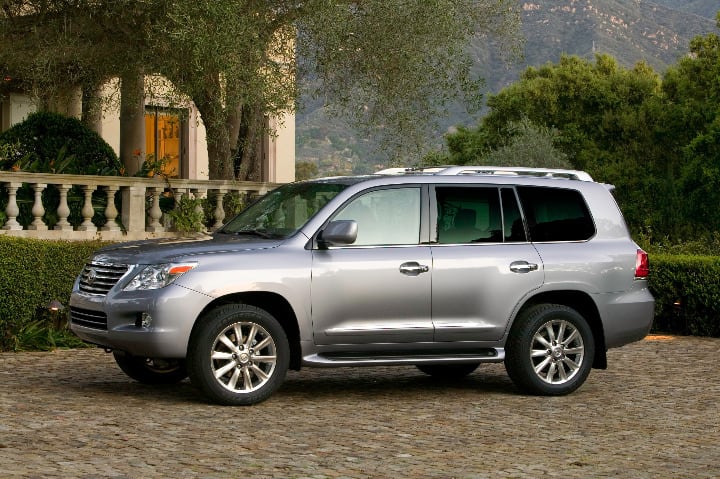
2010 LX 570
TORRANCE, CA - The eight-passenger LX 570 continues to be a premium luxury utility vehicle for daily driving or conquering off-road challenges, according to the manufacturer. For the 2011 model-year, the LX 570 receives a standard brake override system, updated interior colors, and additions to the available Luxury Package. The Costa Azul Mica exterior is discontinued.
The LX 570 receives standard a brake override system as an additional measure of consumer confidence. The braking system enhancement will automatically reduce engine power when the brake pedal and the accelerator pedal are applied simultaneously under certain driving conditions.
The LX 570's 5.7L V-8 delivers the punch and towing power demanded in this segment. The powerplant produces 383 horsepower at 5,600 rpm and peak torque of 403 lb.-ft at 3,600 rpm.
The V8's advanced Dual Variable Valve Timing with intelligence (VVT-i) system controls valve timing and overlap on both the intake and exhaust valves, which helps to optimize power, fuel efficiency and emissions. The Acoustic Control Induction System (ACIS) switches the length of the intake tract in two stages, based on rpm and throttle angle, to improve torque across the engine speed range. Tubular stainless steel headers flow into a full stainless steel exhaust system.
The LX 570's six-speed automatic transmission is designed to handle high torque while performing with Lexus quietness and smoothness. The electronically-controlled transmission's control unit estimates road conditions and predicts the driver's intention to select the appropriate gear ratio for the vehicle's speed and the driving conditions. A sequential shift mode allows the driver to select gears manually.
The LX 570's transfer case provides full-time four-wheel drive that is equally adept at handling the rigors of slippery winter weather or deep mud or snow. A 2.62:1 low-range ratio is available for challenging driving surfaces. The system uses a TORSEN® limited-slip locking center differential to distribute power 40:60 front-to-rear, directing more power to the wheels with the best grip should slippage occur. Four-wheel Active Traction Control (A-TRAC) employs both brake and throttle intervention to help control wheel spin. Vehicle Stability Control (VSC) helps maintain directional control during cornering and can be disengaged via the "TRAC off" switch.
The Crawl Control feature provides improved throttle modulation when maneuvering over rough, uneven or difficult surfaces. When the transmission is shifted into low range, Crawl Control regulates engine speed and output, along with braking force, to propel the vehicle forward or in reverse at one of three low-speed settings. Crawl Control also actuates a set of virtual locking differentials to help reduce tire slippage and optimize chassis behavior.
The LX 570's highly capable chassis is equipped with an advanced suspension system. Body-on-frame construction provides ruggedness and durability in extreme driving conditions, plus impressive ride isolation characteristics and a 7,000-pound towing capability. An electro-hydraulic system with four-wheel Active Height Control (AHC) and Adaptive Variable Suspension (AVS) reacts more quickly and allows for a greater range of adjustment than the system used in the previous generation LX.
[PAGEBREAK]
The LX 570's brake system utilizes 13.4-inch ventilated discs and four-piston calipers up front and 13.6-inch ventilated discs at the rear. The multi-terrain ABS system determines road-surface conditions and automatically optimizes lock-up control, selecting the suitable ABS profile for on- and off-road driving surfaces. Electronic Brake-force Distribution (EBD) employs the ABS to properly balance braking forces between the front and rear wheels, while Brake Assist (BA) provides auxiliary force to assist the driver during emergency braking.
The front of the LX 570 frame integrates a three-stage crush structure to help reduce frame damage to other areas of the vehicle in certain severe frontal impacts. The patented design can disperse collision force from the main side members to the floor frame members, helping to reduce deformation in the passenger compartment.
The LX 570 is equipped with 10 standard airbags, including driver- and front-passenger knee airbags, front and second-row seat-mounted side airbags in the outboard seating positions, and side curtain airbags for all three rows. All eight seating positions feature three-point seatbelts. The second-row seatbelts integrate pre-tensioners for the outboard seats and an ELR (Emergency Locking Retractor) seatbelt for the center seat.
The LX 570 was the first vehicle in its class to use Active Front Headrests which move up and forward almost instantly in the event of certain rear-end collisions when the force of the occupant's body is applied to the seat back. The standard dual-swivel Adaptive Front lighting System (AFS) helps to illuminate a turn or curve as the driver steers into it.
The LX 570 was also the first in its class to offer available Pre-Collision System with Dynamic Radar Cruise Control. In addition, LX 570 was the first Lexus to offer the optional Wide-view Front and Side Camera feature designed for use in tight settings, such as parking garages. With cameras located within the front grille and under the passenger outside mirror, the driver can check hard-to-view areas by simply pressing a button on the dashboard and viewing the camera images on the standard navigation system screen. The Wide-view Front and Side Camera functions up to a vehicle speed of about 7.5 mph and displays the front and side views simultaneously in split-screen mode.
The standard power rear door, Smart Access keyless entry system with push-button start, headlamp washers and a front windshield wiper deicer provide all-weather convenience. A full array of standard luxury amenities includes four-zone independent climate control, front-seat power-seat cushion extenders, a rear back-up camera, Lexus Navigation System and nine-speaker Lexus Premium Sound system with iPod/USB connectivity.
The LX 570 offers an optional Luxury Package that includes a cool box for beverages; semi-aniline leather-trimmed upholstery; an African Bubinga wood-trimmed shift knob, heated steering wheel and rear center console lid; heated and ventilated front seats and heated second-row seats; Smart Access and Liquid Graphite finished wheels.\
In addition to the Luxury Package, the LX 570's option list includes climate-controlled front seats and heated second-row seats, and an entertainment system. The available rear-seat entertainment system, with 3D icons and LED backlight, plays DVDs and uses a nine-inch wide-format screen.
For more information, visit www.fleet.toyota.com.
More Operations

How Fleets Can Recruit and Train Veterans for Technician Roles
Here's how the technician shortage has affected uptime for fleets, and what to do about it.
Read More →
Avis Budget Group Deploys Neology Toll Management Technology Across Major Brands
Neology’s neoFleet platform will manage toll transactions and toll-authority operations for vehicles across Avis, Budget, Payless, Budget Truck and Zipcar.
Read More →
Fleet Personal-Use Charges Edge Higher in 2026
Nearly eight in 10 surveyed fleets allow personal use of company vehicles, while just over half of respondents report charging employees for the privilege.
Read More →
The Future of Fleet + What’s Changing Right Now | AF News Recap
Could developments overseas offer a preview of what’s coming for U.S. fleets? This week, we’re looking at the future of AI, autonomy, and electrification, plus Ford Pro’s new certified pre-owned program, smarter vehicle offboarding, and a new way for fleets to manage toll expenses.
Read More →
How to Handle Vehicle Offboarding
What do fleet managers need to do when a driver leaves?
Read More →
Fleet Manager’s Ultimate Playbook: Navigating the New Standard in OEM Connectivity
Rising operating costs, driver safety concerns, and unplanned downtime are putting unprecedented pressure on modern fleets. Discover how fleet managers use embedded OEM connectivity and real-time vehicle data to cut TCO, prevent downtime, and protect drivers without aftermarket telematics hardware.
Read More →
U.S. Bank Adds Verra Mobility Toll Management to Voyager Fleet Platform
The integration allows U.S. Bank Voyager fleet customers to manage toll payments and violations alongside fuel, EV charging and maintenance expenses.
Read More →
ADAS Prevents Crashes. But Repairs Cost More | AF News Recap
ADAS-equipped vehicles may crash less often, but they can cost more when they do. This week, we’re breaking down what that tradeoff means for fleets, plus Subaru’s first Forester Wilderness Hybrid, Nissan’s new e-POWER Rogue, and why Calstart has become Catalyst Mobility.
Read More →
Moventum Fleet Management Names Mark Iorillo Head of Sales
Iorillo brings nearly 20 years of fleet management and sales experience to the role, including previous positions at Element Fleet Management, CEI, Donlen and Ryder.
Read More →
Fleet Has a Talent Pipeline Problem. What Comes Next? | AF News Recap
Where will fleet’s next generation of leaders come from? This week, we’re looking at the industry’s talent pipeline, what certification can add to a fleet career, how to build an award-worthy track record, and the return of Automotive Fleet’s Personal Use Survey.
Read More →