




Least Expensive 2015 Vehicles to Insure Announced
Three vehicles widely used in commercial fleets including the Ford Escape, Ford Edge, and Dodge Grand Caravan made the list of the 10 least expensive vehicles to insure, according to an annual report by Insure.com.
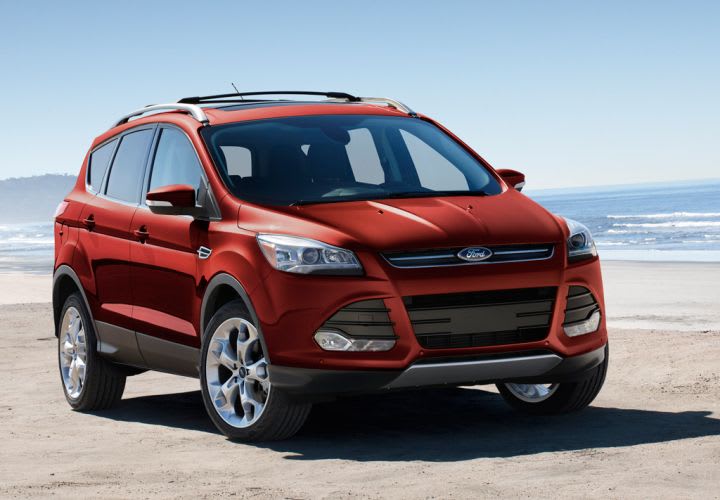
Photo of 2015 Escape courtesy of Ford.
Photo of 2015 Escape courtesy of Ford.
Three vehicles widely used in commercial fleets including the Ford Escape, Ford Edge, and Dodge Grand Caravan made the list of the 10 least expensive vehicles to insure, according to an annual report by Insure.com.
The Escape compact SUV, Edge mid-size SUV, and Grand Caravan minivan placed eighth, tenth, and sixth respectively with average annual premiums of $1,176, $1,190, and $1,162. Insure.com considers rates for a 40-year-old single male driver with a good record.
The four-wheel-drive Jeep Wrangler Sport repeated as the least expensive vehicle to insure with a $1,134 premium. Other models on the list included the front-wheel-drive Jeep Patriot Sport ($1,136), four-wheel-drive Honda CR-V LX ($1,160), Honda Odyssey LX ($1,163), FWD Jeep Compass Sport ($1,164), Subaru Outback 2.5i ($1,176), and Smart Fortwo Pure ($1,186).
"The Smart's showing may seem like a surprise," said Penny Gusner, consumer analyst for Insure.com. "But it has racked up years of consistent below-average losses from claims, and that’s what your insurance bill reflects."
The insurance aggregator also released the 10 most expensive cars to insure, which was led by the Nissan GT-R Nismo with a $3,574 annual premium. Other vehicles on the list include the Mercedes-Benz SL65 AMG convertible ($3,573), Dodge SRT Viper ($3,318), Porsche 911 Carrera S Cabriolet ($3,216), Audi R8 5.2 Spyder Quattro ($3,206), Porsche Panamera Turbo Executive ($3,174), BMW 760Li ($3,147), BMW M6 convertible ($3,115), Mercedes-Benz E63 AMG 4Matic Wagon ($3,042), and Mercedes-Benz CLS63 AMG 4Matic sedan ($2,972).
For its survey, Insure.com commissioned Quadrant Information Services to calculate average auto insurance rates for 2015 models. Averages were calculated using data from six large carriers (Allstate, Farmers, GEICO, Nationwide, Progressive and State Farm) in 10 ZIP codes per state. Not all models were available, especially exotic cars. More than 1,500 models are included in the study.
More Operations
The Top 300 Commercial Fleets
The Top 300 Commercial Fleets: See the List
Read More →
Your Local Dealer Knows More Than You Think
Your local dealer can provide an information advantage that extends well beyond courtesy deliveries.
Read More →


Fleet Meets: Austin Schutte
Here are some industry insights, personal touches, and words of advice from the CEO and Founder of Anew Solutions.
Read More →
Soap Box Derby Challenge: What’s Powering Team Brown
The car is coming together, the students are solving real build problems, and the fleet industry is helping push Team Brown toward the starting line.
Read More →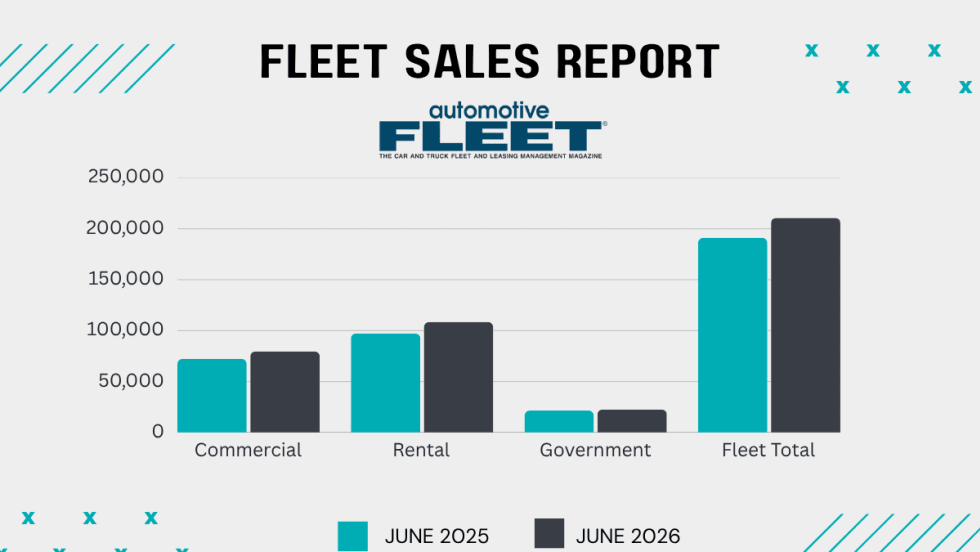
Commercial Fleet Sales Contribute To June, YTD Gains
The fleet sector has boosted its vehicle purchases at a reliable pace in the first half of this year compared with 1H 2025.
Read More →
What Fleet Managers Really Want From Vendors
From customer service frustrations and technology breakdowns to RFQs, change management, and the growing impact of turnover across the industry, this conversation pulls back the curtain on the real operational challenges fleet managers are navigating every day.
Read More →
Fleet Safety Masterclass: Industry Leaders on Storytelling, Strategy & Innovation
In this special masterclass episode, industry leaders break down what it really takes to build safer fleets in today’s increasingly distracted and data-driven world.
Read More →
Integrating Legacy Fleet Systems and Historical Data
In this episode, we bring together fleet and technology leaders to unpack the realities of data integration, system migrations, and the evolving role of AI in fleet management.
Read More →
From Resistance to Results: Change Management Strategies for Fleets
From new technologies and safety programs to evolving regulations, fleets are under constant pressure to adapt. But as Dr. Betz explains, success isn’t about the system you implement—it’s about whether your people actually use it.
Read More →