




Kansas City Adding New CNG Trucks to Fleet
KANSAS CITY, MO - The City recently took delivery of one of the first of a total of 19 heavy-duty compressed natural gas (CNG) trucks being placed into service this year.
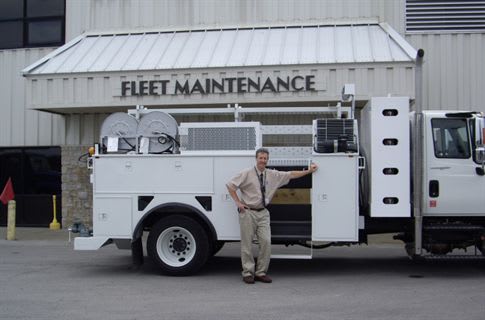
KANSAS CITY, MO - The City of Kansas City recently took delivery of one of the first of a total of 19 heavy-duty compressed natural gas (CNG) trucks being placed into service this year.
The city received a federal grant through the Congestion Mitigation and Air Quality (CMAQ) Program to help pay for the CNG system, according to Sam Swearngin, fleet administrator for Kansas City. The CNG truck is an International 4300 storm water utility truck application.
Though the fleet also uses other available alternative fuels including propane, ethanol, biodiesel, hybrid-electric, and plug-in electric, CNG "displaces more foreign oil derived fuels than all the others combined," said Swearngin.
"We use CNG for a number of reasons. First of all, we want vehicles that are safe and perform as well as traditional vehicles. Secondly, we want the lowest emissions possible, and finally, we want a secure, domestically produced fuel that will be affordable over the long haul and offer price stability, to get us off the roller coaster of petroleum fuels. For us, the move to CNG has proven to be a good choice," Swearngin explained.
City fleet technicians, supervisors, and superintendents recently received training for the new truck from the National Alternative Fuels Training Consortium. The training involved three full days of class and hands-on learning.
The training covered:
Understanding the properties of compressed natural gas and how it compares to other fuels.
Purpose and function of compressed natural gas vehicle components.
Recognizing the proper installation guidelines and identifying component damage.
Compressed natural gas safety.
Cylinder inspection.
While the CNG truck is similar to traditionally fueled models, Swearngin said there are two noticeable differences between CNG trucks and traditional trucks. "First, the CNG fuel tanks are bigger, heavier and required more space on the vehicle. Second, filling the CNG truck's fuel tank is different. It's like a heavy-duty air chuck that snaps on the truck's inlet nozzle," Swearngin explained.
Kansas City was pleased to have worked with truck body company Mobile Hydraulics Equipment Co. (MHE) on the new trucks. "As with just about all 'first of vehicles', there are usually delays. And there was with this project, but MHE rolled with the flow and was very supportive," noted Swearngin.
CNG Truck Specs
Cab and Chassis Make and Model: International 4300
CNG Engine Make and Model: ESI Phoenix 7.6L 265HP, 820ft.lb @ 1400 RPM
CNG Fuel Tank Package: Enviromech -60 dge (diesel gallon equivalent) minimum (dge = scf /139); 4-cylinder system
Application: Storm Water Utility Truck
More Green Fleet

Inspiration Mobility Acquires Key Electrada Assets
Inspiration Mobility Group has acquired select assets of Electrada, adding the fleet electrification provider's team, technology, and charging infrastructure development capabilities to its energy management business.
Read More →
Turning Connected Vehicle Data Into Decisions That Matter
Fleet leaders have more data than ever, but turning that data into clear, actionable decisions remains a challenge. This white paper shows how leading organizations are using connected vehicle data to improve safety, reduce costs, and optimize fleet performance. Learn how to turn insight into action across your fleet.
Read More →
Are You Tracking Your Fleet's True Total Cost of Ownership?
Bobit Business Media surveyed 190 fleet professionals and found that while most fleets are tracking costs, fragmented systems and data gaps are keeping true TCO visibility out of reach. With rising pressure to control spend in an increasingly volatile environment, the gap between what fleets think they know and what the data actually shows is wider than you might expect. See how your peers are managing costs today and where the industry still has room to improve.
Read More →
Hybrids: Electrification Without the Challenges
For fleet managers, fuel is one of the biggest line items in the budget — and it's one hybrids can shrink without changing how your people work. Download the eBook to see the numbers, understand the technology, and get a step-by-step guide to making the switch.
Read More →
Startup ZMD Motors Developing Electric Conversion for Ram 5500 Work Trucks
Detroit-based company says it has begun early development of a system to convert internal combustion Ram 5500 chassis-cab trucks to electric power.
Read More →
U.S. EV Adoption Is Climbing, but Commercial and Passenger Markets Diverge
New industry group data revealed that light-duty electric vehicle sales are hitting record market share and volumes, while commercial EV volume dipped. What’s driving the fluctuations?
Read More →
How To Upfit Electric Work Trucks and Vans
The biggest challenge lies in balancing additional equipment and accessories with EV battery capacity and range.
Read More →
How Fleets Can Adjust Approaches To EV Adoption
With the expiration of federal incentives, EV success now hinges less on government policy and more on discounts, battery tech progress, increased range, and broader infrastructure.
Read More →
Despite World Troubles, Forward Thinking Guides Fleets
Fleet operators shared their challenges during an annual conference that embraced the latest advances across all aspects of running private- and public-sector vehicles.
Read More →
GM Energy Details Partnerships and Targets for Public Charging Build-Out
EVgo, Pilot, ChargePoint and IONNA named; goal is 35k GM-invested DC stalls by 2030, with customer-experience upgrades at sites.
Read More →