




Jeep Adds Two Grand Cherokee Models for 2017
FCA's Jeep unit will roll out two more Grand Cherokee models, including the Trailhawk and Summit, for 2017. The two models appeared at the New York International Auto Show, and will arrive at dealer lots in late summer.

Photo of 2017 Jeep Grand Cherokee Trailhawk courtesy of FCA US.

Photo of 2017 Jeep Grand Cherokee Trailhawk courtesy of FCA US.
FCA's Jeep unit will roll out two more Grand Cherokee models, including the Trailhawk and Summit, for 2017. The two models appeared at the New York International Auto Show, and will arrive at dealer lots in late summer.
The 2017 Jeep Grand Cherokee Trailhawk adds off-road 4x4 capability features, including Jeep's Quadra-Drive II 4x4 system with rear Electronic Limited Slip Differential (ELSD) for all powertrains, a unique version of Grand Cherokee's Quadra-Lift air suspension developed for Trailhawk that offers improved articulation and total suspension travel, as well as Selec-Speed Control with Hill Ascent Control. Skid plates and a Trailhawk-specific anti-glare hood decal are also standard.
Approach angles on the Jeep Grand Cherokee are 29.8 degrees or 36.1 degrees when the lower front fascia is removed for severe off-roading, while the breakover angle is 27.1 degrees and the departure angle is 22.8 degrees. Grand Cherokee Trailhawk models offer up to 10.8 inches of ground clearance.
The 2017 Jeep Grand Cherokee Summit arrives with an updated front fascia, grille and LED fog lamps, with new 20-inch polished aluminum wheels. The full leather interior boasts a Nappa leather-wrapped dashboard, center console and door panels, and Laguna leather seats with edge welting.
2017 Grand Cherokee Summit adds more standard equipment such as auto-folding power mirrors, headlamp washers, blind spot detection, forward collision warning, adaptive cruise control and, for the first time, lane departure warning and parallel and perpendicular park assist.
More Operations

Fleet Has a Talent Pipeline Problem. What Comes Next? | AF News Recap
Where will fleet’s next generation of leaders come from? This week, we’re looking at the industry’s talent pipeline, what certification can add to a fleet career, how to build an award-worthy track record, and the return of Automotive Fleet’s Personal Use Survey.
Read More →
Smith System Launches Driver Risk Management Program
Fleets have more driver data than ever, but identifying risky behavior doesn't necessarily correct it. Smith System's new Driver Risk Management program combines monitoring, training, and follow-up coaching to help fleets connect risk signals with driver intervention.
Read More →
Automotive Fleet Opens 2026 Personal Use Survey for Commercial Fleet Managers
Less than two weeks left! Commercial and corporate fleet managers are invited to share how their organizations handle company vehicle personal-use policies, charges, and driver eligibility.
Read More →
From AI Prompts to AI-Generated Safety Songs | AF News Recap
Can better prompts make AI more useful for fleet managers? This week, we’re breaking down smarter fleet analysis, an AI-assisted experiment that turned safety training into music, and what happened to fuel prices in August.
Read More →
How to Write Better AI Prompts for Fleet Analysis
Include these six elements in your fleet prompts to generate more relevant analysis and accurate answers.
Read More →
Fleet Meets: Eric Kilgore
This edition of the Fleet Meets series features one of the industry's best leaders driving multi-market and national operations.
Read More →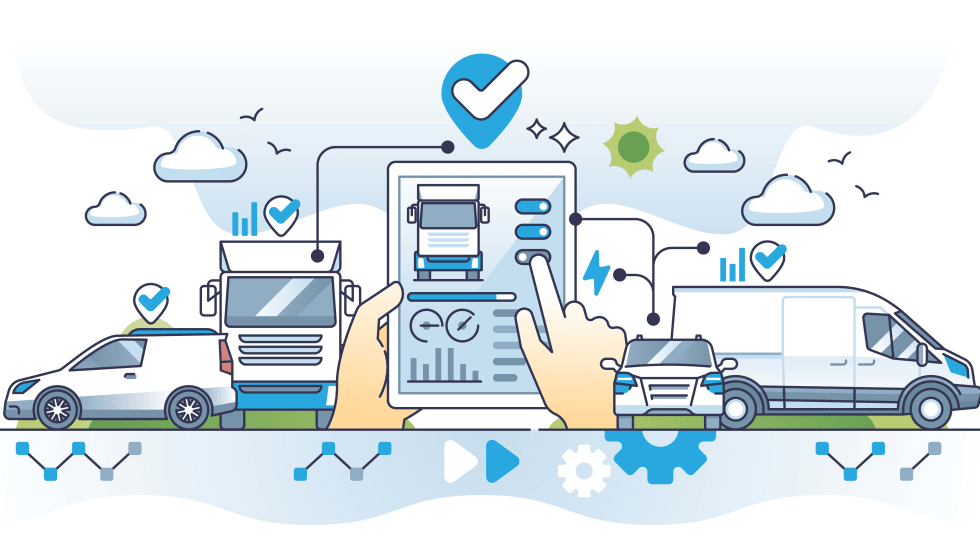
Why Reactive Fleet Management Is Becoming Too Expensive to Sustain
Research highlights a growing need for proactive management strategies to address rising costs in fleet operations effectively.
Read More →
What Your Fleet KPIs Aren’t Telling You
Tracking fleet metrics is only useful when the data leads to better decisions. This guide helps fleet leaders assess cost, utilization, and downtime more accurately, identify performance gaps, and prioritize the actions that can improve operational results.
Read More →
Hidden in Plain Sight: Fleet Compliance Risks
Fleet compliance isn't just about having policies — it's about consistently enforcing them. This practical guide reveals six hidden compliance risks common in public sector and shared fleet operations and outlines proven strategies to improve visibility, accountability, and audit readiness
Read More →
Turning Fleet Payment Data into Executive Insights
Does data alone drive results in operations?
Read More →