




January Retail Vehicle Sales Expected to Tumble
The industry is expected to sell 1.13 million new vehicles in January, a 3% decline over the same time last year, and a 33% decline from the month before, according to Kelley Blue Book, resulting in a seasonally adjusted annual rate (SAAR) of 17.4 million.
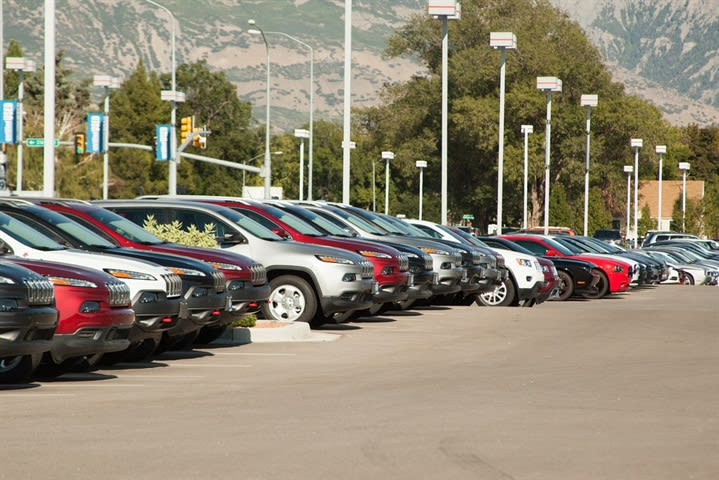
Photo courtesy of EveryCarListed via Flickr.
Photo courtesy of EveryCarListed via Flickr.
The industry is expected to sell 1.13 million new vehicles in January, a 3% decline over the same time last year, and a 33% decline from the month before, resulting in a seasonally adjusted annual rate (SAAR) of 17.4 million.
Of those sales, 79.2% will originate from retail sales while 20.8% are expected to come from fleet. This represents a slight decrease in percentage of retail sales from the same time last year, when 79.9% of sales originated from retail sales, the firm noted, according to Kelley Blue Book data.
"January is typically the weakest month of the year for sales, as winter weather sets in and consumers recover from big spending over the holiday season," said Alec Gutierrez, senior analyst for Kelley Blue Book. "In addition, many potential sales were likely pulled ahead into December as consumers opted to take advantage of the ample inventory and incentives available industry-wide."
Those incentives, KBB noted, are something the industry will have to look out for through 2017. In 2016, transaction prices reached some of their highest levels on record, but incentive spending rose about as much, counterbalancing the would-be profit. According to KBB, for the industry to see another record-year in 2017 would require undisciplined sales tactics driven by incentives, leasing and longer loan terms.
KBB is now forecasting vehicle sales by the end of the year at 16.8 to 17.3 million units, 1% to 4% less sales than 2016 produced.
Two manufacturers that Gutierrez expects to see sales grow in the first month of the year are Honda and Volkswagen. The KBB analyst expects Honda to realize an approximate 5% year-over-year growth primarily driven by sales of the brand’s CR-V and HR-V models.
And, demand for utilities won’t be constrained to just Honda, KBB noted. According to KBB, mid-size SUVs/ crossovers are expected to be the second highest volume segment in January. The title of top volume segment will belong to compact SUV/crossovers, and although the segment is expected to realize a slight year-over-year sales decline in January, it’s still expected to grow its share of overall sales. If demand for the segment continues on its current trajectory, KBB predicts that the Toyota RAV4 and Honda CR-V may unseat the Toyota Camry and Honda Civic as the highest-selling vehicles in the industry.
As for Volkswagen, the analyst sees the manufacturer putting the diesel scandal behind it to realize an approximate 17% year-over-year increase in sales.
"With multiple new products on the market and looking to put the diesel scandal in the past, Volkswagen Group should report large year-over-year increases, and start to gain back market share," said Gutierrez. "While new cars like the Volkswagen Golf Alltrack and redesigned Audi A4 are contributing to the automaker's growth this month, SUVs like the Tiguan and upcoming Atlas will have to become bigger players to help Volkswagen transition its sales mix toward the growing consumer preference for utilities."
More Operations

Fleet Has a Talent Pipeline Problem. What Comes Next? | AF News Recap
Where will fleet’s next generation of leaders come from? This week, we’re looking at the industry’s talent pipeline, what certification can add to a fleet career, how to build an award-worthy track record, and the return of Automotive Fleet’s Personal Use Survey.
Read More →
Smith System Launches Driver Risk Management Program
Fleets have more driver data than ever, but identifying risky behavior doesn't necessarily correct it. Smith System's new Driver Risk Management program combines monitoring, training, and follow-up coaching to help fleets connect risk signals with driver intervention.
Read More →
Automotive Fleet Opens 2026 Personal Use Survey for Commercial Fleet Managers
Less than two weeks left! Commercial and corporate fleet managers are invited to share how their organizations handle company vehicle personal-use policies, charges, and driver eligibility.
Read More →
From AI Prompts to AI-Generated Safety Songs | AF News Recap
Can better prompts make AI more useful for fleet managers? This week, we’re breaking down smarter fleet analysis, an AI-assisted experiment that turned safety training into music, and what happened to fuel prices in August.
Read More →
How to Write Better AI Prompts for Fleet Analysis
Include these six elements in your fleet prompts to generate more relevant analysis and accurate answers.
Read More →
Fleet Meets: Eric Kilgore
This edition of the Fleet Meets series features one of the industry's best leaders driving multi-market and national operations.
Read More →
Why Reactive Fleet Management Is Becoming Too Expensive to Sustain
Research highlights a growing need for proactive management strategies to address rising costs in fleet operations effectively.
Read More →
What Your Fleet KPIs Aren’t Telling You
Tracking fleet metrics is only useful when the data leads to better decisions. This guide helps fleet leaders assess cost, utilization, and downtime more accurately, identify performance gaps, and prioritize the actions that can improve operational results.
Read More →
Hidden in Plain Sight: Fleet Compliance Risks
Fleet compliance isn't just about having policies — it's about consistently enforcing them. This practical guide reveals six hidden compliance risks common in public sector and shared fleet operations and outlines proven strategies to improve visibility, accountability, and audit readiness
Read More →
Turning Fleet Payment Data into Executive Insights
Does data alone drive results in operations?
Read More →