




Related: UPS Drone Delivers Medicine to Remote Location in Test
Is Amazon Planning a Flying Warehouse?
An Amazon patent filing surfaced on Dec. 28 describing an airborne fulfillment center for the company’s drone delivery system, according to a report by CNBC.
by Staff
December 30, 2016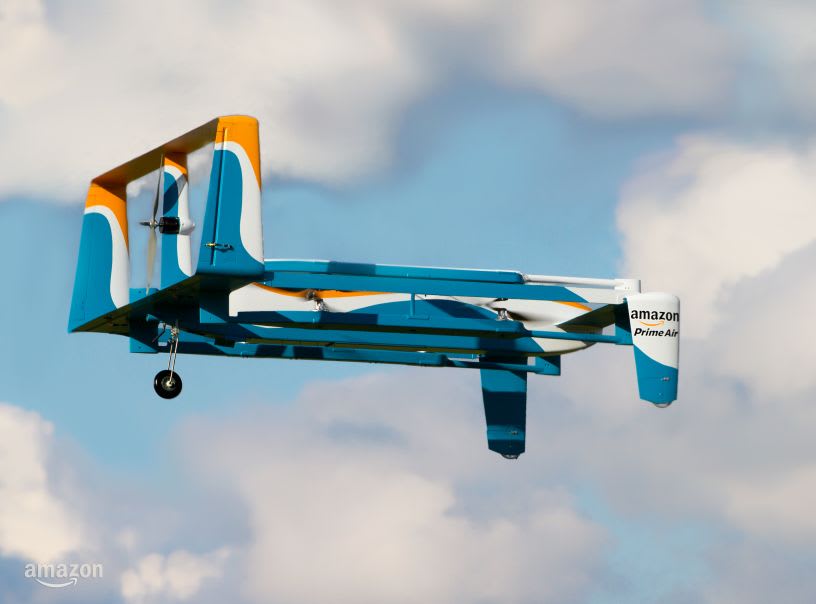
Photo: Amazon
2 min to read
Photo: Amazon
An amazon patent filing surfaced on Dec. 28 describing an airborne fulfillment center for the company’s drone delivery system, according to a report by CNBC.
An illustration depicts an airship floating above the city at 45,000 feet from which the drones would fly down to deliver packages. The patent also mentioned possible uses including delivering food and other items to fans at a stadium.
Whether or not the plan is feasible may be up for debate. The logistics of placing a large blimp thousands of feet above a populated area for long periods of time would require regulatory approval, not to mention the fact that Amazon’s drone delivery system is still in its infancy.
Other details of the patent filing include rudimentary plans for midair refueling and restocking from aircraft that could dock with the airship.
The patent was actually approved way back in April 2016 but was not publicized by Amazon at the time. An analyst from CB Insights, which covers the venture capital and angel investment world, posted an image from the filing onto her Twitter account on Dec. 28.
I just unearthed the Death Star of #ecommerce via @cbinsights... AMZN patent for airborne warehouses at 45K ft spitting out delivery drones pic.twitter.com/qEz2ilUtJP
— Zoe Leavitt (@zoe_leavitt) December 28, 2016
The plan itself may never actually come to fruition; many technology companies file for patents as a way of protecting potential ideas. Sometimes the ideas are never followed through on, or they are just a piece of a larger plan that changes over time.
Amazon’s drones have already been tested while being launched from a traditional, ground-based delivery truck. In the U.K. earlier this month, Amazon officially delivered its first package by drone and the company said that it expected to expand trials in the near future.
More Operations

How Fleets Can Recruit and Train Veterans for Technician Roles
Here's how the technician shortage has affected uptime for fleets, and what to do about it.
Read More →
Avis Budget Group Deploys Neology Toll Management Technology Across Major Brands
Neology’s neoFleet platform will manage toll transactions and toll-authority operations for vehicles across Avis, Budget, Payless, Budget Truck and Zipcar.
Read More →
Fleet Personal-Use Charges Edge Higher in 2026
Nearly eight in 10 surveyed fleets allow personal use of company vehicles, while just over half of respondents report charging employees for the privilege.
Read More →
The Future of Fleet + What’s Changing Right Now | AF News Recap
Could developments overseas offer a preview of what’s coming for U.S. fleets? This week, we’re looking at the future of AI, autonomy, and electrification, plus Ford Pro’s new certified pre-owned program, smarter vehicle offboarding, and a new way for fleets to manage toll expenses.
Read More →
How to Handle Vehicle Offboarding
What do fleet managers need to do when a driver leaves?
Read More →
Sponsored•October 1, 2026
Fleet Manager’s Ultimate Playbook: Navigating the New Standard in OEM Connectivity
Rising operating costs, driver safety concerns, and unplanned downtime are putting unprecedented pressure on modern fleets. Discover how fleet managers use embedded OEM connectivity and real-time vehicle data to cut TCO, prevent downtime, and protect drivers without aftermarket telematics hardware.
Read More →
U.S. Bank Adds Verra Mobility Toll Management to Voyager Fleet Platform
The integration allows U.S. Bank Voyager fleet customers to manage toll payments and violations alongside fuel, EV charging and maintenance expenses.
Read More →
ADAS Prevents Crashes. But Repairs Cost More | AF News Recap
ADAS-equipped vehicles may crash less often, but they can cost more when they do. This week, we’re breaking down what that tradeoff means for fleets, plus Subaru’s first Forester Wilderness Hybrid, Nissan’s new e-POWER Rogue, and why Calstart has become Catalyst Mobility.
Read More →
Moventum Fleet Management Names Mark Iorillo Head of Sales
Iorillo brings nearly 20 years of fleet management and sales experience to the role, including previous positions at Element Fleet Management, CEI, Donlen and Ryder.
Read More →
Fleet Has a Talent Pipeline Problem. What Comes Next? | AF News Recap
Where will fleet’s next generation of leaders come from? This week, we’re looking at the industry’s talent pipeline, what certification can add to a fleet career, how to build an award-worthy track record, and the return of Automotive Fleet’s Personal Use Survey.
Read More →